Why visit Asia Fest 2026: a step-by-step guide to the event. Here is what you might enjoy too
By Raluca Ogaru
- NEWS
- 30 AUG 26
Asia Fest 2026 takes place from 4 to 6 September in the outdoor area of the National Arena, with access from Maior Coravu Street. The 13th edition brings together more than 200 artists and over 100 restaurants, food trucks, cultural centres and exhibitors. It also introduces an important change: the festival is divided into clearly defined areas, making it easier to choose what you want to see without getting lost among the stands.
You can come for ramen and sushi, a K-Pop concert, cosplay or an origami workshop. Children have their own activities, while car enthusiasts will find an exhibition of modified Asian cars and driving simulators. You do not need to be an expert on Asian culture. The variety makes the event accessible even to first-time visitors.
What Asia Fest 2026 does differently
The main new feature is the creation of four large cultural and culinary areas dedicated to Turkey, India, South Korea and Japan. Previous editions featured stands, performances and workshops connected to these cultures, but in 2026 they are brought together in themed spaces that are easier to explore.
The festival combines traditional culture with contemporary pop phenomena. You can move from a tea ceremony to a K-Pop competition, from Turkish water marbling to manga and cosplay, or from classical Indian dance to a display of modified cars. These contrasts give the festival much of its energy.
The four main areas are:
- Turkish Corner
- Here you will find gözleme, kebab, döner, lahmacun, simit, Turkish coffee and baklava.
- The area includes Ebru workshops, introducing the traditional technique in which colours are placed on the surface of water and then transferred onto paper.
- The atmosphere is inspired by Turkish bazaars, with music, dance, crafts and a dedicated photo area.
- Indian Corner
- You can take part in Bollywood, Bhangra, Garba and Rajasthani dance workshops, as well as yoga sessions and activities dedicated to rangoli art.
- Henna, mandalas, traditional clothing and presentations about Ayurveda complete the experience.
- Food options will include tikka masala, butter chicken, paneer, biryani, naan, mango lassi and desserts such as gulab jamun.
- Korean Corner
- You will be able to try on a hanbok, discover the Hangul alphabet and make norigae, the decorative pendants traditionally worn with Korean clothing.
- The food area brings together bibimbap, bulgogi, kimchi, mandu, tteokbokki, japchae, kimbap and the famous Korean fried chicken.
- K-Pop, traditional games and calligraphy workshops connect historical and contemporary Korean culture.
- Japanese Corner
- You can try sushi, ramen, gyoza, Japanese curry rice, yakisoba, mochi, taiyaki and matcha products.
- The proposed workshops include origami, calligraphy, the tea ceremony and presentations of kimono and yukata clothing.
- The Angela Hondru Romanian-Japanese Studies Centre will also be present in this area.
The official Asia Fest 2026 page currently lists 16 participating countries. The initial press release mentioned 14, without Mongolia and Malaysia. For the latest information before your visit, the official programme remains the most reliable reference.
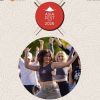
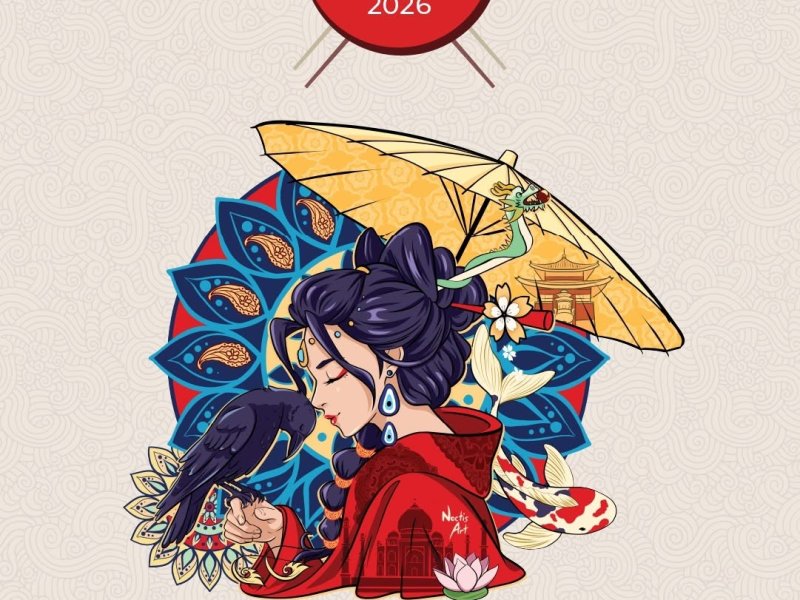 Asia Fest 2026 festival poster. The event takes place at the National Arena in early September.
Which day to choose, depending on what you want to see
There is no single day that will suit every visitor. Friday has a shorter programme and ends with a Korean party, Saturday focuses on cosplay, dance and Turkish music, while Sunday brings the K-Pop competition and one of the festival’s most spectacular Japanese performances.
The programme is dense. If you want to explore the cultural areas, eat without rushing and attend a workshop, allow at least four or five hours. A one-hour visit will probably give you enough time only for a walk among the stands and a quick stop in the food area.
- Friday, 4 September: for K-Pop and the evening atmosphere
- The festival is open from 14:00 to 22:00.
- Orientarhythm takes to the stage at 17:00.
- Random Dance by The Leaders is scheduled between 18:45 and 19:45.
- South Korean guest DJ Fat Lips hosts the Korean Party from 19:45 to 22:00.
- Saturday, 5 September: for cosplay, dance and concerts
- The programme begins at 10:00 and ends at 22:00.
- The cosplay competition is scheduled for 12:00.
- A live cooking demonstration begins at 16:40.
- The evening includes Bollywood dance, a show inspired by Asian cultures and, from 20:45, a concert by Fetiblue & Uğur Bozdağ.
- Sunday, 6 September: for the K-Pop competition and Japanese show
- The festival is open from 10:00 to 22:00.
- The K-Pop competition begins at 12:00, while the cosplay parade is scheduled for 14:00.
- The parade of traditional costumes takes place from 18:00.
- The choreographic show “Between Times”, inspired by Japanese culture, begins at 20:00, followed by Orientarhythm at 20:30.
Times may change, particularly at an outdoor event. Check the programme on the day of your visit and choose two or three moments you do not want to miss. You can leave the rest of your time open for unplanned discoveries.
How to explore the festival step by step
The first useful thing to do when you arrive is pick up a festival map. Do not head straight for the first food stand you see. A short walk around the entire site will show you where the stages, cultural areas, workshops, children’s activities and the stands that interest you are located.
A simple strategy can help you avoid spending half your visit waiting in queues:
- Choose your priority performances
- Note the time and stage for each one.
- Arrive in the area 10 to 15 minutes early, especially for the cosplay and K-Pop competitions.
- Choose two of the four cultural corners
- If you try to rush through all of them, you will see the decorations but miss many of the activities.
- Begin with the cultures you know least about. You can return to your favourite area later.
- Take part in a workshop
- Origami, calligraphy, henna, Ebru, the tea ceremony and other creative activities offer a more memorable experience than simply photographing the stands.
- The workshops are advertised as free, but their times and availability should be checked at the festival.
- Share the food with the people accompanying you
- Instead of choosing one large portion each, order several dishes and share them.
- Combine a familiar dish with something you have not tried before: ramen with gyoza, bibimbap with mandu or curry with naan.
- Save room for dessert. Mochi, taiyaki, baklava, gulab jamun and Asian-inspired ice creams are part of the festival experience.
- Leave Asia Market until the end
- The market brings together sauces, spices, teas, noodles, cosmetics, books, manga, games, decorative objects and cosplay costumes.
- At Artists’ Alley, you can find illustrations, handmade items and products created by independent artists.
- If you shop at the beginning, you will have to carry your bags around the festival for the rest of the day.
What you might enjoy even if you are not a K-Pop or anime fan
Asia Fest is not intended exclusively for communities already formed around Korean and Japanese culture. Its programme includes traditional Indian dance, Turkish music, martial arts, calligraphy, food, crafts and performances designed for very different audiences.
You can plan your visit according to your interests:
- If you are coming for the food
- Restaurants and food trucks inspired by the cuisines of Japan, South Korea, China, India, Vietnam, Thailand, Turkey, Syria and Lebanon are gathered in one place.
- It is a good opportunity to compare similar dishes prepared with different ingredients and techniques.
- If you are visiting with a child
- The children’s area includes Korean kite-making, tote bag painting, slime, Soroban activities, face painting, henna tattoos, trampolines and VR experiences.
- Choose the morning hours and alternate workshops with breaks. The 12-hour weekend programme can become tiring for younger visitors.
- If you are interested in pop culture
- KJ Area brings together K-Pop, manga, anime, cosplay, board games, Dungeons & Dragons and Artists’ Alley.
- Activities include decorating K-Pop photocard holders, making K-Pop-inspired keyrings and collaborative manga drawing.
- If you are interested in cars
- The West Competition Racing area presents modified Asian cars and explains the aesthetic and technical changes made to them.
- Driving simulators make the display more interactive, rather than limiting it to stationary vehicles.
- If you prefer quieter experiences
- You can choose the tea ceremony, calligraphy, origami, yoga or the Indian relaxation area.
- You do not have to stay close to the stages. The cultural areas can be explored at a gentler pace.
How Asia Fest has changed over the years
Recent editions show the festival’s transition from a cultural event with free general admission to a larger, more structured festival with an increasingly complex artistic programme. Its core has remained the same: food, performances, workshops and the meeting point between Asian traditions and pop culture.
The most visible change in 2026 is not the number of stands, but how the experience is organised. The four large cultural corners, KJ Area, the car section and the different programme prepared for each day make the festival easier to adapt to individual interests.
- In 2023, the 10th-anniversary edition offered free general admission. The major separate event was a concert by Japanese artist MIYAVI, with tickets starting at 180 lei. The anniversary and this special performance were central to that year’s festival.
- In 2024, Asia Fest reached its 11th edition, bringing together more than 200 artists and over 100 restaurants, food trucks and participating organisations. Tickets cost 15 lei on Friday and 20 lei on Saturday or Sunday, while a full festival pass cost 45 lei.
- In 2025, the event presented traditions and food associated with 16 countries. Ticket prices increased to 25 lei on Friday, 30 lei for each weekend day and 70 lei for a full festival pass.
- In 2026, prices remain at the same level as the previous edition, but the festival takes place earlier, during the first weekend of September. The four major cultural and culinary areas are introduced for the first time, while K-Pop, cosplay and anime culture receive a more clearly defined space.
In other words, the 2026 edition does not reinvent Asia Fest, but organises its different components more effectively. Visitors no longer encounter only a succession of stands and performances, but several distinct routes: culinary, traditional, pop culture, creative, automotive or family-oriented.
Opening hours, tickets and access to the National Arena
On Friday, 4 September, the festival is open from 14:00 to 22:00. On Saturday and Sunday, 5 and 6 September, it runs from 10:00 to 22:00. The entrance is on Maior Coravu Street.
Tickets are listed online on the More ticketing platform, while the organisers have also announced that they can be purchased at the entrance:
- Friday: 25 lei;
- Saturday: 30 lei;
- Sunday: 30 lei;
- Three-day festival pass: 70 lei;
- Children under the age of seven enter free of charge;
- According to the organisers’ press release, people with disabilities also benefit from free admission.
According to information published by the organisers, card payments are accepted at the stands and pets are allowed inside the festival. Not every stand or activity is necessarily managed in the same way, so carrying a small amount of cash may still be useful.
READ ALSO:
Bucharest Street Food Festival returns to Constitution Square on 5–6 September
Five weekend markets in Bucharest to explore like a local
For transport, the organisers recommend taking the metro to Piața Muncii, bus 104 to the Stadionul Național stop or trams 40 and 56, getting off on Basarabia Boulevard. Parking spaces around the National Arena are limited, and the area can become very crowded. Public transport remains the simpler option.
Asia Fest is worth considering for more than its large selection of food or stage performances. You can try something new, learn to write a few calligraphic characters, see how a kimono or hanbok is worn and explore the difference between real Asian cultures and the simplified images often circulated online. You do not have to do everything. Choose a few experiences and give yourself time to stop wherever you genuinely find something interesting.