Locations close to George Severeanu Museum

  • Museums & Galleries

    “Amiral Vasile Urseanu” Astronomical Observatory

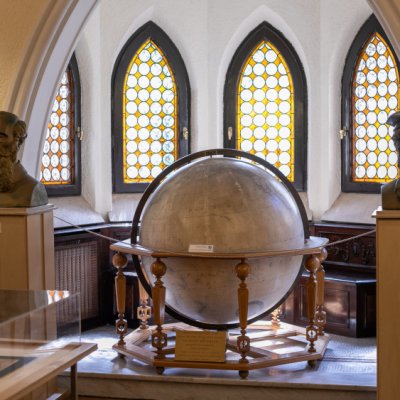
    The “Amiral Vasile Urseanu” Astronomical Observatory, located at 21 Lascăr Catargiu Boulevard, Sector 1, is the only observatory in Bucharest permanently open to the public. Built with a classical dome and equipped with the original Zeiss telescope, it offers both historical exhibitions and real stargazing experiences. The atmosphere here is not ov...
  • Museums & Galleries

    Mobius Gallery

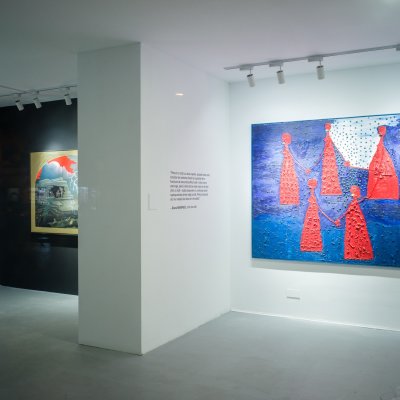
    Mobius Gallery, established in 2015, is a space dedicated to high-level contemporary art with a rigorous curatorial program featuring both local and international artists. The gallery stands out for its commitment to making art accessible to a broad audience through lectures, guided tours, and artist talks. Its exhibitions are diverse, including pa...

  • Museums & Galleries

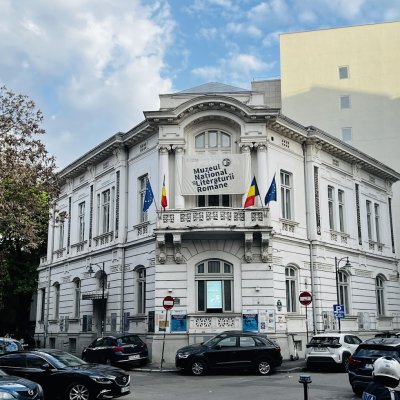
    The National Museum of Romanian Literature

    The National Museum of Romanian Literature has operated since 2017 across two distinct venues, each with its own profile — and it's worth knowing both before you set out.
    Main venue — Str. Nicolae Crețulescu nr. 8, Sector 1 Permanent exhibition
    This is where Romanian literature takes on physical form. Over 300,000 pieces — manuscripts, photographs,...

  • Museums & Galleries

    Grigore Antipa Museum

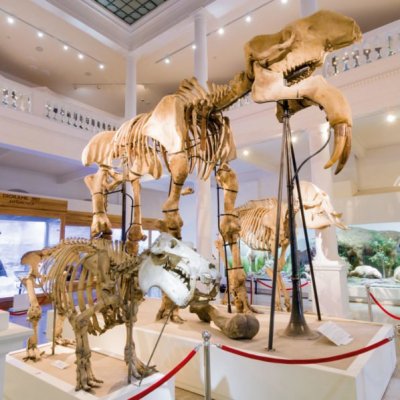
    There isn't a Bucharest resident you ask about the capital's museums who doesn't mention the Grigore Antipa Museum. And with good reason: it is one of the most prestigious museums in Romania and Eastern Europe, currently housing over 2 million exhibits.

    Founded in 1834 and named after the famous Romanian biologist Grigore Antipa, the museum near H...

  • Museums & Galleries

    The National Museum of the Romanian Peasant (MȚR)

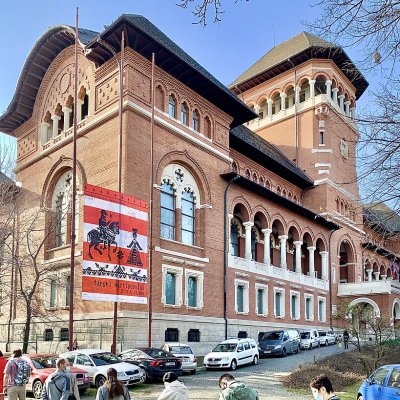
    The National Museum of the Romanian Peasant (MȚR) is one of the most important cultural institutions in Romania dedicated to traditional rural life. Housed in a heritage building in Neo-Romanian architectural style, the museum features an impressive collection of authentic artifacts: from folk costumes and painted icons to tools, furniture, and eve...

  • Museums & Galleries

    The National Museum of Maps and Old Books

    National Museum of Maps and Old Books is a rare gem in Bucharest’s cultural landscape: vast collections of maps, atlases, globes, and old books, all housed in an elegant building that itself breathes history. Each map is a window into a different way the world was once known and imagined — vanished regions, shifting borders, old urban plans. The in...

  • Museums & Galleries

    The National Military Museum "King Ferdinand I"

    The museum was founded on 18 December 1923, by Royal Decree no. 6064, signed by King Ferdinand I himself — after whom it is named to this day. The founding purpose was clear: to preserve and pass on Romania's military memory at a time when the country had just emerged from the First World War with reunited territories, but also with deep wounds.
    Ov...

  • Museums & Galleries

    The Zambaccian Museum

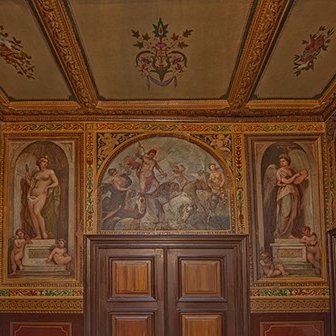
    The Zambaccian Museum is one of those places Bucharest keeps quietly to itself, far from the busier tourist trails. Tucked into a calm corner of the Dorobanți neighborhood, it makes no grand announcement from the outside — and that's precisely what amplifies the effect once you step in.
    The house was built specifically in the 1940s to hold the coll...

  • Museums & Galleries

    Galeria Posibilă

    Galeria Posibilă is a contemporary art space with a strong curatorial vision, active in Bucharest since 2003. It is currently located at 6 Popa Petre Street, tucked away in a quiet courtyard near the city center. Though discreetly situated, the gallery has gained recognition for its thoughtful programming and dedication to Romanian contemporary art...

  • Museums & Galleries

    The National Museum of Romanian History (MNIR)

    The National Museum of Romanian History (MNIR), located in Bucharest, on Calea Victoriei, was established in 1970 and is housed in an impressive building dating back to the Belle Époque period. The building, constructed between 1894 and 1899, was originally the headquarters of the Central Post Office, and its transformation into a museum was part o...

FAQ in case you need it

  • Yes, it is generally safe, with occasional petty theft in busy areas. Use common sense precautions.
  • No, but it helps. Many people speak English, especially younger generations and
    professionals.
  • Metro is fastest, public transport is cheap, and ride-sharing (Uber/Bolt) is convenient.
    Walking works great in the city center.
  • Yes. EU citizens can buy freely. Non-EU citizens can buy apartments and rent easily.
  • Bucharest is affordable compared to most EU capitals. Rent, food, and transport are
    reasonably priced. Costs depend on lifestyle.
  • Non-EU citizens need a visa or residence permit. EU citizens must register after 3 months
    with Romanian Immigration.
  • Yes. Public healthcare is accessible, but private clinics offer faster and higher-quality
    services. Health insurance is recommended.
  • Yes. Bucharest has several international schools and English-taught university programs,
    especially in medicine, business, and tech.