Who Was the Boyar Ion Slătineanu and Why Does a Street in Bucharest Bear His Name?
- Articles
- 15 SEP 26
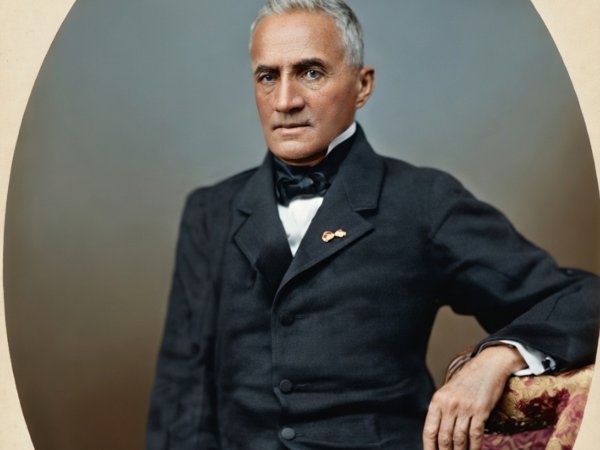
Bucharest has streets named after rulers, writers, artists, scientists and politicians whose names are immediately recognizable. But there are also names that have remained part of the city’s memory even though passers-by know almost nothing about the people who carried them. One such case is Ion Slătineanu Street, in the central area of the capital, between Piața Romană and the Dorobanți district. The name belongs to Ioan, also known as Iancu or Ion Slătineanu (1795–1864), a boyar and important high-ranking official of Wallachia. He was an influential figure during the first half of the 19th century, and his administrative career is closely connected to the transformation of Brăila into a modern city and an important commercial center on the Danube. Slătineanu is considered one of the men who laid the foundations of modern Brăila. He was appointed administrator of Brăila County in 1831, after the city returned to Romanian administration, and remained in this position until 1837. Historical sources describe him as the first major administrator of Brăila after the abolition of the Ottoman-controlled raia, while historian Nicolae Iorga called him a “founder of the city.” Why, then, did his name end up on a street in Bucharest? The answer lies not only in the position he held in Brăila, but also in the prominent position occupied by the Slătineanu family in Bucharest society and in the administration of Wallachia.
A boyar from an old Wallachian family
Ioan Slătineanu was born in 1795 and came from an important boyar family. He was the son of Grand Vornic Scarlat Slătineanu and Catinca Filipescu, and the grandson of Vornic Răducan Slătineanu. Genealogical and historical sources therefore place him among the high-ranking boyar families of Wallachia.
The Slătineanu family had an important presence in both the political and economic life of the principality. Its members owned properties and estates, and the family name is also connected with early economic activities. Historical research on the development of Bucharest mentions the Slătineanu family among the leading native boyar families and refers to properties they owned in Bucharest, including along the old Podul Mogoșoaiei, today’s Calea Victoriei.
Ion Slătineanu entered public administration at an early age. In 1819, at just 24 years old, he became a Grand Comis, a high-ranking official at the princely court. During the 1821 revolution led by Tudor Vladimirescu, he took refuge in Brașov, after which he continued his rise through the administrative and boyar hierarchy.
In 1826, he became a Paharnic, while in 1827 he was appointed administrator of Buzău County, a position he held for a period before moving to lead Prahova County. This administrative experience would prove essential for the mission he was later given in Brăila.
The man who helped lay the foundations of modern Brăila
The decisive moment in Ion Slătineanu’s career came in 1831, when he was appointed administrator of Brăila County. To understand the importance of the position, it is necessary to remember that Brăila had been an Ottoman-controlled raia for centuries. Following the Russo-Turkish War and the treaties that followed, the city returned to Wallachian administration and entered a completely new stage of development.
Slătineanu was appointed on May 22, 1831, and remained at the head of the county until 1837. Some sources describe him as the first mayor of Brăila after the city returned to Wallachian rule, but this formulation needs to be qualified: his official position was that of “cârmuitor” or “ocârmuitor” of Brăila County, an administrative office established under the new Organic Regulation system.
This administrative distinction does not diminish his importance to the city. On the contrary, Slătineanu played a major role in reorganizing Brăila at a moment when the city had to move from its former status as an Ottoman raia and fortified settlement toward becoming a major commercial center of Wallachia.
The National Center for Tourist Information and Promotion in Brăila even considers 1831, the year Ioan Slătineanu was appointed administrator, as the beginning of the city’s period of flourishing.
The “Richelieu of Brăila” and the development of a commercial city
Slătineanu’s activity in Brăila was important enough for the French consul Charles Joseph Edmond Bois-le-Comte to describe him, in a report dated May 15, 1834, as the “Richelieu of Brăila.” The comparison with the famous French cardinal and statesman suggested the influence Slătineanu exercised over the city’s development.
During this period, Brăila underwent major changes. Historical studies of the city show that between 1830 and 1837, under Slătineanu’s administration, urban improvements were undertaken that contributed to changing the city’s appearance. At the same time, economic activity increased dramatically, and the port began to play an increasingly important role in Danubian trade.
The growth of commerce was closely connected with grain exports. Brăila occupied a strategic position, while the Danube provided direct access to foreign markets. Economic documents from the period indicate a rapid increase in the number of ships arriving at the port and in the volume of trade.
In this context, Slătineanu was more than an administrative official. He belonged to a generation of men who contributed to the transition of Romanian cities from medieval and pre-modern structures toward modern administration and economic life.
Schools, churches and the city’s first institutions
One of the most interesting aspects of Ion Slătineanu’s activity was his involvement in the development of local institutions.
In 1832, the first public school in Brăila with Romanian as the language of instruction was established, and it operated in the house of Paharnic Iancu Slătineanu. Historical documentation prepared for Brăila’s General Urban Plan explicitly records this fact.
His involvement in the city’s religious and civic development was also significant. The Church of Saint Michael the Archangel, a historic monument now located in Traian Square, had previously been a mosque and was converted into an Orthodox church in 1831. In 1832, the brick apse of the church was built with financial support from Paharnic Iancu Slătineanu.
An official report from 1833 recorded that the work on the church had been carried out “through the efforts” of Iancu Slătineanu. Historical documents therefore confirm that his involvement in the city extended beyond administration itself.
His name also remained for a time embedded in Brăila’s urban geography. Today’s Sfântul Nicolae Street was formerly known as Ulița Slătineanu, and it appeared on historical city plans under the name “Rue Slatiniano.”
A political career that extended far beyond Brăila
After his time in Brăila, Ion Slătineanu’s career did not come to an end. In 1837, he became Aga under Prince Alexandru Ghica, a position he held until 1839.
He later returned to the Obșteasca Adunare, the representative assembly established under the Organic Regulations, serving as a deputy between 1839 and 1844. He subsequently held other important positions in the administration and judiciary, being mentioned as a member of the Civil Appellate Divan and later of the High Court. In 1852, he became Minister of Religious Affairs and Public Education.
His political career shows that Slătineanu’s influence was not limited to Brăila. He belonged to the administrative and political elite of Wallachia during a period of profound transition, marked by the Organic Regulation, Russian influence and the emergence of modern institutions.
At the same time, he was a political figure of his own era, with positions and ambitions that must be understood within the complicated rivalries between boyars, rulers and the great powers influencing the Romanian Principalities.
Why does Bucharest have an Ion Slătineanu Street?
The connection between Slătineanu and Bucharest is older than the street that bears his name today.
His family owned important properties in the capital, including in the area around Calea Victoriei. Historical studies of Bucharest property ownership mention the presence of the Slătineanu family along the old Podul Mogoșoaiei, one of the city’s most important thoroughfares.
There is also a fascinating reference to Ion Slătineanu’s houses along Podul Mogoșoaiei. Documents researched by historian Ioan C. Filitti show that, in 1842, Slătineanu offered his houses, described as having “two façades and a large plot,” for theatrical activities. Public balls and performances were held there, demonstrating that the family was involved not only in administration but also in the social and cultural life of the capital.
Today, Ion Slătineanu Street is located in Sector 1, in the central part of Bucharest, in the area between Piața Romană and Dorobanți, close to Calea Dorobanților and the Piața Romană area. It lies within an urban fabric where the former properties and houses of prominent families were gradually replaced or complemented by buildings dating from the 19th and 20th centuries.
The name of the street is therefore not accidental. It preserves the memory of a family that owned significant property and enjoyed an important presence in Bucharest, as well as of a man who held senior positions in the administration of Wallachia.
Why Ion Slătineanu deserves to be remembered
Ion Slătineanu is not one of those historical figures remembered through a single spectacular event or a major literary work. His importance lies primarily in administration, in the institutions he served and in the urban and economic transformations he helped support.
In Brăila, his name is associated with the beginnings of the modern city. He was the administrator of a settlement emerging from centuries of Ottoman rule and entering a new period defined by commerce, Romanian administration and urban development. This is precisely why Nicolae Iorga called him a “founder of the city.”
In Bucharest, his memory is more discreet. It does not survive in a grand monument dedicated exclusively to him, but in the name of a street passed every day by hundreds of people.
Ion Slătineanu Street is therefore more than an urban designation. It is a link between two cities and two moments in Romanian history: the boyar Bucharest of the 19th century and the Brăila that, after emerging from Ottoman administration, rapidly developed into one of the great commercial centers of the Danube.
The man whose name remains on the street sign was one of the representatives of a generation that helped, with all the limitations and contradictions of its time, guide Wallachia toward the world of modern institutions.
We also recommend: “The Man of Steel” Armand Călinescu, the Legionnaires’ Fiercest Enemy, Has a Street Named After Him in Bucharest