“The Man of Steel” Armand Călinescu, the Legionnaires’ Fiercest Enemy, Has a Street Named After Him in Bucharest
- Articles
- 09 SEP 26
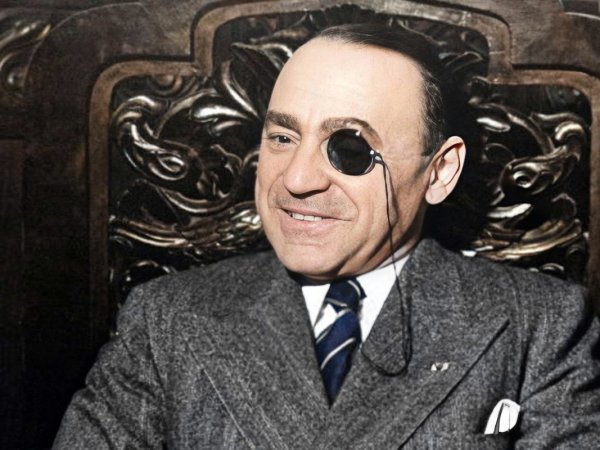
Armand Călinescu was one of the most powerful and controversial political figures of interwar Romania. Nicknamed “the man of steel” because of the determination with which he acted against the political opponents of the state, he remained in history above all as one of the most determined adversaries of the Legionary Movement. His political rise coincided with one of the most tense periods in European history, when democracies were threatened from opposing directions by fascism, Nazism, and communism. His name is today borne by a street in central Bucharest, in Sector 2, located between Thomas Masaryk Street and C. A. Rosetti Square. It is a discreet street, situated near the Armenian–Rosetti area, but the name it bears refers to one of the most dramatic episodes in Romania before the Second World War.Armand Călinescu was, at the same time, a politician formed in the tradition of the National Peasants’ Party and one of the people who became the main supporters of the authoritarian regime established by Carol II. He was an uncompromising adversary of the Legionnaires, but also an important participant in the construction of a regime that restricted political life and eliminated democratic pluralism. It is precisely these contradictions that explain why his personality continues to be analyzed with nuance even today.
The child from Pitești who reached the center of Romanian politics
Armand Călinescu was born in Pitești, in 1893, into a wealthy family. His date of birth appears in some sources according to the old style, which explains the differences found in his biographies. His father, Mihai Călinescu, was a veterinarian and reserve officer, while his mother’s name was Ecaterina. Young Armand received a solid education and attended school and the “Ion C. Brătianu” High School in his native city.
After finishing high school, he came to Bucharest for university studies. He attended the Faculty of Law and, at the same time, courses at the Faculty of Philosophy. Later, he continued his education in Paris, where he obtained his doctorate in political and economic sciences. His intellectual background would distinguish him from many of the politicians of the period. He was known for his capacity for work and for his interest in administrative and economic issues.
A political career attracted him from an early age. Initially, Călinescu looked toward the National Liberal Party, the dominant political formation in Romania during the first decades of the twentieth century. However, failing to reach an understanding with the Liberal leadership, he moved closer to the Peasants’ Party, led by Ion Mihalache.
In 1926, he was elected deputy for the first time. After the merger of the Peasants’ Party with the Romanian National Party of Transylvania and the formation of the National Peasants’ Party, Armand Călinescu became one of the important figures of the new political formation in Argeș County.
He was re-elected in several legislatures and gradually built a reputation as an energetic and efficient politician. For Călinescu, administration was not merely a secondary field of politics, but one of the main instruments through which the state could intervene in the life of society.
From prefect of Argeș to close associate of King Carol II
The victory of the National Peasants’ Party in the 1928 elections gave Armand Călinescu the opportunity to occupy his first important positions in state administration. He was appointed prefect of Argeș County and later held positions in the Ministry of Agriculture and Domains.
In 1930, Armand Călinescu became undersecretary of state at the Ministry of the Interior, during a period in which Romania was facing numerous social and political tensions. In this position, he began to support firm measures against unrest and movements that he considered dangerous to the stability of the state.
At the same time, Europe was undergoing dramatic transformations. The economic crisis, the frustrations left after the First World War, and the weaknesses of certain democratic regimes contributed to the development of extremism. The rise of Adolf Hitler and the Nazi Party in Germany became the best-known example of this trend, but the phenomenon was present in numerous European states.
Romania was not spared from radicalization. On the far left was the Romanian Communist Party, banned during most of the interwar period and with limited electoral influence. On the far right, however, the Legionary Movement became an increasingly visible force, using an ultranationalist, antisemitic, and profoundly anti-democratic discourse.
Armand Călinescu would become one of the most determined adversaries of both forms of extremism. The nickname “the man of steel” was connected precisely to the rigidity and energy with which he acted against communists and Legionnaires.
However, his political path became increasingly controversial because of his closeness to Carol II. In 1937, an important part of the leaders of the National Peasants’ Party concluded an electoral agreement with the Iron Guard. For Armand Călinescu, his party’s rapprochement with the Legionnaires represented a political limit that he was not willing to accept.
He accepted the position of Minister of the Interior in the government led by Octavian Goga. The decision permanently distanced him from the leadership of the National Peasants’ Party, and Călinescu was expelled from the party. At the same time, his relationship with Carol II became stronger.
“The man of steel” and the fight against extremism
In the years that followed, Armand Călinescu became one of the king’s main trusted men. After the establishment of Carol II’s authoritarian regime, he held several important positions in the government before becoming President of the Council of Ministers, on March 7, 1939.
His position toward the Legionary Movement was categorical. From the previous years onward, Călinescu had called for energetic measures against the organization led by Corneliu Zelea Codreanu. He considered the Iron Guard a direct threat to the authority of the state.
At the same time, Călinescu also supported harsh reprisals against the communists. From the positions he held at the Ministry of the Interior, he took part in the policy of repressing social movements considered dangerous and supported the use of force against unrest.
This attitude also explains the fundamental contradiction of his career. Armand Călinescu was an opponent of extremism, but he did not remain a defender of liberal democracy until the end of his life. On the contrary, his closeness to Carol II and his participation in the authoritarian regime contributed to the consolidation of a political system in which traditional parties and democratic freedoms were severely restricted.
He was involved in the National Renaissance Front, the single political organization of the Carol II regime. Therefore, his historical image must be viewed in all its complexity: a politician who violently opposed Legionary extremism but who considered the authoritarian regime a legitimate instrument for saving the state.
The assassination of Corneliu Zelea Codreanu and the point of no return
The conflict between Armand Călinescu and the Legionary Movement reached its climax in 1938. Corneliu Zelea Codreanu, the leader of the Legion of the Archangel Michael, had entered into a conflict with the historian Nicolae Iorga, a conflict that led to one of his trials.
After the initial conviction, the authorities brought further charges against the Legionary leader. Corneliu Zelea Codreanu was sentenced to ten years of hard labor, and Armand Călinescu, who was Minister of the Interior at that time, played an important role in the authorities’ action against the Legionary leadership.
On the night of November 29 to 30, 1938, Corneliu Zelea Codreanu and several leading Legionnaires were killed during their transfer from Râmnicu Sărat prison to Jilava. The authorities presented an official version at the time, but the event was later regarded as an extrajudicial assassination.
Political responsibility for this episode was associated, first and foremost, with Carol II and with the people in charge of the regime, among whom was Armand Călinescu. In the eyes of the Legionnaires, he became one of the main figures responsible for Codreanu’s death.
From that moment on, Călinescu’s life was permanently threatened. The Legionary Movement regarded him as one of its most important enemies, and revenge for Codreanu’s death became one of the organization’s main concerns.
The prime minister who chose the Western camp
On March 7, 1939, Armand Călinescu became Prime Minister of Romania. He took over the leadership of the government at a time when Europe was on the brink of war.
Nazi Germany was continuing its expansion, and pressure on the states of Central and Eastern Europe was becoming increasingly intense. Călinescu supported Romania’s traditional foreign policy orientation toward France and Great Britain, trying to preserve the country’s independence in the face of German pressure.
His government supported the Polish authorities and the refugees who arrived in Romania after the invasion of Poland. At the same time, Romania attempted to maintain its neutrality in the conflict that had begun in September 1939.
His firm position against Nazi influence and the Legionary Movement made Armand Călinescu an important obstacle for fascist organizations and for supporters of the Axis in Romania.
“The man of steel” was aware that he was in danger. Assassination attempts and information received from the security services had warned him that the Legionnaires were preparing an action against him.
The day Armand Călinescu was assassinated
On September 21, 1939, the threat became reality. In Bucharest, near the Eroilor Bridge, a Legionary commando prepared an ambush against the prime minister’s automobile.
The attackers blocked the car in which Armand Călinescu was traveling. After the automobile stopped, they opened fire. The prime minister was shot dead, and the attack also caused the deaths of his driver and bodyguard. According to the account of Romanian Radio, Călinescu was hit by 21 bullets, three of them in the head.
The assassination was claimed by the Legionnaires as revenge for the death of Corneliu Zelea Codreanu. After the attack, the members of the commando went to the headquarters of the Romanian Broadcasting Society and attempted to broadcast the announcement of the prime minister’s assassination.
The death of Armand Călinescu produced a major shock in Romanian society. Romania was losing one of its most important political figures of the moment, at a time when war had just broken out in Europe.
The Carol II regime responded with extremely harsh reprisals against the Legionnaires. The authorities executed members of the organization and intensified the repression, while the conflict between the state and the Legionary Movement entered a new stage of violence.
The street in Bucharest that preserves the name of “the man of steel”
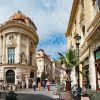
Today, the name of Armand Călinescu is preserved in the nomenclature of Bucharest through the street that connects the area of C. A. Rosetti Square with Thomas Masaryk Street. It is a street located in the center of the city, in a historic area where numerous streets bear the names of political and cultural personalities.
For those who walk today along Armand Călinescu Street, the name on the street signs may seem like merely another designation in the geography of the capital. In reality, it recalls a period when Bucharest was the center of political confrontations that would decisively influence Romania’s history.
Armand Călinescu remains a personality impossible to reduce to a single label. He was a cultivated politician and an energetic administrator. He was one of the most uncompromising opponents of the Legionary Movement and became, precisely for this reason, the main target of its revenge.
At the same time, his closeness to Carol II and his participation in the construction of the authoritarian regime represent the controversial part of his political legacy. Armand Călinescu fought against extremism, but he did so within a regime that had abandoned an important part of the democratic principles of the interwar period.
Perhaps it is precisely this contradiction that makes his story so important. The street in Bucharest that bears his name does not recall only “the man of steel” who refused to yield in the face of the Legionnaires. It preserves the memory of a politician who lived in an era in which the struggle to defend the state, authoritarianism, political violence, and the threat of extremism became intertwined in one of the most dramatic chapters in Romania’s history.
Armand Călinescu was killed at only 46 years of age, in September 1939. His political career, brutally ended by assassination, remained forever connected to the conflict with the Iron Guard. And almost a century after his death, the street in Bucharest that bears his name still recalls the fate of the politician whom his contemporaries and history called “the man of steel.”
We also recommend: Who was Major Dimitrie Giurescu and why does he have a street named after him in Bucharest