Who was Major Dimitrie Giurescu and why does he have a street named after him in Bucharest
- Articles
- 01 SEP 26
Bucharest preserves in its street nomenclature the names of people who played an important role in Romania's history, although, in many cases, their biographies are no longer known to the general public today. One of these streets bears the name of Major Dimitrie Giurescu, a Romanian officer who lost his life on the battlefield during the War of Independence of 1877-1878. His story is that of a soldier who started from the bottom of the army hierarchy, went through difficult moments and, through perseverance and courage, came to command a battalion in one of the most important confrontations of the war.
A true Romanian hero
Born in Bucharest itself, Dimitrie Giurescu was to have his name forever linked to the battles of Rahova, a locality located today in Bulgaria, where the Romanian army won an important victory during the campaign for independence. At the head of the 2nd Muscel Battalion, the major personally took part in the attack, choosing to lead his men from the front line. There he was to be killed, after having managed to inspire the dorobanți to advance towards the fortified positions of the Ottoman army.
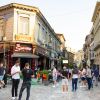
His sacrifice remained in the memory of his contemporaries, and his name was honoured through monuments and commemorations. Bucharest still has a Major Dimitrie Giurescu Street today, in the central area of the city, near Piața Romană and Calea Dorobanților, a name that recalls one of the officers who fell in the struggle for Romania's independence.
A Bucharest native who began his military career from a modest position
Dimitrie Giurescu was born in Bucharest on July 27, 1835. His path towards a military career was neither simple nor did it begin directly with obtaining an officer's rank. On September 13, 1852, while he was still very young, he was employed as a courier at the Ministry of War. It was the beginning of a connection that was to mark his entire life and which, more than a quarter of a century later, was to take him to one of the most dangerous battlefields of the War of Independence.
At a later time, after he had been assigned to a border guard unit, Dimitrie Giurescu became ill. His health problems forced him to leave military activity for a time, and he was placed in the reserve. His career could have ended then, but Giurescu chose to return to the army.
His return to military service was made as a volunteer, with the rank of an ordinary soldier, in the 1st Lancers Regiment. This detail says a great deal about his professional path. Dimitrie Giurescu did not begin as an officer and did not receive an important position from the start. He had to climb step by step through the army hierarchy, and his promotion was the result of his activity and the abilities he demonstrated while on duty.
He was promoted to sergeant and was later transferred, in the interest of the service, to the 3rd Infantry Regiment. There, his qualities began to be noticed. An important moment in his rise took place during an inspection attended by Ruler Alexandru Ioan Cuza. Dimitrie Giurescu was observed and appreciated, being exceptionally promoted to the rank of second lieutenant.
From volunteer soldier to battalion commander
The promotion to the rank of second lieutenant represented an important change in Dimitrie Giurescu's career. Having become an officer, he continued to advance, proving that the appreciation he had received had not been accidental. In 1867, after taking an examination considered brilliant, he was promoted to the rank of captain.
In the following years, the experience he accumulated in the army allowed him to receive increasingly important responsibilities. In 1875, Dimitrie Giurescu obtained the rank of major and was given command of the 1st Battalion of the 4th Dorobanți Regiment. It was a position that involved the direct leadership of a large number of soldiers and one that was to provide him with the experience necessary for what was to happen during the war.
In February 1877, only a few months before Romania entered the conflict that was to bring it independence, the battalion commanded by Major Giurescu was reorganised and received the name of the 2nd Muscel Battalion, while retaining its place within the same 4th Dorobanți Regiment. This unit was to become closely associated with the name of its commander.
The war of 1877 represented the decisive moment in Dimitrie Giurescu's life. After the proclamation of Romania's independence and the entry of the Romanian army into operations south of the Danube, the Romanian units were called upon to take part in difficult battles against the Ottoman Empire. The Muscel Battalion crossed the Danube and was directed towards the area of Rahova, a point of great strategic importance in the development of the campaign.
The road to Rahova and the desire to fight on the front line
Rahova represented an important position for the Ottoman army. The locality was well defended, and its geographical position and fortifications made the attack particularly difficult. The capture of this area was important for the Romanian-Russian military operations and for limiting the possibilities of support for the Ottoman forces in the region.
The 2nd Muscel Battalion, commanded by Dimitrie Giurescu, was among the units that were to take part in the attack. According to the accounts of how the battle unfolded, the major was not content to command his men from a distance. He wanted his unit to participate directly in the fighting and to be at the head of the attack.
This choice was to define his image in the memory of his contemporaries. Giurescu was a commander who believed that an officer had to share danger with his soldiers. For the dorobanți under his command, the presence of the major on the front line had considerable moral importance.
On the day of the attack, the Romanian artillery began to support the advance of the troops, and the dorobanți approached the enemy positions. The Muscel Battalion was directly involved in the attack on the redoubts at Rahova, under heavy fire from the Ottoman defenders. It was in front of these fortifications that the moment which transformed Dimitrie Giurescu's name into a symbol of military sacrifice in 1877 was to unfold.
“Forward, children!” and the attack that brought him death
According to the accounts preserved about the battle of Rahova, the 2nd Muscel Battalion, led by Major Dimitrie Giurescu, attacked the redoubt on the morning of November 20, 1877, beginning at 9 o'clock. During the battle, the major was at the head of his men.
At a decisive moment of the attack, he raised his sword and urged the dorobanți to move forward, calling on them to follow the example of the heroes of the past. After the first fortified position had been captured, the attack continued towards the main redoubt.
The battle became extremely dangerous. A projectile struck his sword, breaking the blade, while another bullet pierced his uniform. Despite this, the major continued to advance alongside his men. He did not retreat and did not leave the line of attack.
Only a few dozen metres from the redoubt, Dimitrie Giurescu was struck fatally in the forehead. The accounts of the time describe his fall as that of a tree cut down, with his blood reaching the regiment's flag. The image was to remain one of the most dramatic evocations of the sacrifice of Romanian officers at Rahova.
His death was recorded on the very same day in the Order of the Day of the 4th Dorobanți Regiment. For the unit he had commanded, the loss of the major was not only the disappearance of a commander, but also the death of the man who had chosen to be at the head of the attack in the most difficult moments of the battle.
How the memory of Major Dimitrie Giurescu was preserved
Dimitrie Giurescu's sacrifice was not forgotten after the end of the war. Like many of the officers and soldiers who fought for Romania's independence, he became part of the public memory dedicated to the heroes of 1877.
In the courtyard of the 30th Dorobanți – Muscel Regiment, a bronze bust dedicated to the major was unveiled in 1898. The ceremony represented a tribute to the commander who had lost his life at the head of his dorobanți.
General Alexandru Candiano-Popescu, himself a veteran of the War of Independence, also attended the event. In his speech, the general placed the names of those who had fallen at Rahova within the continuity of the military heroes of Romanian history. The idea behind his speech was clear: as long as the memory of the great fighters of the past continued to be preserved, the names of those who had died in the war for independence should not disappear either.
Thus, Dimitrie Giurescu became part of a gallery of heroes that Romanian society at the end of the 19th century and the beginning of the following century tried to keep alive through monuments, ceremonies and street names.
Why a street in Bucharest bears his name
The naming of Major Dimitrie Giurescu Street represents a tribute to a Bucharest-born soldier who died during one of the most important campaigns in Romania's modern history. The name of the street recalls not only an officer, but also the generation that fought to obtain the independence of the Romanian state.
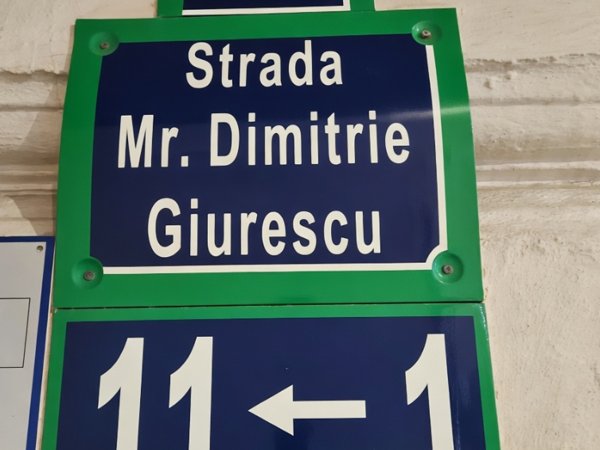
It is significant that Dimitrie Giurescu was born in Bucharest and that his name was preserved in his native city. For passers-by who walk along this street today, its name may seem like just one of the many historical names written on the blue street signs of the capital. Behind it, however, lies the story of a man who began his military career as an employee of the Ministry of War, returned to the army as an ordinary volunteer and, through work and successive promotions, rose to the command of a battalion.
Major Dimitrie Giurescu lost his life at the age of 42, at the moment when he was leading the attack at Rahova. His choice to remain on the front line and his death during the assault made him one of the symbols of the sacrifice of Romanian officers in the War of Independence.
The street that bears his name in Bucharest is, therefore, more than a simple address. It is a form of urban memory. In a city where numerous streets bear the names of personalities from culture, politics or the military, Major Dimitrie Giurescu Street recalls an essential episode in national history and the courage of those who fought for Romania's independence.
Almost a century and a half after the battles of Rahova, the major's name remains present both in the history of the War of Independence and on the map of Bucharest. For those who wish to find out who the man behind this street name was, his story is one of perseverance, duty and sacrifice: that of a soldier who began as a volunteer and died while leading his battalion towards one of the redoubts defended by the Ottoman army.
We also recommend: Major Ion Coravu, the Romanian hero of Mărăști in the First World War, has a street named after him in Bucharest