Who Was Nicolae Kirilov and Why Does a Street in Bucharest’s Sector 2 Bear His Name?
- Articles
- 29 JUL 26
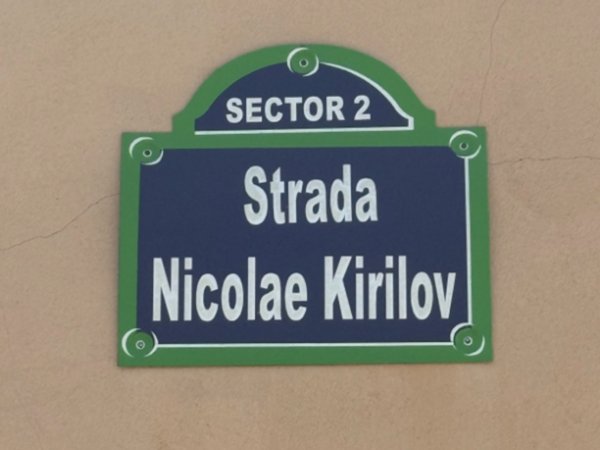
Few people walking along Nicolae Kirilov Street in Bucharest’s Sector 2 today stop to wonder who the man behind the name on the street signs was. At first glance, his name is not as well known as those of Romania’s great playwrights, actors, or directors. However, Nicolae Kirilov played an important role in the development of Romanian theatre and cinema during the first half of the 20th century. He was one of the artists who helped strengthen a generation of creators at the dawn of modern Romanian performing arts, distinguishing himself both as an actor and as a theatre director. His artistic career unfolded during a period of profound transformation for Romanian culture. At a time when Romanian cinema was taking its first steps and interwar theatre was experiencing one of its most prolific eras, Nicolae Kirilov built a discreet yet valuable professional career. He collaborated with important personalities of the time, supported the debut of authors who would later become part of Romania’s cultural history, and remained close to the great writers of his era, including Tudor Arghezi. The fact that a street in Bucharest bears his name is a form of recognition for his contribution to the artistic and cultural life of the Romanian capital. Although he is not among the most widely publicized figures of the Romanian stage, his work demonstrates that the evolution of Romanian theatre and cinema also relied on the dedication of professionals who, over time, became less familiar to the general public.
His First Steps in a Romanian Film Industry Still in Its Infancy
Nicolae Kirilov began his artistic career at a time when Romanian cinema was still in its infancy. During the first decades of the 20th century, only a handful of films were produced in Romania, and every new production represented both an artistic and a technical experiment.
His film debut came in 1923, when he was cast as a young Western-educated boyar in the historical melodrama The Gypsy Girl from the Boudoir (Țigăncușa de la iatac), directed by Alfred Halm. The film was one of the most ambitious Romanian productions of its time and was based on a novella by Radu Rosetti.
The production combined historical and melodramatic elements during a period when Romanian audiences were beginning to discover the appeal of domestic cinema. For Nicolae Kirilov, this appearance marked his first encounter with the world of filmmaking and made him one of the pioneer actors of Romanian fiction cinema.
At that time, producing a film required limited resources, modest equipment, and overcoming numerous technical challenges. Actors often came from the theatre, and stage experience proved to be a significant advantage in front of the camera. Kirilov belonged to this generation that laid the foundations of an industry that was still taking shape.
His Role in Manasse, One of the Landmark Films of the Interwar Period
Nicolae Kirilov’s film career continued in 1925, when he appeared in Manasse, directed by Jean Mihail, one of Romania’s most highly regarded filmmakers of the interwar period.
The film was an adaptation of the famous play written by Ronetti Roman and addressed a sensitive issue for the society of the time: religious intolerance and the difficulties of coexistence among the country’s various ethnic and religious communities.
Nicolae Kirilov played a supporting role, yet his participation in the production further secured his place in the history of Romanian cinema. Manasse is still regarded today as one of the defining films of the interwar era, both because of the subject it tackled and because of its artistic value.
The experience he gained in cinema would later influence his work in the theatre. His collaboration with important directors and his exposure to new acting techniques gave him a broader perspective on the performing arts.
Nevertheless, after these cinematic experiences, Nicolae Kirilov devoted almost all of his energy to theatre directing.
From Actor to Theatre Director
During the interwar period, Nicolae Kirilov established himself primarily as a theatre director. He worked within Bucharest’s theatrical institutions, including the National Theatre Studio, where he contributed to staging productions that were well received by audiences of the time.
The interwar years represented a period of remarkable vitality for Romanian theatre. New dramatic works were being written in Bucharest, modern stage concepts were being explored, and the public showed an ever-growing interest in high-quality performances.
Within this context, Nicolae Kirilov distinguished himself through the seriousness with which he approached the construction of his productions and the attention he devoted to the actors. He was not a spectacular director in the modern sense of the word, but rather one who focused on the artistic balance of each performance and on remaining faithful to the dramatic text.
His work contributed to the consolidation of a generation of directors who bridged the gap between the classical theatre of the early 20th century and the modern artistic approaches that would come to dominate the Romanian stage after the Second World War.
The Director Who Brought Valeriu Anania’s First Dramatic Work to the Stage
One of the most significant moments in Nicolae Kirilov’s career took place in March 1940.
It was then that he directed the world premiere of the dramatic poem Dochia, written only a few months earlier by an 18-year-old young man named Valeriu Anania, who would later become the renowned scholar and Metropolitan Bartolomew Anania.
At that time, Anania was virtually unknown in the theatrical world, and staging a play written by such a young author involved considerable artistic risk. Nicolae Kirilov, however, believed in the value of the text and decided to bring it to the stage.
The production featured a mixed cast consisting of both professional and amateur actors. Nina Diaconescu performed the leading role.
Dochia drew upon Romanian mythology and folklore in a poetic manner, and Kirilov’s staging helped promote an original theatrical vision. Looking back today, the performance has acquired special historical significance, as it marked the dramatic debut of the man who would later become one of Romania’s most important cultural and religious figures.
Through this artistic decision, Nicolae Kirilov demonstrated his willingness to support young talent and offer opportunities to authors who were just beginning their careers.
His Friendship with Tudor Arghezi and Bucharest’s Literary Bohemia
In the second half of his life, Nicolae Kirilov became known less for his stage work and more for his close ties to Bucharest’s literary circles.
He was one of the people who frequented the capital’s cultural milieu and developed a long-lasting friendship with the poet Tudor Arghezi. His visits to the famous house at Mărțișor were later recorded in memoirs published in cultural magazines and in volumes dedicated to the great poet.
Kirilov fondly recalled his meetings with Arghezi and recounted, with characteristic humour, that he would sometimes recite the poet’s verses even before they had been published. Surprised that his poems were already circulating among close acquaintances, Arghezi reportedly asked him:
“How do you know that poem? It hasn’t even left the courtyard yet.”
This now-famous remark illustrates the closeness between the two men and the intellectual atmosphere surrounding the Mărțișor residence.
Nicolae Kirilov’s recollections were later published, including in the cultural magazine Luceafărul in 1979, becoming valuable documentary sources for scholars interested in the life and personality of Tudor Arghezi. His accounts provide authentic details about the way the poet welcomed his friends, the conversations they shared, and the cultural climate of both interwar and post-war Bucharest.
The House He Built in Bucharest That No Longer Exists
Nicolae Kirilov’s connection with Bucharest extended far beyond his theatrical activity. Urban planning records from the interwar period show that, in March 1941, the artist collaborated with the modernist architect Ion Boceanu to build his own residence in the Romanian capital.
The project reflected Kirilov’s desire to settle permanently in Bucharest and to become an integral part of the city’s cultural life. Unfortunately, the house he built did not survive the urban transformations carried out during the communist era.
In the 1980s, when numerous historic neighborhoods of Bucharest were demolished as part of the large-scale systematization projects, Nicolae Kirilov’s home was among the buildings that disappeared.
The loss of this house is yet another example of Bucharest’s architectural heritage that was destroyed during the final decades of the communist regime, along with many other buildings that had belonged to important cultural figures.
Why a Street in Sector 2 Bears His Name
The decision to name a street in Bucharest’s Sector 2 after Nicolae Kirilov represents an effort to preserve the city’s cultural memory. Over the years, Bucharest has chosen to honor not only its most famous personalities but also individuals who made significant contributions to fields such as theatre, cinema, literature, and architecture. Nicolae Kirilov belongs to this category of creators who quietly, yet meaningfully, influenced the development of Romanian culture.
Through his work as an actor in some of Romania’s earliest fiction films, through the theatrical productions he directed during the interwar period, and through the support he gave to the dramatic debut of Valeriu Anania, Kirilov earned his place in the history of Romanian theatre. At the same time, his recollections of Tudor Arghezi became valuable documentary sources for understanding Bucharest’s cultural life.
Today, Nicolae Kirilov Street serves as a reminder of an artist whose life spanned several important stages in the evolution of Romanian culture: the beginnings of Romanian cinema, the golden years of interwar theatre, the literary circles gathered around Tudor Arghezi, and the transformation of Bucharest throughout the 20th century.
Although his name is less familiar to the general public, his contributions fully justify the place he occupies in the memory of the Romanian capital and explain why the city chose to preserve his legacy by naming a street in Sector 2 in his honor.
We also recommend: Who Was Dionisie Lupu and Why Does a Street in Bucharest Bear His Name?