Who Was Dionisie Lupu and Why Does a Street in Bucharest Bear His Name?
- Articles
- 27 JUL 26
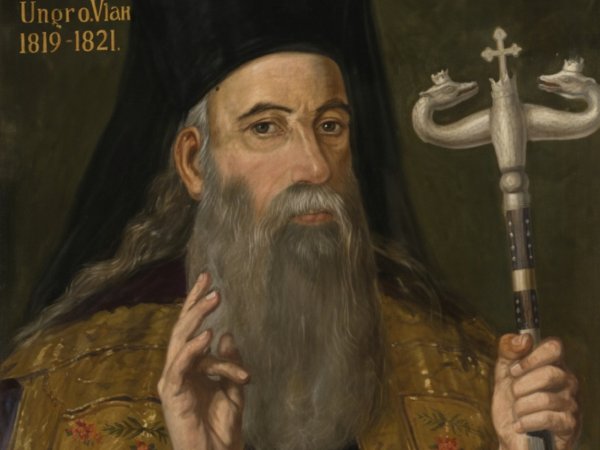
Few personalities of the early 19th century influenced the religious, cultural, and educational life of Wallachia as profoundly as Metropolitan Dionisie Lupu. His name is familiar to many Bucharest residents because of Dionisie Lupu Street, located in the center of the Romanian capital, yet few people know who the man behind this street name truly was. In reality, Dionisie Lupu was one of the most important Romanian hierarchs of his era, a reformer who sought to modernize the Church, eliminate the abuses inherited from the Phanariote period, and support the development of education in the Romanian language. His activity took place during one of the most turbulent periods in the history of Wallachia. The final years of the Phanariote regime were marked by political instability, enormous debts, conflicts between the great powers, and growing public dissatisfaction. In this context, the election of a Romanian metropolitan, after several decades during which the metropolitan throne had been occupied by Greek hierarchs, represented a symbolic moment for the affirmation of national interests. Dionisie Lupu was not only a religious leader but also a capable administrator, a supporter of culture and Romanian-language education, and a close associate of personalities such as Gheorghe Lazăr and Tudor Vladimirescu. His reforms laid the foundations for the changes that would transform church life and Romanian education in the decades that followed.
From the Son of a Boyar in Buzău to Metropolitan of Wallachia
Dionisie Lupu was born on February 25, 1769, in the village of Blăjani, in present-day Buzău County, into the family of the boyar Costache Lupu, who held the rank of clucer.
Historians do not know exactly where he received his education, although it is believed that he studied at the episcopal school in Buzău or at one of the important church schools of the period. What is certain is that from an early age he distinguished himself through his intelligence, seriousness, and interest in culture.
In 1785, he chose the monastic life and was tonsured as a monk, most likely at the Metropolitan Church in Bucharest. From that moment on, he dedicated his entire life to the Romanian Orthodox Church, gradually ascending through all the ranks of the ecclesiastical hierarchy.
In 1795, he became the abbot of Dealu Monastery, one of the most important monastic settlements in Wallachia. There, he quickly demonstrated his skills as an administrator. He supervised extensive restoration works at the monastery and was also involved in rebuilding the Saint Friday Church in Târgoviște, an important religious monument for the local community.
Later, he was ordained titular Bishop of Sevastia, and after a difficult period during which he was unjustly removed from the leadership of Dealu Monastery, he received the lifetime abbacy of Tismana Monastery. There as well, he left his mark on the monastery’s material and spiritual development, earning the respect of Romanian boyars and the clergy alike.
The experience he gained while administering these great monasteries proved decisive in his election to the highest ecclesiastical office in Wallachia.
His Election as Head of the Church and the Beginning of the Reforms
In 1819, following the resignation of Metropolitan Nectarie, the members of the national party among the boyars believed that the time had come for a Romanian to occupy the metropolitan throne. Dionisie Lupu’s election was no coincidence. He was respected for his honesty, administrative experience, and dedication to Romanian interests.
Prince Alexandru Șuțu approved the proposal, and on May 20, 1819, Dionisie Lupu was officially enthroned as Metropolitan of Ungro-Wallachia. The ceremony carried strong symbolic significance. The festive address was prepared by Gheorghe Lazăr, the founder of modern Romanian-language education, while another speech was delivered by Hieromonk Macarie, one of the great promoters of Romanian church music.
From the very first months of his ministry, the new metropolitan launched an extensive reform program. One of the greatest challenges was the enormous debt left behind by his predecessors. The financial situation was so severe that the functioning of the Metropolitanate itself was at risk.
Through careful administration and firm measures, Dionisie Lupu succeeded in reducing and paying off a large portion of these financial obligations. At the same time, he proposed that future metropolitans and bishops should no longer be allowed to contract loans on behalf of their dioceses without proper authorization, thus preventing a similar financial crisis from occurring again. His proposal was approved by the authorities of the time and became one of the most significant administrative reforms in the Church of Wallachia.
At the same time, Dionisie Lupu sought to eliminate the many abuses affecting the clergy. He intervened to limit the fees imposed on priests, ordered the protopopes to cease abusive practices, and advocated benefits for priests’ families and widows. He also worked to strengthen clerical discipline by organizing meetings and providing guidance on observing church regulations and properly fulfilling pastoral duties.
His Collaboration with Gheorghe Lazăr and His Support for Romanian Education
One of Dionisie Lupu’s greatest contributions was his involvement in the development of Romanian-language education. During his tenure as metropolitan, he also served as president of the School Board, a position that enabled him to play a decisive role in shaping education in Wallachia.
The metropolitan understood that the development of a modern society depended on the existence of schools where young people could study in their native language. For this reason, he became one of the strongest supporters of Gheorghe Lazăr, the founder of higher education in Romanian. When Lazăr established the Romanian-language school at Saint Sava in 1818, Dionisie Lupu offered him both moral and institutional support at a time when Greek teachers were trying to obstruct the project.
The metropolitan promoted the gradual replacement of Greek influence in schools with Romanian teachers. At the same time, he encouraged the opening of schools in towns and market settlements throughout his diocese, instructing protopopes to find qualified teachers capable of teaching reading, writing, arithmetic, and church music. His plan was ambitious and aimed to expand education during a period when access to schooling remained limited for much of the population.
Another project especially dear to him was the establishment of a Romanian-language school of church music at the Metropolitanate itself. He appointed Hieromonk Macarie, one of the foremost reformers of Romanian Byzantine chant, as its head, while Anton Pann, who would later become one of the best-known cultural figures of the 19th century, was among its collaborators.
His vision of education extended beyond the borders of the country. Dionisie Lupu became the first metropolitan of Wallachia to send scholarship students to study at a Western university. Four young men—Constantin Moroiu, Simion Marcovici, Eufrosin Poteca, and Ioan Pandele—were sent to the University of Pisa, with the obligation to return home and teach in Romanian schools. This initiative reflected his determination to educate an intellectual elite capable of modernizing Romanian society.
A Supporter of Printing and Romanian Culture
Dionisie Lupu understood very early that the spread of culture could not take place without the development of printing. For this reason, he paid particular attention to printing activities and the publication of religious and educational books.
During his ministry, numerous important works for the religious life of the country were printed, including the Apostolos, the Pentecostarion, and the Psalter, as well as translations of fundamental writings by Saint John Chrysostom and Saint Gregory of Nazianzus. He also encouraged the publication of several books in Greek, demonstrating that he supported cultural development while maintaining dialogue with other Orthodox traditions.
His concern for printing extended even further. He sent three young men to Buda to learn the printing trade, hoping to train specialists capable of developing the publishing activity of Wallachia.
Perhaps his boldest initiative was his attempt to publish the first Romanian newspaper with political and cultural content. In a memorandum addressed to the prince, Dionisie Lupu requested permission to publish a bilingual newspaper, in Romanian and Greek, which he called an “ephemeris.” Inspired by the Greek newspapers that supported the national awakening of the Balkan peoples, the metropolitan believed that Romanians also needed such an instrument of information and education.
The project never came to fruition, yet the very idea illustrates how modern Dionisie Lupu’s thinking was and how well he understood the importance of the press in shaping a national consciousness.
His Relationship with Tudor Vladimirescu and the End of His Ministry
The year 1821 radically changed Dionisie Lupu’s destiny. The revolution led by Tudor Vladimirescu brought an end to the Phanariote regime and opened a new chapter in Romanian history.
The metropolitan supported the movement from its very beginning. He welcomed Tudor Vladimirescu upon his entry into Bucharest and recognized him as the country’s leader. Moreover, together with several boyars, he attempted to mediate relations between the revolutionary leader and the great landowners, helping to avoid internal conflicts.
Later, Dionisie Lupu and the other bishops signed an oath of loyalty to Tudor’s movement, clearly demonstrating their support for the national cause. However, the rapid development of events and the approach of the Ottoman armies created an extremely difficult situation.
At one point, Tudor Vladimirescu prevented the metropolitan and several boyars from leaving the country, seeking their political support. After the Ottoman troops entered Wallachia, however, he released them and allowed them to travel to Târgoviște, from where they eventually took refuge in Brașov.
While in exile, Dionisie Lupu sent several memoranda to Russia, Austria, and the Ottoman Empire, requesting the withdrawal of Ottoman troops and the appointment of a native Romanian prince. His wish was fulfilled in 1822, when Grigore IV Ghica became the first Romanian ruler after the end of the Phanariote era.
Although the new prince repeatedly invited him to return as metropolitan, Dionisie Lupu declined. He cited health problems and financial difficulties, although historians believe that personal reasons also influenced his decision. Eventually, a new metropolitan was elected in 1823.
His Final Years and the Legacy He Left to Bucharest
Dionisie Lupu returned to Wallachia in 1827. He once again received the lifetime abbacy of Dealu Monastery but no longer became directly involved in its administration, choosing instead to live in his residence in Bucharest.
He died on February 17, 1831, during a period marked by a plague epidemic and the Russo-Ottoman military occupation. He was buried inside the Metropolitan Cathedral in Bucharest, and at his funeral Constantin Moroiu, one of the scholarship students he had sent to Italy, delivered the funeral oration—a symbolic gesture of gratitude from one of his former protégés.
Dionisie Lupu’s legacy is remarkable. He contributed to the Romanianization of the leadership of the Orthodox Church in Wallachia, reduced administrative abuses, supported the development of Romanian schools, encouraged the printing of books and the education of teachers, and became one of the earliest advocates of a modern Romanian press. He was also the hierarch who ordained the future Saint Calinic of Cernica, one of the most important figures of Romanian Orthodoxy.
Today, Dionisie Lupu Street, located in central Bucharest between Piața Romană and the Grădina Icoanei area, commemorates one of the men who played a decisive role in transforming Romanian society at the dawn of the modern age. It is not merely the name of a busy street in the capital but a tribute to a metropolitan who understood that the progress of a nation begins with education, culture, faith, and public responsibility. Through his reformist activity and his unwavering support for Romanian values during a period of profound historical change, Dionisie Lupu rightfully earned a lasting place in the memory of Bucharest and in the history of Romania.
We also recommend: