Who was Luigi Galvani and why does he have a street named after him in central Bucharest
- Articles
- 08 APR 26
We live in a world in which electrical energy is omnipresent. From household appliances to industrial and medical infrastructure, almost all everyday activities depend on electricity. A simple power outage can create major discomfort: we can no longer use devices, transportation is affected, and urban life suddenly becomes more difficult. However, we rarely stop to reflect on the origins of this phenomenon that is fundamental to modern civilization. Behind the discovery of electricity lies a fascinating story, in which Luigi Galvani played an essential role. His name is not only a reference in physics and biology textbooks, but also a concrete presence in the urban landscape of Romania, being given to a street in central Bucharest. But who exactly was Galvani, and why has he remained so important in history?
From theology to science: the formation of a researcher
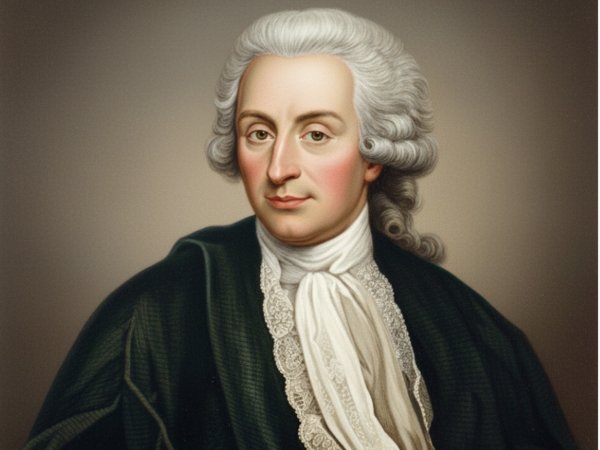
Luigi Galvani was born on September 9, 1737, in Bologna, Italy, an important European university center. Initially, his academic path did not seem to be connected to experimental science. He began by studying theology, but gradually his interest shifted toward medicine, the field in which he would truly make his mark.
After completing his studies, Galvani wrote a doctoral thesis on the formation of bones, a work that brought him recognition and opened the way to an academic career. He became a professor at the University of Bologna, where he taught anatomy starting in 1762. His activity was not limited to teaching, but also included extensive research in physiology, especially on birds.
He published studies on the structure of bones, kidneys, and the ear in birds, demonstrating a rigorous and methodical approach. However, his career was not without obstacles. In the context of the political changes generated by the French Revolution, Galvani refused to swear allegiance to the government of the Cisalpine Republic, considering it authoritarian. For this reason, he temporarily lost his position, which he later regained.
The frog experiment and the birth of a discovery
What would turn Galvani into a central figure in the history of science was his interest in electrical phenomena. In his laboratory there was often an electrostatic machine, a rudimentary device that generated electricity through friction.
Around the year 1790, during experiments on the nervous system, Galvani observed an unexpected phenomenon. While dissecting frog legs, one of his assistants touched a nerve with a metal instrument, and the muscle reacted with a sudden contraction. The coincidence seemed strange, especially since the electrostatic machine nearby was in operation.
Intrigued, Galvani repeated the experiment under different conditions. He observed that the reaction occurred only when there was a source of electricity or when different metals were involved. He continued his research both in the laboratory and outdoors, including during storms, where he noticed that lightning produced similar contractions in animal tissues.
Based on these observations, Galvani formulated the theory of “animal electricity,” arguing that living organisms contain a kind of electrical fluid that circulates through nerves and muscles. Although this hypothesis was not entirely correct, it opened the way to a deeper understanding of the relationship between electricity and living organisms.
The dispute with Volta and the appearance of the battery
Galvani’s discoveries attracted the attention of other scientists, including Alessandro Volta. He did not agree with the theory of animal electricity and decided to investigate the phenomenon from another perspective.
Volta repeated Galvani’s experiments, but reached a different conclusion: the source of electricity was not the living tissue, but the contact between two different metals. To demonstrate this, he replaced the animal tissue with conductive materials, such as paper soaked in a saline solution, and succeeded in generating electric current.
This discovery led to the invention of the voltaic pile, the first electric battery in history. Thus, even though Galvani’s hypothesis was not entirely correct, his research was fundamental to scientific progress.
Moreover, his name remained associated with instruments such as the galvanometer, used to measure weak electric currents, as well as with processes such as electroplating—the technique of coating objects with thin layers of metal.
Scientific legacy and impact on the modern world
Luigi Galvani’s contributions had a profound impact on the development of physics and chemistry. His experiments laid the foundation for later important discoveries, including the electrolysis of water and the separation of chemical elements such as sodium and potassium.
His research also influenced the discovery of the relationship between electricity and magnetism, demonstrated later in 1820 by Hans Christian Ørsted. Thus, Galvani can be considered one of the pioneers of a new scientific era.
Although his discovery seemed, at first glance, the result of chance, in reality it was made possible by rigorous work and constant curiosity. Galvani was not just a lucky observer, but a dedicated researcher, capable of recognizing the importance of an apparently trivial phenomenon.
He died on December 4, 1798, in his native city, leaving behind a legacy that continues to influence the modern world.
Luigi Galvani Street in Bucharest: location and significance
In recognition of his contributions, Luigi Galvani’s name was given to a street in central Bucharest. Luigi Galvani Street is located in Sector 2 of the capital, in a central area, near the Foișorul de Foc neighborhood and close to major arteries such as Pache Protopopescu Boulevard.
This area has a strong historical and urban character, defined by old buildings, quiet streets, and a specific atmosphere of old Bucharest. The presence of a street bearing Galvani’s name reflects the city’s tradition of honoring important figures of science and universal culture.
The naming of the street is not accidental. It represents a symbolic recognition of the impact that Galvani’s discoveries have had on the modern world, including Romanian society, which is deeply dependent on technologies based on electricity.
From the laboratory to everyday life
Today, when we turn on the light, use our phone, or travel by electric means of transport, we indirectly benefit from the discoveries initiated by Galvani. Electricity is no longer a mystery, but an essential resource, without which modern life would be impossible.
The internet, modern medicine, industry—all these fields depend on electrical energy. And behind this reality lie the contributions of scientists such as Luigi Galvani, who had the courage to explore the unknown.
His story shows us that great discoveries do not arise only by chance, but from the combination of observation, perseverance, and the desire to understand the world. And the fact that his name appears on a street in Bucharest is proof that his impact goes beyond the boundaries of time and space.
Ultimately, Luigi Galvani was not just an Italian scientist, but a pioneer, a pathbreaker of an electrical world in which we all live today.
We also recommend: What is the oldest street in Bucharest? On Smârdan Street in the Old Town, the Union of the Romanian Principalities was sealed