What legends have surrounded Pasărea Monastery for more than 200 years: the oak tree, the abbot, the marriages untied, and the famous migrating bird
- Articles
- 25 AUG 26
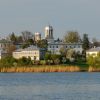
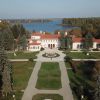
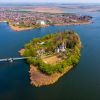
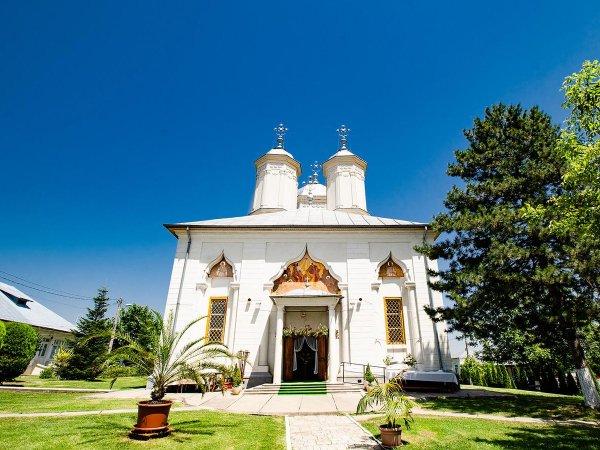
Approximately 20 kilometers from Bucharest, in a landscape where the forest, water, and tranquility create the impression of a world detached from the hustle and bustle of the capital, lies Pasărea Monastery. The monastic settlement in Brănești commune, Ilfov County, is one of the best-known places of prayer near Bucharest and, at the same time, a place around which numerous traditions and legends have been preserved. The monastery is included on the list of historical monuments, being officially dated to 1813, while the present-day complex preserves churches, monastic houses, the bell tower, and the old refectory, which has been transformed into a museum. Its history of more than two centuries is marked by dramatic moments, earthquakes, wars, looting, and social changes, but also by periods of spiritual and cultural flourishing. Around these events, stories have been woven that have survived through generations and that make Pasărea Monastery a special place. The best-known is the legend of the bird that is said to have indicated the place where the altar would be built, but it is not the only one. The old oak tree, the words of Abbot Timotei, the miracles spoken of by believers, and the tradition of the Thursday evening service have contributed to the mysterious aura of the settlement.
The bird that is said to have shown the place for the future monastery
The story of the founding of Pasărea Monastery begins in 1813, during the reign of Caragea Vodă, when Archimandrite Timotei, the abbot of Cernica Monastery, built the first wooden church here, dedicated to Saint Nicholas. This information is recorded by the Archdiocese of Bucharest, while local tradition preserved a much more spectacular story about the choice of the place.
According to the legend, three nuns asked Timotei to find them a secluded place in the forests near Cernica, where they could build a small hermitage. The archimandrite would have set out through the dense forest together with them and another monk, looking for a suitable place for the future settlement. In that forest, about which Saint Calinic would later mention that it was almost uninhabited and full of wild animals, the travelers are said to have noticed a bird that accompanied them and flew from one tree to another.
The bird would not have been an ordinary one in the eyes of those who passed down the story. Its chirping became increasingly insistent, as if it were trying to draw their attention to a particular place. Eventually, it stopped on the branches of an old oak tree. At the base of the tree there was a large anthill, and this image would acquire a special meaning in the story of the monastery’s foundation.
Timotei is said to have then stuck his staff into the ground and spoken the words through which the place was chosen for the altar: “Here shall be the altar of the church.” Then, turning toward the nuns, he blessed them, telling them to multiply like the ants in the anthill at the foot of the oak. Tradition says that the name of the future hermitage, which later became Pasărea Monastery, came precisely from the bird that guided them through the forest.
The oak tree, the ants, and the significance of a foundation
The legend of the oak tree is one of those stories in which elements of nature become symbols of a foundation considered providential. In the Romanian traditional imagination, the oak represents strength, stability, and endurance, while the ants suggest diligence, organization, and, above all, the multiplication of a community. Thus, the image of the oak around which a community of nuns would develop is not merely a picturesque detail of the story, but can also be interpreted as a metaphor for the monastery’s durability.
Indeed, the subsequent development of the settlement seems to have given this legend a special resonance. The first church was built of wood, and after the destruction and transformations of the 19th century, the complex gradually expanded. In 1834, the cemetery church was built, dedicated to the Dormition of the Mother of God, and between 1846 and 1847 the large church, dedicated to the Holy Trinity, was constructed under the guidance of Saint Calinic of Cernica.
There is also a deep connection between Saint Calinic and Pasărea Monastery. His mother, Floarea Antonescu, entered the monastery community toward the end of her life, becoming Schema-nun Filofteia and being buried here. For Calinic, therefore, the settlement was not merely a foundation located near Cernica, but also a place with a special family and spiritual significance.
Abbot Timotei and the beginnings in the middle of the Vlăsia Forests
Another important part of the story is connected to the personality of Archimandrite Timotei, the abbot of Cernica and the first founder of Pasărea Monastery. The beginnings of the settlement must be viewed in the context of the early 19th century, when the area on the edge of the Vlăsia Forests was much wilder than it is today. Church sources describe the surroundings as a difficult-to-access territory, with dense forests and swampy areas.
The first church at Pasărea, built in 1813, was made of wood and dedicated to Saint Nicholas. Some local traditions say that the timber also came from an older Bucharest church that had been demolished, while wood from the surrounding forests contributed to the construction of the new settlement. Beyond the legendary details, it is certain that in that isolated place a monastic community began to take shape, one that would survive for more than two centuries.
The first decades were not peaceful at all, however. In 1821, during the Revolution led by Tudor Vladimirescu, the nuns at Pasărea were robbed and persecuted by Ottoman troops and were forced to seek refuge. Later, the earthquake of January 11, 1838, caused significant destruction, and the original wooden church could no longer continue to serve as the center of monastic life.
The church built after the earthquake and the rebirth of the monastery
After the earthquake of 1838, the story of Pasărea Monastery entered a new stage. The small cemetery church, built in 1834 and dedicated to the Dormition of the Mother of God, remained an important part of the complex, but the growing community needed a larger place of worship. In 1846-1847, the abbot of Cernica, Calinic, the future saintly hierarch, coordinated the construction of the large church dedicated to the Holy Trinity.
The new masonry church became the center of the complex and was decorated with frescoes in the Neo-Byzantine style. According to the Archdiocese of Bucharest, the works were carried out with the support of the faithful and through the efforts of Mother Superior Domnica. The church was consecrated in the presence of Metropolitan Neofit and Prince Gheorghe Dimitrie Bibescu.
The monastery’s resistance in the face of misfortune would become one of the central themes of its history. During the First World War, the settlement once again went through shortages and looting, while the nuns continued their monastic life. During wartime, some of the nuns from Pasărea also worked in hospitals, and the monastery continued to be associated with the idea of refuge and support.
The legend of untied marriages and the mystery of the Thursday service
Among the most widespread contemporary traditions associated with Pasărea Monastery is the one connected to the Thursday evening service. According to accounts about the place, numerous believers come here for prayers that they associate with the untying of suffering, curses, or problems that they believe prevent them from having a personal and family life. In popular tradition, the expression “untied marriages” has thus become widespread, used by those who hope to remove obstacles that they perceive as standing in the way of marriage or a relationship.
This reputation has transformed the Thursday service into one of the best-known aspects of spiritual life at Pasărea. Accounts about the place describe the large number of believers who attend, some of them coming from considerable distances. For them, prayer is primarily a moment of reflection and a search for divine help, while stories about people who are said to have found peace or rebuilt their family lives have, over time, contributed to the special aura of this ritual.
It is important, however, that such accounts be regarded as traditions and testimonies of believers, rather than as medical facts or verifiable demonstrations of miraculous healing. Their value lies in the faith of those who participate and in the way people have interpreted the experiences they have lived through in this space. Precisely this combination of prayer, hope, and tradition has contributed to Pasărea Monastery’s reputation as a place where people come when they are going through difficult periods.
The relics, the museum, and the stories that continue to attract pilgrims
Pasărea Monastery is important not only because of its legends. Inside the complex there is a valuable collection of ecclesiastical art, icons, paintings on wood and glass, embroideries, old books, and other objects of historical and artistic value. The old refectory now houses the monastery museum, where pieces illustrating the evolution of the monastic community over time can be discovered.
A special place within the complex is also occupied by the memory of sculptor Gheorghe D. Anghel, who spent the final years of his life at the monastery. The museum preserves plaster casts of his works, while the artist’s grave is located in the monastic cemetery. Thus, Pasărea is not only a place of prayer, but also a space where religious history meets Romanian artistic heritage.
Within the complex there are also the large Holy Trinity Church, the cemetery church, the bell tower, the monastic houses, the museum, and other buildings that form a complex with a well-defined identity. The complex was restored and modernized between 1967 and 1975, and subsequent restoration works were carried out on the frescoes.
Pasărea Monastery, a place of refuge between history and legend
Throughout more than two centuries, Pasărea Monastery has witnessed profound transformations in Romanian society. It has survived revolutions, wars, earthquakes, looting, and administrative changes, while preserving its spiritual function. During the Second World War, the tradition of the place also preserved the memory of personalities who found peace and refuge here, contributing to the image of the monastery as a space of protection in troubled times.
Today, documented history and memory passed down through stories coexist around the monastery. Documents confirm the foundation in 1813, the construction of the churches, and the main stages in the development of the complex, while the legend explains, in a symbolic language, why precisely that place was chosen. The bird, the oak tree, the anthill, and the staff of Abbot Timotei together form a story that has become part of the spiritual identity of the settlement.
Perhaps this is also the explanation for the fascination that Pasărea Monastery exerts on those who come here. Some arrive for prayer, others for the services they have heard about, for the museum, for the architecture, or simply for the tranquility of the surrounding forest and waters. Each person may find a different reason to return, but the legend of the bird remains the invisible thread connecting the beginning with the present.
More than two hundred years after its foundation, the story seems to repeat itself in a symbolic form. If, long ago, a bird is said to have led a group of people through the forest toward the place of the future altar, today people are led here by their own searches: faith, hope, the need for tranquility, or the desire to find an answer. And Pasărea Monastery continues to remain, like the place chosen in the legend, a stopping place between the world and prayer, between history and story, between what can be documented and what people choose to believe.
We also recommend: Comana Adventure Park, the fairytale place for thrill-seekers of all ages near Bucharest