Unusual Sports You Can Try in Bucharest
By Eddie Țone
- Articles
- 09 SEP 26
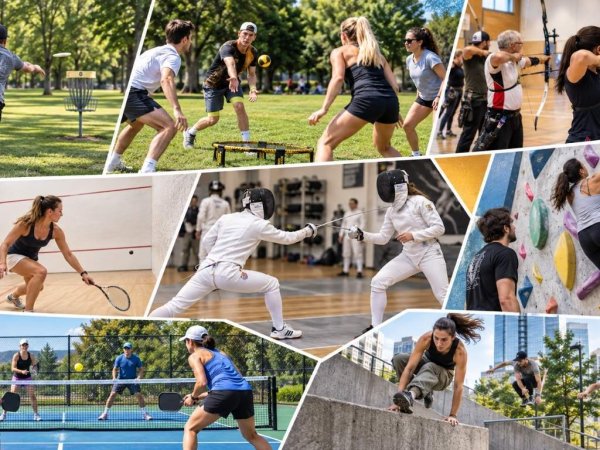
If you're an amateur athlete, your relationship with Bucharest is probably fairly predictable. You run through Herăstrău, cycle wherever you're allowed to, lift weights in a gym with mirrors large enough for a small Viennese palace, and, when spring arrives, rediscover tennis. Beyond this familiar repertoire, however, there is a much more curious sporting side of Bucharest, populated by archers, fencers, climbers, parkour practitioners and people who throw discs at metal baskets or sprint around a circular net roughly the size of a coffee table.
Some of these disciplines have had active communities for years. Others have only recently taken root in the capital. Disc golf, for example, got Romania's first permanent course installed in an urban public park in the summer of 2026. Roundnet already has established clubs in Bucharest. Bucharest's parkour community dates back to 2005. And in a building on Calea Rahovei, you can learn archery at 18 metres, the classic distance used in indoor competitions.
The capital suddenly becomes a little more interesting once the treadmill disappears from the equation.
The practical information below was checked for September 2026. Club schedules and prices may change, so checking before you go is always a good idea, especially for activities that require advance booking. Let's do some sport. Just a slightly different kind of sport.
Disc Golf in Verdi Park – Golf Where the Club Has Been Replaced by a Frisbee
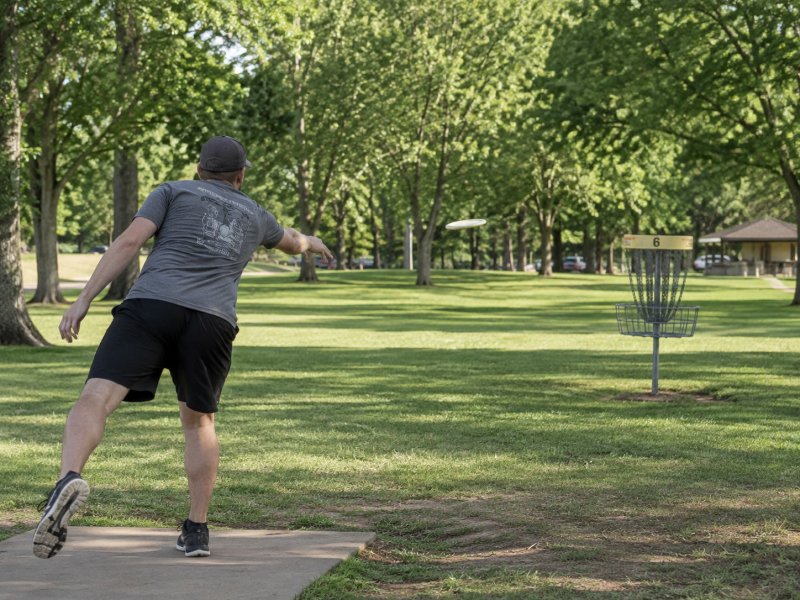
Of all the sports on this list, disc golf probably offers the best ratio between how strange it looks at first and how simple it is to play your first round. Players throw a disc toward a metal basket fitted with chains and try to complete the course in as few throws as possible. There are starting positions, “holes,” par, scoring and strategy, just like in golf, while checked trousers and country club membership remain entirely optional.
Since June 2026, Verdi Park in Floreasca has been home to the first permanent disc golf course installed in an urban public park in Romania. Disc Golf Romania has installed nine Innova DISCatcher PRO28 baskets here, and each basket can be played from two different tee positions, allowing an 18-hole round to be configured. The course has a par of 55 and measures approximately 1,150 metres.
Access is free, with no reservation required and no fence separating the course from the rest of the park. In practice, it functions like any other park, except that every now and then you will see people among the trees staring intently at colourful flying discs.
To get started, a single disc is enough. The official Disc Golf Romania page explains the basic rules and where you can play.
The sport is already moving into a more serious competitive stage as well. Bucharest Open 2026, taking place from 18 to 20 September, begins with its first round in Verdi Park, followed by two more rounds at Clubul Diplomaților. The competition has PDGA C-tier status, and the tournament director is Alexandru Cioacă. The announced participation fee is €25.
In other words, something that only a few years ago would probably have attracted puzzled looks from people sitting on a park bench is now developing its own calendar, rankings and international competitions.
Roundnet – Four People, a Circular Net and a Lot of Sprinting
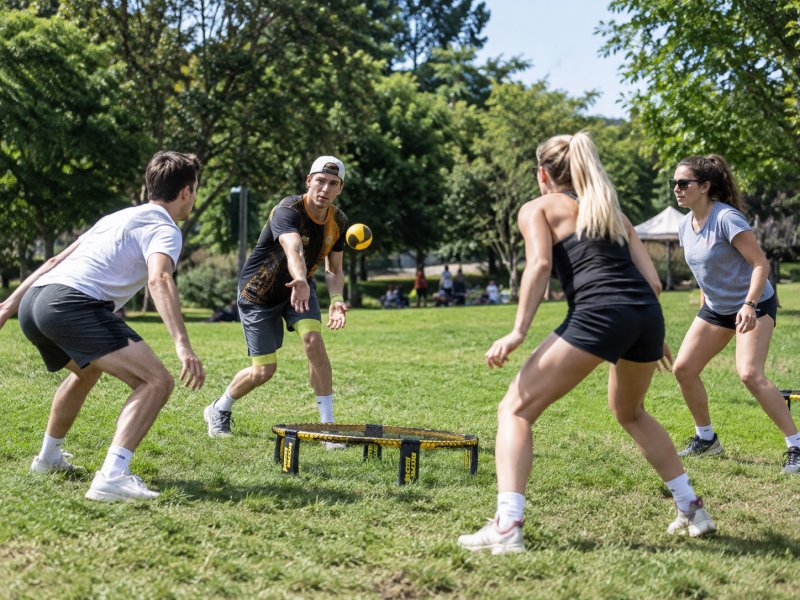
Roundnet, frequently known by the commercial name Spikeball, looks at first like the result of a meeting between volleyball and a trampoline designed for hamsters. Two teams of two players move around a circular net positioned close to the ground. Each team is allowed up to three touches before hitting the ball onto the net, after which the opposing team takes over.
The game is played in 360 degrees, so the traditional concept of “my half of the court” disappears very quickly. That is also where much of the spectacle comes from. Players constantly change positions, sprint, dive after the ball and attempt angles that, from the outside, look like the product of a geometry lesson invented after two coffees.
Bucharest has sports clubs dedicated to roundnet, including ACS Magic Roundnet București and ACS Roundnet Club București. The Roundnet România organisation lists Tineretului Park and Izvor Park as the main meeting points for the local community.
Playing times are arranged within the community, so for anyone who wants to give it a try, the easiest option is to contact the Bucharest players using the details published by Roundnet România.
A separate list of affiliated clubs and clubs currently being established is available on the organisation's website.
For anyone coming from tennis, volleyball or badminton, the first few rallies may feel somewhat familiar. A few minutes later, the circular running begins, and your body quickly discovers that geometry is perfectly capable of producing muscle soreness.
Archery – Robin Hood, Sector 5 Version
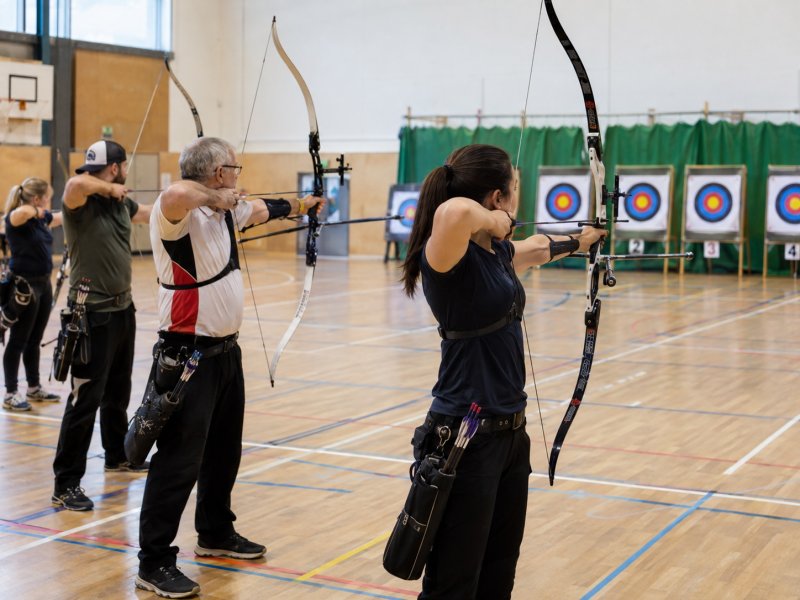
At White Tiger Archery Club, located at Calea Rahovei 301, there is a dedicated indoor archery range. The maximum shooting distance is 18 metres, an important benchmark because 18 metres is the distance commonly used in indoor competitions.
The club's published schedule is Monday to Friday from 18:00 to 20:30. On Saturdays, there are three shooting sessions: 10:00–12:00, 13:00–15:00 and 15:30–17:30. The club recommends booking in advance.
For beginners, a one-and-a-half-hour introductory session costs 70 lei, with equipment included. The Starter membership includes six introductory sessions for 290 lei and is valid for three months. At advanced level, a two-hour session costs 50 lei, while renting a package including bow, arrows, quiver and protective equipment costs 30 lei. You can find the full rates here.
The interesting part begins after the first few arrows. From the outside, archery looks almost static. In practice, body position, bow tension, breathing, movement sequence and string release turn every shot into a small examination of self-control.
And the target, sitting quietly at the other end of the room, develops the remarkable ability to appear smaller after every miss.
Fencing – The Elegant Duel That Burns a Surprising Amount of Energy
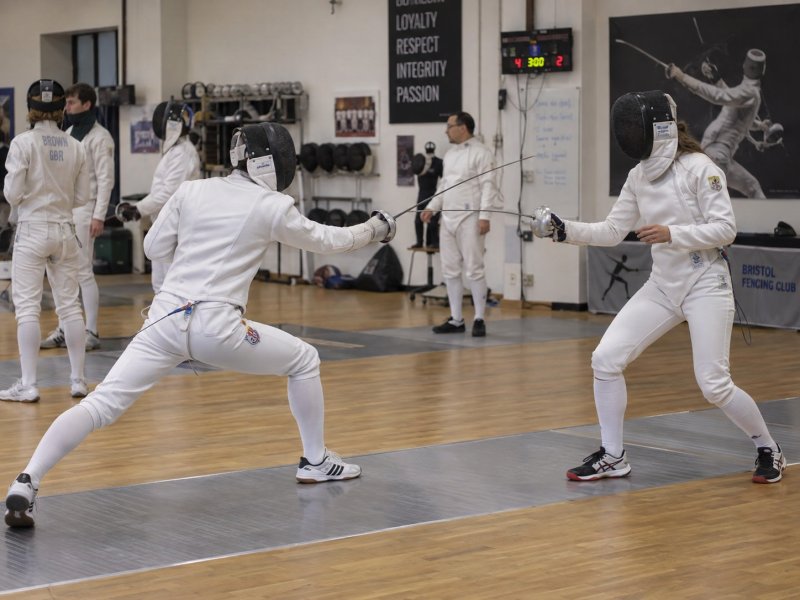
Fencing retains an aristocratic image, probably because of the masks, weapons and vocabulary rooted in French. After a few sequences of movement up and down the piste, however, aristocracy gives way to sweat. The sport combines explosiveness, precision, tactics and reaction speed in a way that sometimes resembles chess played by two people in an enormous hurry.
Academia de Scrimă operates in two locations in Bucharest. The first is at the Steaua Sports Complex, Bd. Ghencea 35, while the second is at School No. 195, on Strada Lunca Bradului 2.
At Ghencea, the published schedule includes training sessions on Mondays and Wednesdays from 17:30 to 19:00, Tuesdays and Thursdays from 08:00 to 10:00, plus Saturdays from 08:30 to 10:30. At School No. 195, sessions take place on Tuesdays and Thursdays between 17:00 and 19:30.
For adults, the monthly subscription costs 400 lei. A beginner lesson is 70 lei, while equipment rental costs 30 lei per day. Details about prices and schedules are available here.
The fact that adult beginners are welcome makes fencing attractive even to people who have long since passed the age when their parents could sign them up for sport after maths class. An Olympic career can safely remain tucked away in an imaginary drawer, but the combination of reflexes, physical conditioning and tactics works extremely well at any age suited to this level of effort.
Parkour and Freerunning – Seeing the City as a Course
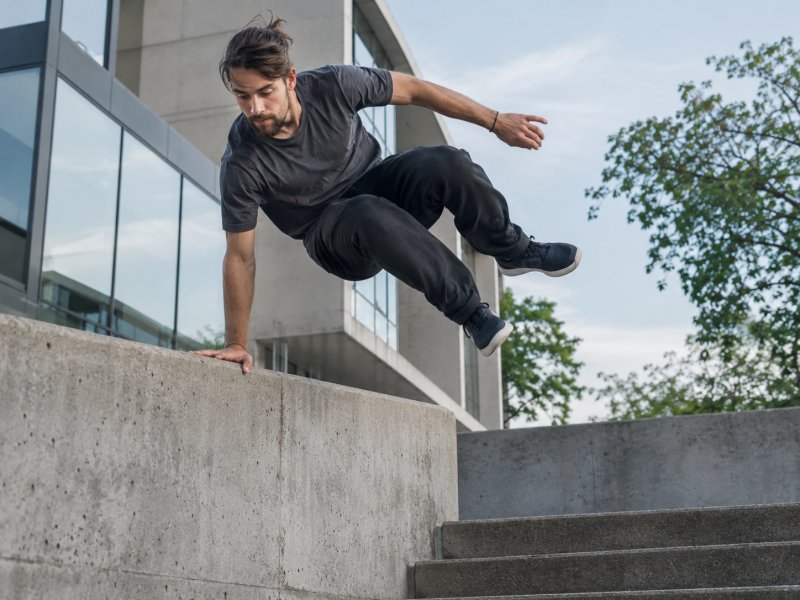
Parkour spent many years in popular culture represented by young people jumping over walls in videos filmed with shaky cameras. Practised seriously, however, the discipline involves method, progression and a great deal of technique. Training covers landings, balance, movement, jumps, body control and efficient obstacle crossing, while freerunning adds a more acrobatic and expressive component.
Traceurs România describes itself as the first Romanian parkour and freerunning community, founded in 2005. Current classes are aimed at teenagers and adults as well, with the club's main age group covering people from 10 to 60 years old.
Training combines functional warm-ups, cardio, balance, technique, free application of movements, body conditioning and stretching. There are parkour classes, freerunning classes and formats that combine the two disciplines.
Published prices start at 60 lei per session, while group-class memberships range between 200 and 300 lei per month. A private session costs 150 lei. Bookings and available options are listed on the Traceurs România website.
For the average Bucharest resident accustomed to treating a kerb as an adversary and an escalator as a blessing, parkour can produce a fairly radical change in perspective on urban furniture.
Bouldering – Climbing, Puzzle Solving and Permanent Negotiations with Gravity
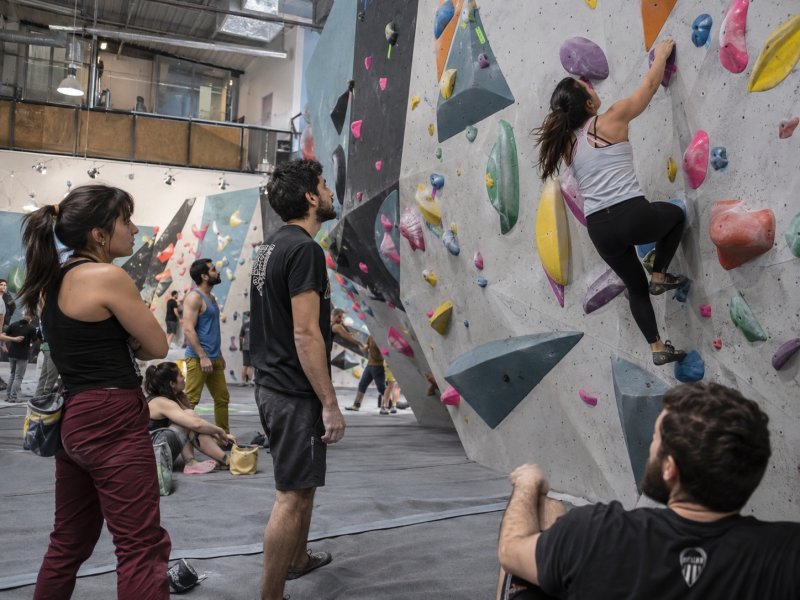
Bouldering means climbing relatively short routes without ropes, above specially designed safety mats. Each route, often referred to as a “problem,” consists of a sequence of holds and movements.
The name seems particularly appropriate. After three failed attempts, a hold sitting two handspans away can begin to acquire the dimensions of an existential crisis.
Natural High București operates inside the APACA complex, Building D, at Bd. Iuliu Maniu 7. The gym, which opened in 2023, has approximately 1,200 square metres dedicated to climbing and bouldering, while the climbing wall reaches a height of ten metres.
The current schedule is Monday to Friday from 07:30 to 22:00 and weekends from 10:00 to 20:00.
Adults who are just getting started can book a one-and-a-half-hour introductory bouldering session, with an instructor fee of 70 lei. A four-session programme costs 280 lei, while the eight-session version costs 560 lei. Gym admission and rented equipment are charged separately, and classes require advance booking.
Bouldering combines strength with mobility, coordination and route-solving. Two people with similar fitness levels can reach the same hold using completely different movements. Sometimes the arms win. Sometimes technique does. Quite often, the winner is simply the person who noticed where the foot was supposed to go ten minutes earlier.
Pickleball – The Sport With a Pickle-Like Name That Is Taking Over the Courts
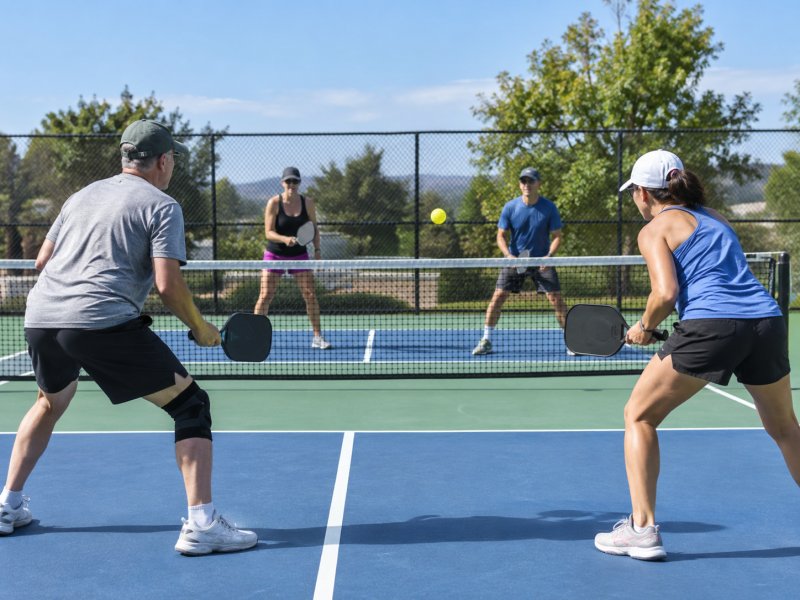
Pickleball uses compact paddles, a perforated plastic ball and a court smaller than a tennis court. The serve is hit underhand, rallies can become very fast, and the area immediately next to the net has the official and wonderfully memorable name of the “kitchen.”
The sport was invented in the United States in the 1960s and has grown enormously over the past two decades. Its name continues to generate debate, including two historical versions of how the term “pickleball” originated. One thing remains certain: very few sports become international phenomena while carrying a name that sounds quite so at home on a burger menu.
In Bucharest, Pickleball y Cerveza operates at Strada Oltețului 30. The Booksport platform lists daily opening hours from 07:00 to 24:00, with online booking, floodlights for night play and equipment rental available.
The indicative rate published in September 2026 is around 100 lei per hour, with the note that prices may vary depending on the day and time slot.
The compact court and pace of the ball make the first rallies relatively accessible, while the game gradually becomes far more tactical through placement, volleys and soft shots played close to the net. At first it seems rather friendly. After an hour, your T-shirt provides a somewhat better-documented assessment of the sport's intensity.
Squash – One Room, Two Rackets and Very Little Time for Philosophy
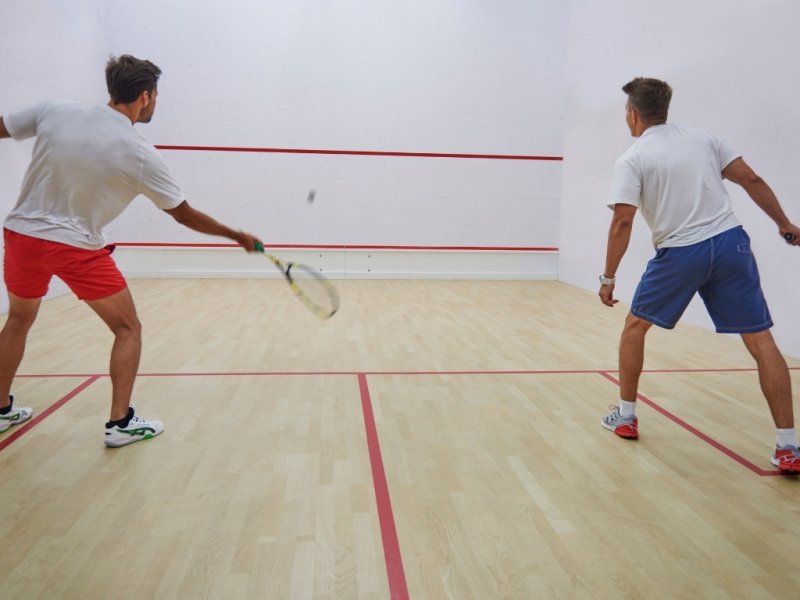
Squash occupies a curious territory between established sport and a discipline that quite a few Bucharest residents still associate with films in which two British executives discuss the stock market between shots.
The ball is hit toward the front wall, while the side and back walls are also part of the game. Rallies unfold quickly, directions constantly change, and those few metres of court suddenly begin to feel surprisingly spacious when the ball is heading straight into the opposite corner.
AeroSquash operates at Romexpo and offers several squash courts, including a glass-walled court.
According to the club's published rates, one hour costs 64 lei from Monday to Friday between 08:00 and 16:00, and 90 lei between 16:00 and 23:00. On weekends and public holidays, the published rate is 90 lei per hour. Renting a racket costs 5 lei per session. The club also offers training with an instructor.
For anyone starting from scratch, a few explanations about positioning and movement can fairly quickly transform chaotic running into an actual game. A squash ball has a remarkable ability to demonstrate just how late a person can react after being completely convinced, a fraction of a second earlier, that they were standing exactly where they needed to be.
In the same general family, padel has also grown rapidly in Bucharest, with courts appearing at Pescariu Sports & Spa, Padel One, Padel World, PadelMania and Magic SMASH Club. Its combination of tennis, squash and team play makes it very easy for amateurs to pick up. For places to play, prices and the specific characteristics of the sport, there is a separate guide on Bucuresti.ro.
Bucharest's Sporting Side Gets More Interesting When You Choose Something Unusual
The pleasant thing about the options above is how easy it can be to get started. Choosing a new sport is a little like choosing a restaurant on a street full of terraces. The familiar option offers comfort, but the stranger-looking door at the end of the street may give you the story you later tell with far more enthusiasm.
In Bucharest, that door might lead to a climbing wall, a fencing piste, a disc golf basket, a pickleball court or an indoor range where people shoot arrows from 18 metres away. For a city that spends a considerable portion of its day sitting in traffic, alternatives like these represent an admirable use of free time.
You may also like: Lia Manoliu, the National Stadium in Bucharest and the story of the first female athlete in the world who participated in 6 consecutive editions of the Olympic Games