Lia Manoliu, the National Stadium in Bucharest and the story of the first female athlete in the world who participated in 6 consecutive editions of the Olympic Games
- Articles
- 26 MAY 26
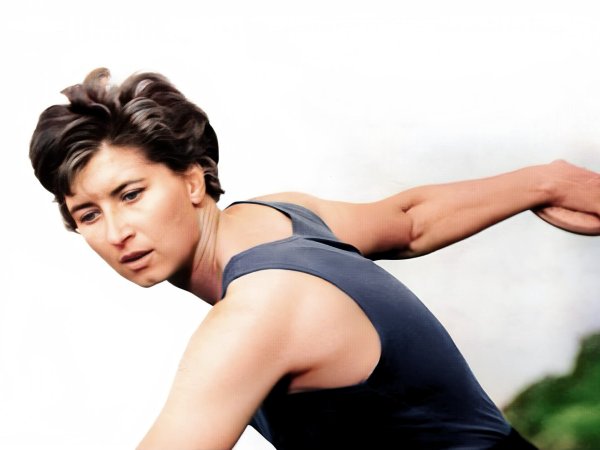
Romanian sport has offered over time numerous personalities who made history through their performances, but few names managed to go beyond the boundaries of one discipline and become symbols of sporting excellence worldwide. One such name is Lia Manoliu, one of Romania’s most important athletes and a respected figure in the international Olympic movement. Her impressive career, marked by historic participations in the Olympic Games and by a longevity rarely encountered in performance sport, made her name forever connected to Romanian sport and to the National Stadium in Bucharest. Lia Manoliu was not only an Olympic champion, but also a woman who demonstrated that ambition, discipline and perseverance can transform an athlete into a role model for entire generations. Her story is one about work, sacrifice and overcoming limits in a period when women’s sport did not benefit from the visibility and support it enjoys today.
Childhood and the beginnings of a great champion
Lia Manoliu was born on April 25, 1932, in Chișinău, during a complicated period for Europe and for Romania. From childhood she showed extraordinary energy and a natural inclination toward physical activity. Sport was going to become very quickly an essential part of her life.
Interestingly, the road toward Olympic performance did not begin directly in athletics. At only 13 years old, Lia Manoliu practiced tennis, a sport that developed her coordination and discipline. Later, she also experimented with other sports disciplines, such as table tennis, volleyball and basketball. In basketball she even became a member of the Știința Bucharest team, a sign that her sporting talent was authentic and versatile.
In all these disciplines she surpassed the level of a simple amateur, obtaining appreciated results in national competitions. This varied experience was going to contribute decisively to the formation of a complete athlete, capable of understanding both the rigors of physical training and the importance of mental discipline.
At the age of 16 she discovered her true vocation: athletics. She began with the high jump, but later turned toward throwing events. After a period in which she practiced shot put, Lia Manoliu chose to specialize in discus throw, the event that was going to transform her into a legend of world sport.
The road toward Olympic performance
The 1950s represented a period in which Romanian sport was beginning to make its place in international competitions, and Lia Manoliu quickly became one of Romania’s reference athletes. In parallel with training and competitions, she continued to place emphasis on education as well, graduating from the Faculty of Energetics within the Polytechnic Institute of Bucharest in 1954.
This combination between sporting performance and intellectual preparation defined her entire career. Lia Manoliu demonstrated that success in sport can go hand in hand with education and professional development.
The first great international performance came at the Olympic Games in Helsinki, in 1952. Although she was only 20 years old, the Romanian athlete managed to rank sixth in the discus throw event, thus becoming the first female athlete from Romania who brought points to our country at the Olympic Games.
Participation in the competition in Finland represented the beginning of an absolutely impressive Olympic career. In an era when athletes’ preparation did not benefit from modern technology and resources, Lia Manoliu built her performances through intense work, perseverance and extraordinary ambition.
The first female athlete in the world present at six consecutive editions of the Olympic Games
One of the most spectacular achievements in Lia Manoliu’s career was her participation in six consecutive editions of the Olympic Games. This extraordinary performance was also recorded in the “Guinness Book of Records”, transforming her into an emblematic figure of world sport.
The Romanian athlete was present at the Olympic Games in Helsinki 1952, Melbourne 1956, Rome 1960, Tokyo 1964, Mexico City 1968 and Munich 1972. Her longevity in high-performance sport was remarkable, especially in such a demanding discipline as discus throw.
The first Olympic medals came in the 1960s. In Rome, in 1960, Lia Manoliu won the bronze medal, confirming that she was part of the world elite of athletics. Four years later, in Tokyo 1964, she repeated the performance and obtained another bronze medal.
The supreme moment of her sporting career took place at the Olympic Games in Mexico City, in 1968. There, Lia Manoliu managed to win the gold medal in discus throw, becoming Olympic champion and entering definitively into the history of Romanian sport.
Her victory had enormous significance. It was not only the triumph of one athlete, but also the confirmation that Romania could produce champions capable of dominating international competitions. The success obtained in Mexico transformed her into a national symbol and into one of the most admired athletes of the time.
A career built through discipline and continuity
Lia Manoliu’s performances were not limited only to the Olympic Games. Throughout her career, she was 12 times national champion and seven times Balkan champion, dominating profile competitions for years.
What impressed especially about Lia Manoliu was her consistency. She remained at a very high level of performance until the age of 40, something extremely rare in world athletics. In a discipline that requires both physical strength and mental resistance, she managed to maintain her competitiveness for more than two decades.
Retirement from competitive activity came in 1972, after participation in the Olympic Games in Munich. Even though she left the sporting arena, Lia Manoliu never moved away from the Olympic movement and from Romanian sport.
The experience accumulated in international competitions, her solid general culture and the fact that she spoke fluently five foreign languages — French, English, German, Russian and Italian — helped her stand out also within international sports structures.
Activity in the leadership of Romanian sport
After ending her sporting career, Lia Manoliu dedicated her energy to the administration and development of Romanian sport. In 1973 she became vice-president of the Romanian Olympic Committee, and in 1990 she was elected president of the institution.
She occupied this position until her death, in 1998, contributing decisively to the reorganization and support of Romanian sport during a period of major political and social changes. She was appreciated for seriousness, diplomacy and the capacity to represent Romania at international level.
In parallel with her sporting and administrative activity, Lia Manoliu also had a political career. In the 1990-1992 legislature, she was elected senator for the municipality of Bucharest.
Her international prestige was confirmed through numerous distinctions. The International Olympic Committee awarded her the Olympic Order Bronze Collar in 1975, the “Woman in Sport” Trophy in 1990 and the Centenary Trophy in 1994. Also in 1975, the UNESCO director-general offered her the International Fair Play Award for the year 1974.
These distinctions rewarded not only sporting performances, but also the exemplary way in which Lia Manoliu represented the Olympic spirit.
The “Lia Manoliu” National Stadium, symbol of Romanian sport
The enormous importance that Lia Manoliu had for Romanian sport caused her name to be given to one of the most important sports complexes in the country. The National Stadium in Bucharest carried for a long time the name “Lia Manoliu”, as a sign of respect for her exceptional contribution to the development of Romanian sport.
The “Lia Manoliu” National Sports Complex functions as a public institution under the subordination of the National Agency for Sport and was established through ministerial order in 1991. It has its headquarters in Bucharest, on Basarabia Boulevard, and represents one of the most important sports centers in Romania.
The main role of the complex is to ensure optimal training conditions for athletes from Olympic and national teams, with the purpose of obtaining important results at European, world and Olympic competitions.
The sports base administered by the “Lia Manoliu” Complex includes fields, buildings, special constructions and modern equipment intended for athletes’ preparation. Both national and international sports competitions are organized here, as well as training camps for performance athletes.
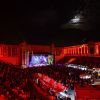
During periods when sports activities are not scheduled, the complex can host cultural events, concerts or other activities dedicated to the general public. Thus, over time the space became not only a sports center, but also one of the most important points of interest for major events in Bucharest.
The legacy left by Lia Manoliu
Lia Manoliu died on January 9, 1998, but her legacy continues to inspire entire generations of athletes. Her story demonstrates that authentic success is not built overnight, but through years of work, discipline and total dedication.
She was more than a great champion. She was a model of elegance, intelligence and perseverance. She represented Romania with dignity on the greatest sporting arenas of the world and contributed decisively to the development of the Romanian Olympic movement.
The fact that her name is associated with one of the most important sports complexes in the country represents a natural recognition of her value. The “Lia Manoliu” Stadium and National Sports Complex remain symbols of performance and of the Olympic spirit that the great champion represented throughout her entire life.
In the history of world sport, Lia Manoliu will remain forever the first female athlete who participated in six consecutive editions of the Olympic Games, but for Romania she represents much more: the image of a champion who transformed passion for sport into a true life lesson.
We also recommend: The Republicii Stadium and the Forgotten History of the Capital: Bombed During World War II, Completely Destroyed in Communism