The stars of interwar Bucharest: Floria Capsali, Romania’s greatest ballerina, fled the war to build the first ballet school in our country
- Articles
- 26 MAR 26
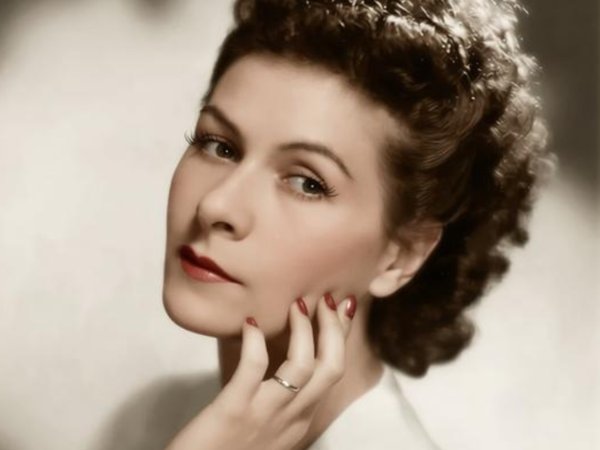
In the vibrant interwar Bucharest, where art, culture, and modernity intertwined in a fascinating rhythm, an exceptional figure of dance stood out: Floria Capsali. Considered the greatest ballerina of Romania and one of the most important personalities of choreographic art of the 20th century, her destiny was marked by courage, talent, and an unshakable will. The story of her life is not only an artistic one, but also a deeply human one, crossed by wars, losses, and rebirth. From a difficult childhood to the status of pioneer of Romanian ballet, Floria Capsali managed to build a legacy that continues to inspire entire generations.
Childhood marked by war and refuge
Floria Capsali was born on February 25, 1900, in the city of Bitolia, at that time under the domination of the Ottoman Empire, today part of North Macedonia. From her very first years of life, her destiny was influenced by political instability and by the conflicts that were shaking the Balkans.
The Balkan Wars forced the Capsali family to leave their home and seek refuge in Romania. This experience left deep marks on the soul of the future ballerina, especially as it was followed by the unexpected death of her father. Despite these harsh blows, Floria showed from childhood a rare resilience.
Her education was complex and diversified. She attended both the Romanian primary school and the French school Saint Vincent de Paul, which offered her a special cultural openness and a solid foundation for her future artistic career.
Artistic formation and the discovery of vocation
The settling of the family in Bucharest, in 1913, represented a decisive moment in Floria Capsali’s life. Here she attended the Central School, an environment that stimulated her interest in art, music, and culture.
After completing high school, she chose to continue on an artistic path, enrolling at the Stoenescu Theatre Academy and later at the Conservatory in Bucharest. Although she studied singing and music theory, her true calling was dance.
During this period, she had the opportunity to sing in the Patriarchate choir, but dance remained the center of her inner universe. Her talent did not go unnoticed, and a scholarship offered her the chance to study abroad, opening the way to the great stages of Europe.
The years of formation in Paris and the meeting with great masters
In 1921, Floria Capsali left for Paris, where she would spend almost a decade training alongside the most important masters of European ballet. She studied at the Grand Opera School, under the guidance of Christine Kerff, where she refined her technique and expressiveness.
A defining moment in her career was the meeting with Enrico Cecchetti, one of the most renowned teachers of the time. He had worked with legendary artists such as Vaslav Nijinsky or Anna Pavlova and had a major influence on Floria’s evolution.
Under Cecchetti’s guidance, Capsali strengthened her technique and acquired a rigorous artistic discipline. Her talent was quickly noticed, and the Italian master sensed her exceptional potential.
In addition to these masters, she also worked with other important teachers, such as Nicolas Legat and Leo Staats, accumulating a vast and diversified experience. During her stay in France, she attended ballet performances from all over the world, which broadened her artistic horizon and influenced her style.
The return to Romania and the transformation of the choreographic scene
After completing her studies, Floria Capsali returned to Romania, bringing with her not only solid knowledge, but also a modern vision of dance. In the same year, she gave her first recital in Bucharest, marking the beginning of an impressive career in the country.
She began to create choreographies for famous works, such as “Papillons” by Robert Schumann or “Mephisto Vals” by Franz Liszt, contributing to the modernization of the Romanian choreographic repertoire.
An innovative aspect of her activity was her interest in authentic Romanian folk dance. Participating in ethnographic research coordinated by Dimitrie Gusti, Capsali managed to integrate folkloric elements into classical ballet, creating an original and authentic style.
The first ballet school in Romania
In 1924, Floria Capsali founded the first ballet and choreography school in Romania, an essential moment for the development of dance in the country. This institution quickly became a center of excellence, where young artists could learn both classical techniques and elements inspired by Romanian traditions.
Among her students was Gabriel Popescu, later considered one of the most important Romanian ballet dancers. Through her pedagogical activity, Capsali contributed decisively to the formation of a new generation of artists.
Her school was not only a place of learning, but also a space of creation and innovation, where dance was seen as a complex form of artistic expression.
Personal life and artistic collaboration
Floria Capsali’s personal life was closely linked to the world of art. In 1926, she married the sculptor Mac Constantinescu, an important artist of the time.
The collaboration between the two was remarkable. Mac Constantinescu contributed to the creation of sets and costumes for Floria’s choreographic performances, adding visual value to her productions.
This relationship was not only a personal one, but also a professional one, based on mutual respect and a shared passion for art. Together, they had a significant impact on the Romanian artistic scene.
Activity at the National Opera and official recognition
In 1938, Floria Capsali was appointed ballet master at the National Opera Bucharest, where she reorganized the troupe and introduced a more structured system, with a larger number of soloists.
This period highlighted not only her artistic talent, but also her organizational abilities. She contributed to the development of the institution and to the promotion of ballet as a major art in Romania.
She also held the position of director of the Romanian Opera and played an important role in the development of the Romanian Rhapsody ensemble. Her activity deeply influenced the artistic culture of the country.
In 1967, she was awarded the title of “Emeritus Master of Art,” an official recognition of her exceptional contribution.
The legacy of a legend of Romanian dance
As a tribute to her contribution, in 1998, the Choreography High School in Bucharest was renamed the “Floria Capsali” Choreography High School. This symbolic gesture reflects the lasting impact she had on Romanian dance.
Her legacy is an impressive one: she trained generations of ballet dancers, modernized Romanian ballet, and created a bridge between tradition and innovation.
Today, Floria Capsali remains a fundamental landmark in the history of dance in Romania. Her story is proof that talent, supported by work and courage, can overcome any obstacle and transform a life marked by difficulties into an artistic legend.
We also recommend: The stars of interwar Bucharest: Oleg Danovski, the Slavic Sphinx who founded the first ballet theatre in Romania