The map of Bucharest's "good" neighborhoods has been redrawn. The north is still pricey, but it's no longer the only place worth looking
- Articles
- 03 SEP 26
Ten years ago, the question "where's a good place to live in Bucharest" had a simple answer: as close to the center as you could afford, or as far north as possible, toward Herăstrău and Pipera. Everywhere else was, largely, just a matter of budget. That's shifted. Public and private money has moved toward Sectors 3, 4 and 6, and neighborhoods that were considered fallback options a few years ago have picked up identities of their own — each with its own crowd and its own reasons to matter.
Pipera, the price of a short commute
Pipera is still the benchmark for the premium end of the market, but the logic behind it has changed since a decade ago. It's no longer just about a house with a garden on the edge of town — it's about calculated proximity: mid- and senior-level employees choosing to live a short walk from the office to skip rush-hour traffic on DN1. The presence of international schools — British Council, American School — acts as a price multiplier: a home near one of them can rent for double what a similar place a few kilometers away would fetch.
The numbers back this up. Two-bedroom rents start at €1,000, and sale prices have doubled over the past decade, according to real estate agents active in the area. The tenant base is mostly expat families, managers, and entrepreneurs — a group less sensitive to economic swings, which keeps demand stable even in shakier periods. What you pay for here isn't the area's old prestige; it's the strict arithmetic of time saved in traffic.
Tineretului and Timpuri Noi, where the office moved next to the park
Until recently, Sector 4 carried the reputation of a "working-class dormitory" — a block-heavy area with little going for it beyond price. Tineretului and Timpuri Noi have broken that mold, pushed along by a mix of metro access, universities, and new office space.
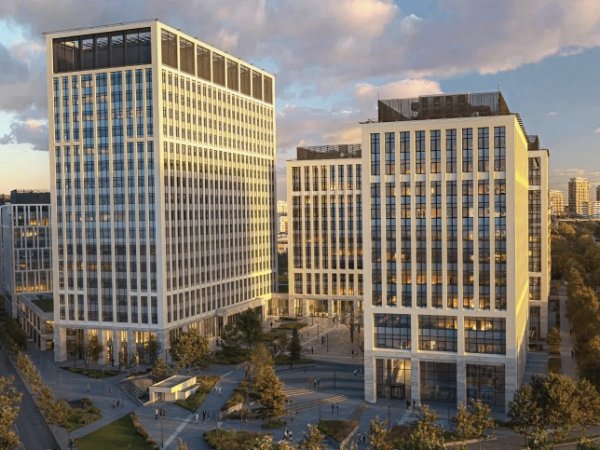
Timpuri Noi Square recently entered its second development phase, adding two new office buildings with an estimated investment of over €100 million. Restaurants, cafés, and gyms have sprung up around the project — the kind of infrastructure that keeps employees around after hours. "Titu Maiorescu" and "Spiru Haret" universities bring a steady flow of students, and Tineretului Park remains one of the few large green spaces in the southern part of the city, a short walk from the Tineretului and Timpuri Noi metro stations, both served by lines M1 and M3.
The result is an area where rent sits below northern levels, but where office and transit infrastructure keeps closing the gap with the city center. For a young professional working in the area, the commute has shrunk noticeably compared to five years ago.
Titan, the growth nobody clocked from the mall
Titan evolved differently than Pipera or Sector 4 — more quietly, without aggressive marketing campaigns, but steadily. A two-bedroom apartment in the Titan–Dristor area sold for about €1,380 per square meter in November 2021. By May 2026, the same type of apartment was trading at €2,068 per square meter, with an average total price above €106,000.
The growth isn't driven by a single project but by a combination of factors that built up over time: Alexandru Ioan Cuza Park, known locally as Parcul IOR, with over 80 hectares of lakes and jogging paths; two metro lines, M1 and M3, putting Piața Unirii a quarter hour away with no transfer; and ParkLake, the mall built right at the edge of the park, which introduced a type of urban space rarely seen in Bucharest — you cross from the mall into the park in a matter of seconds. Independent cafés that have opened in recent years around the park and the metro stations have changed the feel of streets that used to be strictly residential.
Militari, the neighborhood that waited decades for a park
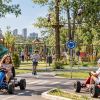
Titan has IOR, Tineretului has the park of the same name, Drumul Taberei has its own — Militari stayed, for a long time, the only large Bucharest neighborhood without an equivalent. That changed in 2023, with the opening of Parcul Liniei, built on a former 8-hectare landfill, with a 1.5-kilometer bike path, playgrounds, outdoor gym equipment, and ping-pong and teqball tables.
Beyond the park, the extension of metro line M5 connected the city's west more directly to the center, and the Grozăvești–Politehnică area has drawn office space and IT campuses, fed by its closeness to the technical universities and to the A1 highway. Sector 6 as a whole went through a major overhaul of streets, sidewalks, and neighborhood alleys, along with new kindergartens and afterschool programs. The result: an affordable area that gained exactly what it was missing — a green space of its own and a faster link to the rest of the city.
What ties these four stories together
None of these neighborhoods changed for a single reason. Pipera runs on the math of commute distance and the pull of international schools. Sector 4 runs on the combination of metro, universities, and new offices. Titan runs on the slow accumulation of a big park, two metro lines, and a mall built into the green space. Militari runs on one park that made up for years of going without. The line between a "fallback" neighborhood and a sought-after one no longer comes down to distance from downtown alone — it comes down to how many of these pieces have stacked up, over time, in the same place.
Photo: tnsquare.ro