Ernest Broșteanu, the General Who Helped Facilitate the Union of Bessarabia with Romania, Has a Street Named After Him in Bucharest
- Articles
- 07 OCT 26
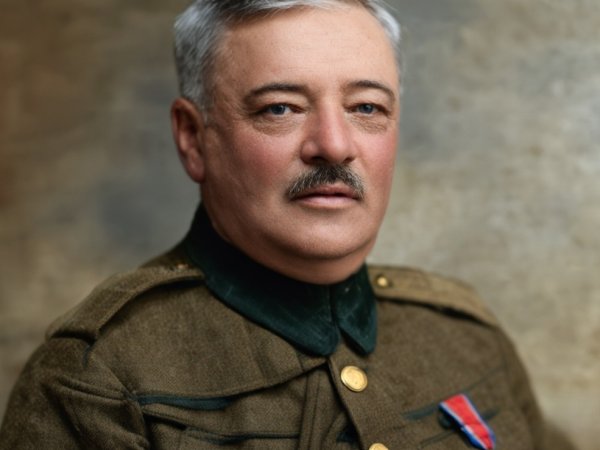
The name of General Ernest Broșteanu is closely linked to one of the decisive moments of 1918, the year in which the historic provinces inhabited by Romanians began, one after another, to break away from the old empires and draw closer to Romania. A career military officer who took part in the fighting in Dobruja and in the Battle of Mărășești, Broșteanu came to the forefront of events in Bessarabia at an extremely complicated moment, when the collapse of Russian imperial authority had been followed by anarchy, armed conflicts, and instability. In January 1918, the 11th Infantry Division, commanded by Ernest Broșteanu, crossed the Prut and advanced toward Chișinău. Its official mission was connected with restoring order and protecting military facilities and transports in a territory where the local authorities could no longer control the situation. However, the presence of the Romanian army also had a major political consequence: it allowed the Sfatul Țării and the institutions of the Moldavian Democratic Republic to continue their activity at a time when Bolshevik pressure had become extremely strong. Today, the general’s memory is also preserved through a street named after him in Bucharest’s Sector 1. The thoroughfare appears in the official records of the local administration as General Ernest Broșteanu Street.
From the Dobruja Front to Command of the 11th Division
Ernest Broșteanu was born on January 24, 1869, in Roman, Neamț County, and pursued a military career during a period when the Romanian army was undergoing an extensive modernization process. He graduated from the Officers’ School and later from the Higher War School, gradually advancing through all the stages of a military career. Before the First World War, he held several positions within the army, and the experience he gained during this period contributed to his development as a commanding officer. He died in Bucharest on June 6, 1932.
The First World War would provide the context in which his name would enter Romania’s military history. During the 1916 campaign, Broșteanu fought on the Dobruja Front and was wounded, later returning to active service. In 1917, he took command of the 11th Infantry Division, a unit with which he took part in the fighting at Mărășești. The National Archives explicitly mention his service on the Dobruja Front and at Mărășești, as well as the fact that, in 1918, the same commander entered Bessarabia with the 11th Division.
By the end of 1917, the situation in Bessarabia had rapidly deteriorated. The Russian Revolution and the disintegration of the former tsarist army left behind retreating military formations, weapons depots, and an administration facing major difficulties in exercising its authority. At the same time, the Bessarabian national movement was taking steps toward establishing its own institutions.
On December 2, 1917, the Moldavian Democratic Republic was proclaimed, and on January 24, 1918, its independence was declared. At the same time, the Sfatul Țării, established as Bessarabia’s representative body, was attempting to manage an extremely unstable political and military situation. It was in this context that the request for Romanian military assistance must be understood.
The Entry of the Romanian Army into Bessarabia
The decision to send Romanian troops across the Prut was made under circumstances in which the chaos in Bessarabia threatened both the population and the supply of the Romanian front. Documentary sources from the National Library of the Republic of Moldova and the Virtual Museum of the Union show that the Romanian authorities decided to intervene in order to restore order and protect military transports and depots.
On January 13, 1918, Romanian troops led by Ernest Broșteanu entered Chișinău. The 11th Infantry Division advanced at a time when Bolshevized forces were attempting to control the capital of Bessarabia and prevent the Moldavian authorities from carrying out their activities. Broșteanu thus became the central military figure of the Romanian intervention during those days. Historian Alberto Basciani records that, on the same day, the general informed the Romanian government that his troops had achieved their initial objectives.
The presence of Romanian soldiers must not, however, be separated from the political context of the moment. The Sfatul Țării had not been dissolved, nor had it relinquished its own authority. On the contrary, one of the messages Broșteanu conveyed to the Bessarabian representatives was that the Romanian army had not come to prevent the province’s political organization, but to help restore order. The Virtual Museum of the Union preserves testimonies according to which the general told the representatives of the Sfatul Țării that the people of Bessarabia had to organize their political life according to their own decisions.
In southern Bessarabia, the Romanian military operation was carried out simultaneously by other units, while the Bolshevized forces withdrew toward the Dniester. The intervention reduced the military pressure on Chișinău and allowed the local institutions to function in a more stable environment. From this perspective, Broșteanu’s role in the events preceding the Union was important, even though the decision to unite did not belong to him and was not made by the Romanian army.
How Broșteanu Contributed to Bessarabia’s Path Toward Union
On March 27, 1918, the Sfatul Țării voted for the union of Bessarabia with Romania. The result was 86 votes in favor, three against, and 36 abstentions, out of all those present at the solemn session. The declaration adopted the principle of the union of the Moldavian Democratic Republic, within its historic borders, with Romania.
It is important to present Ernest Broșteanu’s role in this sequence of events accurately. The general did not “achieve” the union in a political sense, nor was he the one who voted for Bessarabia’s incorporation into Romania. The decision belonged to the Sfatul Țării. However, the Romanian military intervention he led contributed to removing a situation of anarchy and protecting the institutions that were to make the decision. For this reason, Broșteanu may be regarded as one of the military officers who created the security conditions necessary for the political process that led to the union.
The documents preserved in Ernest Broșteanu’s personal collection at the National Archives are relevant to the way his actions were viewed by his contemporaries. The collection contains letters of thanks addressed to the general by the Bessarabian Nobility Club of Chișinău and by other Bessarabian cultural societies. The existence of these documents demonstrates that the 1918 military intervention was perceived by certain groups within Bessarabian society as support at a time of crisis.
Broșteanu also received numerous distinctions for his military service. Among the decorations associated with his career were the Order of Michael the Brave, the Legion of Honour, and the Commemorative Cross of the 1916–1918 War. His career did not end with the events in Bessarabia. After the war, he held important positions in the Romanian army, including commander of the Border Guard Corps and, later, Inspector General of the Infantry.
General Ernest Broșteanu Street in Bucharest
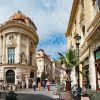
Today, Bucharest residents encounter the general’s name on a thoroughfare in Sector 1. General Ernest Broșteanu Street is located in the central area of the capital, in the Romană district, and its name appears in the register of streets administered at sector level.
The presence of his name on the map of Bucharest is a discreet form of urban remembrance for a figure whose destiny intersected with one of the most important moments in the history of modern Romania. For those who walk along the street named after him today, Ernest Broșteanu may seem to be merely a name on a plaque. Behind that name, however, stands a military officer who, in January 1918, led the 11th Division across the Prut at a time when Bessarabia’s future was still uncertain.
The Union of March 27, 1918, was the result of a complex political process involving the leaders and representatives of Bessarabia, the Romanian authorities, and the international context created by the collapse of the Russian Empire. The army did not decide on behalf of the Sfatul Țării, but it provided military support during a period when public order and the very existence of local institutions were under threat. Ernest Broșteanu stood at the center of this intervention.
More than a century later, his name remains linked to the events of January 1918 and to the path that would lead, several months later, to the historic vote of the Sfatul Țării. The street in Bucharest thus preserves not only the memory of a general, but also the memory of a period when the territory between the Prut and the Dniester became the scene of political and military transformations that would permanently change the map of Eastern Europe.
We also recommend: General Ioan Emanoil Florescu, founder of the Romanian Army, has a street bearing his name in the center of Bucharest