Dragobete in Bucharest: 6 Romantic Places Most People Don't Know About
- Articles
- 24 FEB 26
There's a Bucharest that runs parallel to the tourist one — more intimate, quieter, less rushed. A city where you can spend an afternoon without navigating tour groups or menus in four languages. For Dragobete, Romania's traditional celebration of love on February 24th, here are a few places from that other version of the capital worth discovering.
Parcul Ioanid
Corner of Polonă, Aurel Vlaicu and Dumbrava Roșie streets, Sector 2
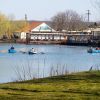
Laid out in 1870 on land purchased by bookseller George Ioanid, the park covers a single hectare — the size of a place that chose to stay small. A lake with a pavilion, a small waterfall, a bridge, narrow paths and a handful of statues you come across by chance among the trees. All of it a few hundred metres from Piața Romană, but entirely removed from its pace.
The architectural setting around it adds to the atmosphere: 25 villas built around 1910 by some of the era's most important architects — Ion Mincu, Ion Berindei and Horia Creangă — each in a different style, all facing the street rather than the park. The interior stays hidden from view, almost secret.
Reachable on foot from Piața Romană metro station in about 800 metres.
Pasajul Macca-Villacrosse
Entrance from Calea Victoriei (near the Telephone Palace) and from Strada Eugeniu Carada, Sector 3
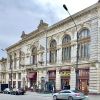
Built in 1891 to a design by architect Felix Xenopol, the passage takes the form of an elongated horseshoe covered with amber-tinted glass. The light that filters through it at certain hours transforms everything — the people, the café tables, the muffled noise from outside — into something with soft edges.
Villacrosse, who gave the passage half its name, was a Catalan architect trained in France who received the building as a dowry upon marrying the daughter of dragoman Petros Serafim. Before becoming a passage, the space housed Bucharest's first Stock Exchange. In the evening, with the lights on, it looks entirely different from during the day — worth seeing both ways.
"Dimitrie Brândză" Botanical Garden
Șoseaua Cotroceni 32, Sector 6
Founded in 1860 at the request of physician Carol Davila, the garden stretches across 18 hectares in the Cotroceni neighbourhood. In summer it draws visitors. In February, the paths are almost empty — and the greenhouses are the real reason to come now.
Built between 1973 and 1976 across 2,500 square metres, they house around 3,000 species from Africa, India, Indonesia and South America — orchids, carnivorous plants, tropical water lilies, palm trees reaching 18 metres high. Stepping inside with 3 degrees outside and 25 within, warm humid air and the smell of tropical vegetation, is one of the most unexpected experiences Bucharest offers in winter.
- Winter hours (16 Oct–15 Mar): Tuesday–Sunday 9:00–17:00
- Trams 41 and 61 stop nearby
Casa Maură (The Moorish House)
Strada Corbeni, the Armenian Quarter, Sector 2
On a narrow street in the Armenian Quarter, a few minutes from Foișorul de Foc, stands a building that combines Dutch Renaissance architecture with Flemish, Moorish and Neo-Byzantine elements. The façade of exposed brick and glazed tiles is unique in the capital — a construction that seems to have arrived from another city and decided to stay.
It's admired from the street, with no ticket and no opening hours. It works well as a stopping point on a walk through the Armenian Quarter — a route with interesting architecture and a slower pace than the tourist centre.
The MNAC Café
Palace of Parliament, Calea 13 Septembrie 1–3, entrance E1, Sector 5
The café of the National Museum of Contemporary Art sits in the courtyard of the Palace of Parliament. The contrast is part of the experience: you enter through a gate showing your ID, pass the guards, and arrive at a relaxed space with a terrace, in the quiet of a neighbourhood with no foot traffic. A coffee or a glass of wine with the Palace as backdrop is an image Bucharest rarely offers.
Access via entrance E1, wing E4. Hours vary — worth checking on the MNAC website before visiting.
The Courtyard of Palatul Suțu
Bulevardul I.C. Brătianu 2, Sector 3
Built in 1834, one of the few Neo-Gothic buildings in the capital now houses the Bucharest City Museum. The inner courtyard, accessible to museum visitors, is a place that surprises with its quiet given the busy boulevard just outside. The stone, the arches and the proportions of the building make this courtyard a setting that deserves more attention than it gets.
- Hours: Tuesday–Sunday 10:00–18:00
- Ticket: 20 lei adult, 5 lei children
Dragobete doesn't call for a restaurant reservation or a flawless itinerary. Sometimes a small park where you can hear a waterfall, amber light through old glass, or the warm air of a tropical greenhouse in the middle of winter is enough. Bucharest has all of it — it just tends to keep things hidden.
Also recommended Valentine’s Day in Bucharest: Low-Budget Romance, No Luxury Price Tag