Dark Tourism in Bucharest: Sites of Repression, Death and Tragedy That Have Become Part of the City's Collective Memory
By Eddie Țone
- Articles
- 27 OCT 26
Bucharest has a talent for hiding difficult things in plain sight. You can walk past a former political prison every day and see nothing more than an old building. You can visit Bellu Cemetery to pay your respects to Eminescu and Caragiale, only to discover, a few paths further along, enough funerary stories to keep a screenwriter busy for an entire television season. You can cross the city centre just minutes away from a Holocaust memorial, then carry on towards a café, with the same ease with which Bucharest mixes historical periods, trams and improvisation.
This is roughly where what tourism scholars call dark tourism, or thanatourism, begins. The term refers to visiting places directly associated with death, suffering, imprisonment, political violence or disasters. International researchers have been studying the phenomenon for nearly three decades, and academic studies devoted specifically to such destinations have already appeared in Romania, including research on Bellu Cemetery.
Bucharest has plenty of material for such an itinerary. Fort 13 Jilava, Malmaison, Bellu Cemetery, the Holocaust Memorial, the sites of the January 1941 pogrom and Colectiv belong to very different chapters of history. What they share is a direct connection to real death or suffering. Dark tourism begins where tragedy lies at the very heart of a place.
But once we reach this point, an uncomfortable question arises: why would we want to visit places like these?
Bellu Cemetery, where funerary tourism becomes an academic subject
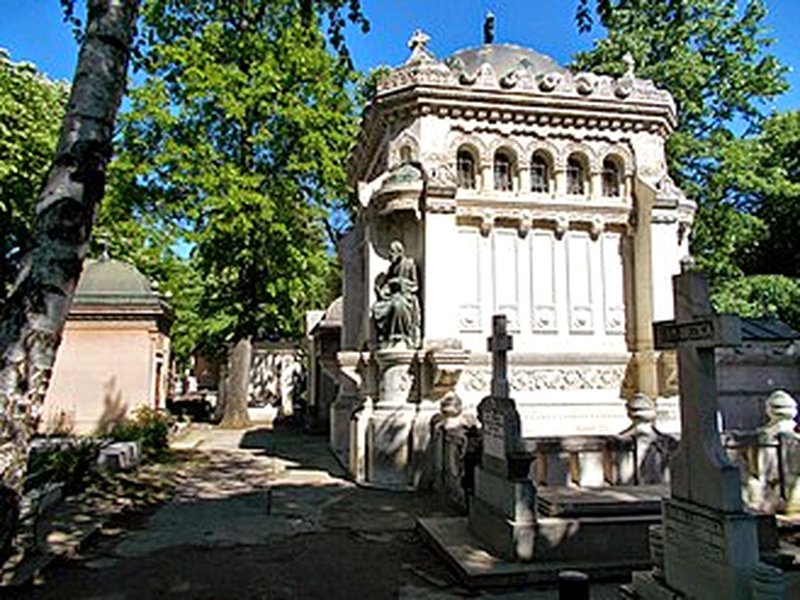
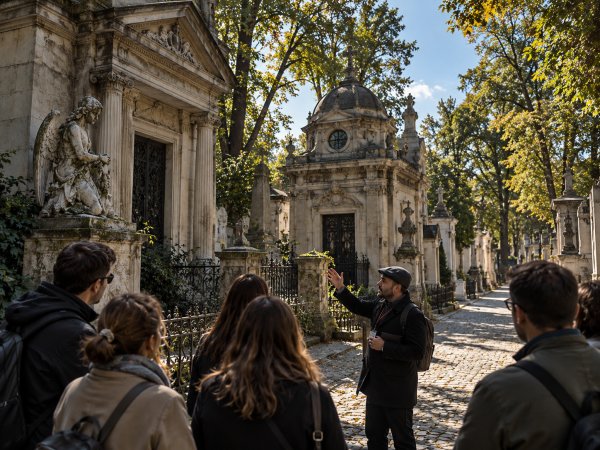
If there is one place in Bucharest that academic literature explicitly identifies as a dark tourism destination, it is Bellu Cemetery.
A study published in 2023 in CACTUS – Journal of Tourism Business, Management and Economics examines Romanians' perceptions of Bellu Cemetery as a dark tourism attraction, exploring visitors' motivations, preferred funerary monuments and the ethical questions surrounding tourism in a cemetery. Another academic study, published in 2025, considers the possibility of developing Bellu into a major tourist destination within this particular niche.
It is an almost textbook example, because Bellu is simultaneously an active cemetery, a historical monument, an open-air museum of funerary sculpture and a place of cultural pilgrimage. Eminescu, Caragiale, George Coșbuc, Mihail Sadoveanu and Amza Pellea attract visitors through their biographies. Other graves draw attention because of their architecture, legends or the circumstances surrounding the deaths of those buried there.
In 2025, AGERPRES reported on a digital map of the cemetery developed to promote funerary tourism. The map catalogued more than 140 notable figures and monuments, some accompanied by 3D scans and QR codes. The project's initiators said they had been inspired by visits to major European cemeteries that had become tourist attractions.
Bellu also reveals the gentler side of the phenomenon. Visitors come because of... death, but stay for the art, history and biographies. This helps explain why researchers sometimes treat cemetery tourism as a distinct category. The atmosphere can be contemplative, and the macabre element gradually gives way to cultural heritage. Even darkness comes in different shades, doesn't it?
Fort 13 Jilava, dark tourism at its most disturbing
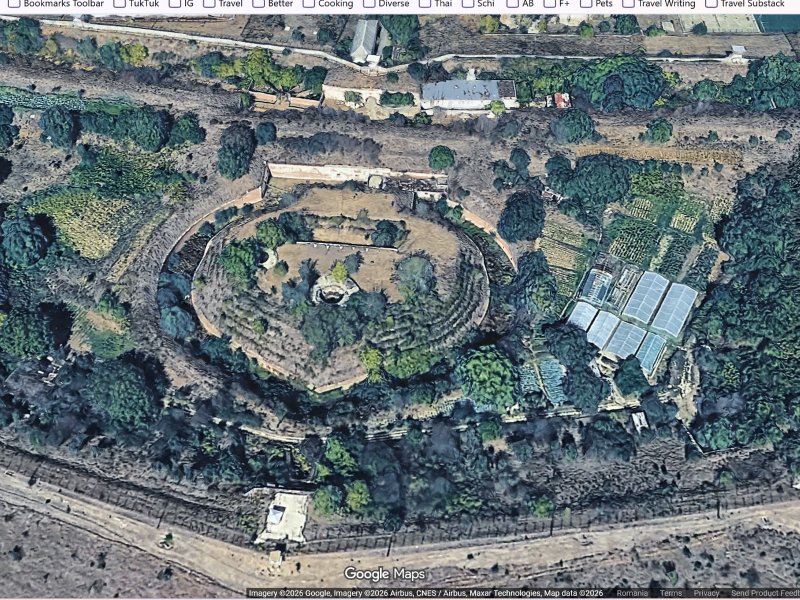
At Jilava, any ambiguity disappears. Fort 13 belongs to the system of fortifications built around Bucharest in the nineteenth century. Its subsequent history turned it into one of Romania's best-known sites of political imprisonment.
The Institute for the Investigation of Communist Crimes and the Memory of the Romanian Exile (IICCMER) describes it as a major transit point within the communist prison system, a place through which numerous political prisoners passed and where executions were carried out. The institute created a virtual tour of Fort 13 precisely because physical access remains severely restricted, as Bucharest-Jilava Penitentiary still operates within the same complex. The tour presents detention conditions and the biographies of people imprisoned or executed there.
Testimonies from former prisoners give the site a human dimension that its walls alone could hardly convey. Ion Sarion, arrested in 1958 at the age of 24, recalled passing through Uranus and Malmaison before being transferred to Jilava in April 1959. Hunger, violence and sleep deprivation feature prominently in his memories.
IICCMER has also organised educational visits to Fort 13. In 2018, the itinerary known as the "Tour of Communist Prisons" began here, with former political prisoner Octav Bjoza acting as guide. The site thus became part of an institutionalised form of remembrance tourism.
Fort 13 offers perhaps the clearest lesson about the ethics of dark tourism in Bucharest. The cells, corridors and prison artefacts have tremendous visual power. Yet the stories of the people must remain at the centre. Otherwise, the architecture of suffering risks becoming little more than scenery.
Malmaison, the prison hidden within the city
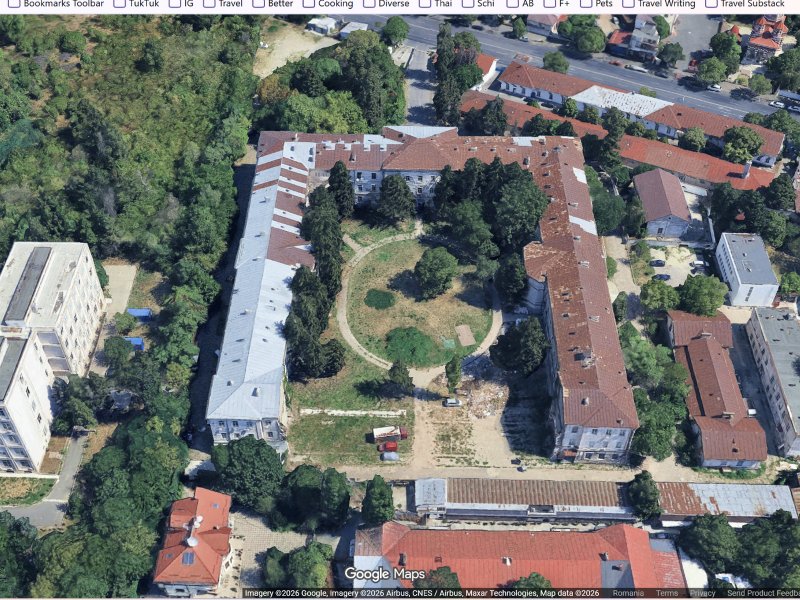
Malmaison works differently. The building stands on Calea Plevnei, in an area crossed daily by thousands of Bucharest residents. Seen in passing, it looks like just another imposing structure from the city's military past. Its history, however, takes a considerably darker turn.
The complex was built in the nineteenth century for military purposes. During the Antonescu regime, it also served as a prison, and after 1948 it became a Securitate detention and interrogation centre. The Sighet Memorial estimates that thousands of prisoners passed through Malmaison.
Among the people associated with imprisonment or interrogation here are Corneliu Coposu, Nicolae Steinhardt and Ecaterina Bălăcioiu-Lovinescu, the mother of Monica Lovinescu. Radio Free Europe documented the building's history and testimonies concerning the interrogations conducted within its walls.
In an interesting twist of fate, part of the complex now houses artists' studios and galleries. In 2026, the Sfântul Gheorghe–Malmaison Barracks complex was officially designated a historical monument. The result resembles layers of transparency placed one over another. The same architectural spaces where the Securitate once interrogated political prisoners now accommodate exhibitions and creative studios. For dark tourism, Malmaison could become one of Bucharest's most compelling stops precisely because of this physical continuity.
The Holocaust Memorial, where dark tourism becomes remembrance tourism
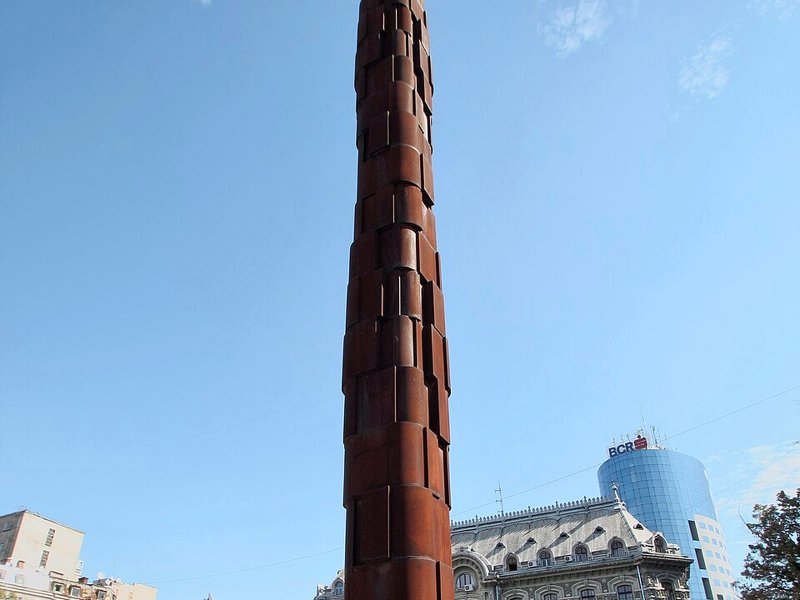 Photo: Foto: Cristian Chiriță / Wikipedia
Near Bucharest City Hall stands the Memorial to the Victims of the Holocaust in Romania, inaugurated on 8 October 2009.
Designed by Peter Jacobi, the complex comprises spaces and elements dedicated to the Jewish and Roma victims of the Holocaust in Romania. The Elie Wiesel National Institute for the Study of the Holocaust in Romania includes the memorial among its projects and also offers the possibility of a virtual visit.
The inauguration was attended by Holocaust survivors, representatives of Jewish and Roma communities, and Romanian state officials.
Here, the expression "tourist attraction" becomes uncomfortable. That discomfort itself reveals something significant about dark tourism: a memorial may form part of a tourist itinerary, but its primary purpose remains commemoration and education.
In such places, visitors encounter death through names and testimonies, while the idea of entertainment loses all meaning. Photography has its place. A cheerful selfie beside the monument immediately changes the tone. The difference may seem small in terms of the gesture, but enormous in its significance.
The Bucharest Pogrom and the geography of murder in January 1941
Dark tourism takes on another dimension when the original buildings have disappeared and the modern city has almost completely covered the geography of the crimes.
Between 21 and 23 January 1941, during the Legionnaires' Rebellion, Bucharest witnessed a pogrom against its Jewish population. The final report of the International Commission on the Holocaust in Romania, chaired by Elie Wiesel, documents the violence, arrests, looting and murders that took place in the capital.
Some of the best-known episodes are associated with the former Bucharest Slaughterhouse, where Jewish victims were murdered under circumstances that have remained in historical memory as one of the defining symbols of the pogrom.
Contemporary Bucharest offers few visible clues to such events. Today's pavement, apartment block or intersection may occupy the very ground where a mass crime was committed. This makes knowledgeable guidance essential, because the story has to be reconstructed through archival photographs, documents and testimonies.
Dark tourism then functions almost like urban archaeology. Visitors see the present and discover what happened beneath its surface.
Colectiv, where historical distance disappears
Colectiv raises perhaps the most difficult ethical question along the entire itinerary. On the evening of 30 October 2015, a fire broke out at Colectiv nightclub, at 7 Tăbăcarilor Street, killing 64 people and injuring more than 160.
The site of the former nightclub became a spontaneous place of remembrance almost immediately. Flowers, photographs and candles were placed outside the entrance, and memorials and crosses were subsequently erected. A monument dedicated to the victims stands in the courtyard of Saint Nicholas–Broșteni Church, while commemorations have taken place both there and outside the former club.
Conceptually, Colectiv falls within dark tourism because of its direct association with tragedy and death. Visiting it, however, carries particular emotional weight because the event belongs to recent memory. Survivors and victims' families are still living with its consequences. Here, any potential tourist enters a space that remains a place of mourning.
Sensationalist language, morbid anecdotes and photographs taken for dramatic effect immediately create a sense of disrespect. A responsible guide can explain the fire, the way it has been remembered publicly and the social changes it subsequently triggered. The tone makes all the difference.
Ghencea Cemetery and the grave of the Ceaușescus
Ghencea Cemetery offers another form of dark tourism, connected to political biography and the posthumous fascination with controversial historical figures.
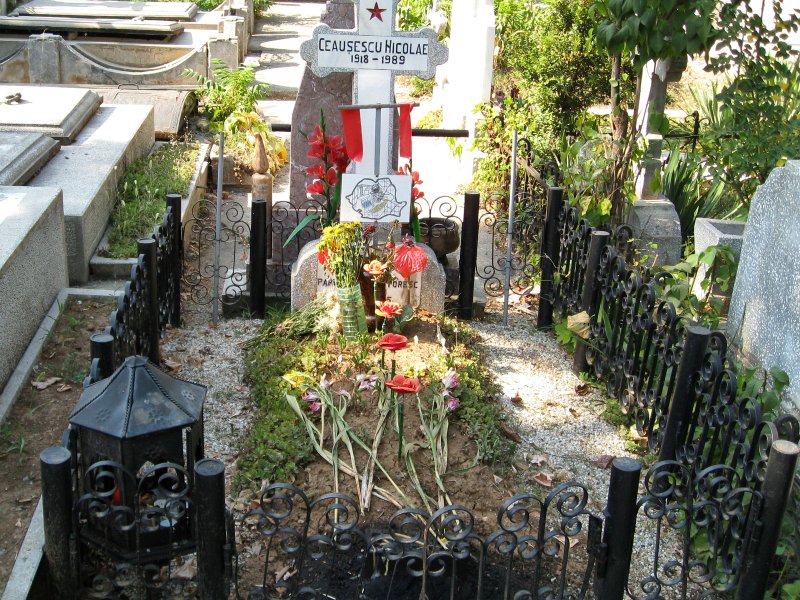
Nicolae and Elena Ceaușescu are buried here. Their grave appears in international guides specifically dedicated to dark tourism, complete with practical information for visitors.
At Ghencea, the tourist interest is directly connected to the couple's deaths and the mythology that developed around them after 1989. This sets the cemetery fundamentally apart from the Primăverii Palace. Visiting the Ceaușescus' former residence falls under communist heritage tourism. Visiting their grave belongs to the category of thanatourism.
The distinction may sound academic, but it is useful. Otherwise, almost any building associated with communism could be labelled "dark", and the term would quickly lose its meaning.
Why are people fascinated by dark tourism destinations?
The explanation that people are simply "fascinated by the macabre" accounts for only part of the phenomenon. Dark tourism studies frequently identify motivations linked to education, remembrance, cultural heritage and the desire to understand historical events through direct contact with the places where they occurred.
In Bellu's case, the 2023 research highlights interest in biographies, funerary monuments and the cemetery's cultural experience.
Bucharest has a particular advantage in this respect. Its difficult history remains physically close. Malmaison stands within the city. Colectiv is located in a residential area. Bellu continues to function as a cemetery. The Holocaust Memorial is in the city centre. Jilava lies just beyond Bucharest's administrative boundary. The past occupies real places, all within reach in a single day.
Where remembrance ends and spectacle begins
Dark tourism can turn an abstract historical event into a tangible experience. A cell at Jilava conveys something that ten paragraphs about political imprisonment struggle to communicate. A gravestone bearing a name and two dates compresses an entire biography into a square metre. The entrance to the former Colectiv nightclub immediately changes how we perceive the images from 2015.
Commercialisation, however, can change the tone very quickly. Recent literature on dark tourism in Romania distinguishes between memorial forms, focused on documentation and empathy, and "soft dark" experiences, which move closer to entertainment, paranormal themes and spectacle.
Bucharest would benefit from carefully researched itineraries built around documents, biographies and testimonies. Such a route could connect Bellu with funerary heritage, Malmaison and Jilava with communist repression, the Holocaust Memorial and the pogrom sites with the crimes of the 1940s, and Colectiv with contemporary trauma.
Visitors would come away with something far more interesting than the thrill of having seen a "sinister place". They would gain context.
Dark Bucharest already exists. What's missing is a coherent story
The capital has all the ingredients for a serious dark tourism route, and several of its sites have already been explicitly addressed by academic research or included in remembrance tourism projects.
Bellu has dedicated studies and digital mapping initiatives, if only we could see them properly implemented, along with some much-needed restoration of the cemetery's pathways! Jilava offers a virtual tour and educational visits organised by specialist institutions. The Holocaust Memorial has resources for historical interpretation. Colectiv continues to serve as a place of remembrance. Malmaison is undergoing one of the most interesting heritage transformations in Bucharest.
The city already has the route, but it exists in fragments. A museum here, a building there, a cross, a cemetery, a former prison cell. A thoughtfully developed dark tourism itinerary could bring them together through history, with respect for the victims and enough serious research to ensure that visitors leave with something more valuable than a photograph.
You may also like: Who was Barbu Bellu, the baron behind the name of Bucharest’s most famous cemetery