Who was Barbu Bellu, the baron behind the name of Bucharest’s most famous cemetery
By Raluca Ogaru
- Articles
- 24 APR 26
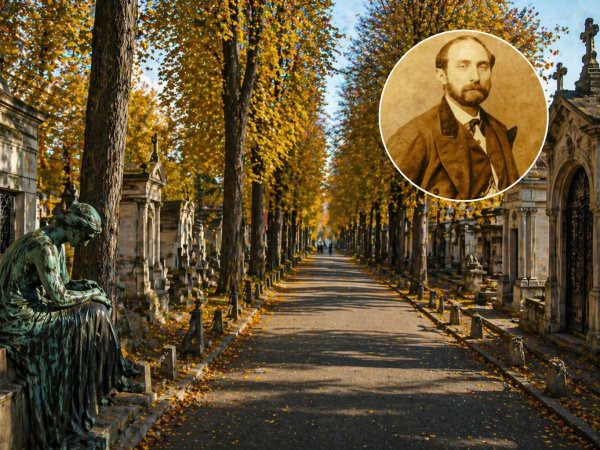
Few people in Bucharest think about the man behind the name Bellu Cemetery. For most, “Bellu” simply means the resting place of Romania’s most important personalities. In reality, the name comes from a family with a complex history and, above all, from a gesture that permanently changed the city’s development.
Barbu Bellu was not just an influential nobleman, but also one of the figures who contributed to the modernization of Bucharest at a time when the city was transitioning into a European capital.
Why it is called Bellu Cemetery
Although the official name of the cemetery is linked to Șerban Vodă Road, locals have always preferred the name “Bellu.” The reason is simple: the land on which the cemetery was built was donated by Baron Barbu Bellu.
In the mid-19th century, authorities decided to ban burials around churches within the city for sanitary reasons. A new space was needed outside the city limits of that time.
This is where Barbu Bellu’s contribution became essential. He donated part of his garden—around 14 hectares, later expanded to over 20 hectares—making possible the creation of Bucharest’s most important cemetery, inspired by the famous Père Lachaise in Paris.
The origins of the Bellu family
The Bellu family has Macedonian roots, originally bearing the name Bellios. According to historian Nicolae Iorga, their origins trace back to the region of Pella.
Over time, members of the family settled in Wallachia and held important positions in administration and public life. The change of name to “Bellu” marked their full integration into Romanian society.
The historical context of the time, marked by instability in the Ottoman Empire and external pressures, led many families to settle in this region, considered safer.
Barbu Bellu, politician and reformer
Born in 1825, Barbu Bellu was the son of Alexandru Bellu, a high-ranking official, and Irina Văcărescu, from a prominent noble family.
He studied in Athens and, upon returning to the country, held several important positions:
- judge at the Ilfov Tribunal
- prosecutor at the Court of Appeal
- Minister of Justice and Public Instruction
He was actively involved in political life but withdrew after the assassination of Prime Minister Barbu Catargiu, who was a close relative. He later became known mainly for his progressive initiatives.
A gesture that changed Bucharest
The donation of land for Bellu Cemetery remains his most significant contribution. At a time when Bucharest urgently needed urban reorganization, this decision enabled the implementation of modern public health regulations.
The cemetery began to be developed in 1855 and became operational in 1858, being one of the first spaces of its kind organized according to Western models.
It quickly became the burial place for Romania’s cultural and political elite, turning into a true “national pantheon.”
An unconventional figure of his time
Barbu Bellu was also known for his unusual lifestyle. He was among the first people to bring an automobile to Bucharest, a gesture considered extravagant at the time.
At the same time, he was recognized for his generosity and for keeping an open house, frequently hosting large gatherings with both invited and unexpected guests.
This mix of modernity and tradition makes him a representative figure of the transitional period Romanian society was going through.
The legacy of the Bellu family
The family’s influence did not end with Barbu Bellu. Its members made important contributions to culture, politics, and the arts.
One notable example is Georges de Bellio, a well-known art collector and supporter of French Impressionists such as Claude Monet and Auguste Renoir. Another is Alexandru Bellu, a pioneer of photography in Romania.
These contributions show that the Bellu family played a significant role not only in the history of Bucharest but also in European culture.
A name that became a symbol
Today, the name Bellu is almost exclusively associated with the cemetery in Bucharest. However, behind this name lies a story of modernization, philanthropy, and public involvement.
For the people of Bucharest, Bellu Cemetery is not just a place of remembrance, but also a space rich in history. And its name remains linked to a gesture that permanently shaped the city’s development.