Cristache Ciolac, the Bucharest lăutar who made violins weep. The story of one of Romania’s first creators of urban folk music
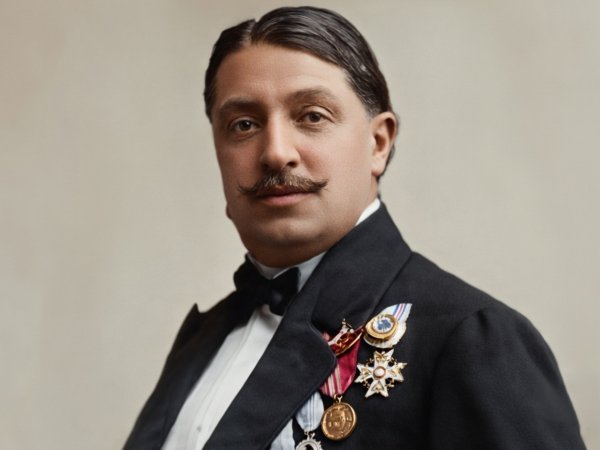
In late 19th-century Bucharest, music could be heard everywhere. It was present in the city’s taverns, at weddings and celebrations, in summer gardens, elegant restaurants, and salons where artists, writers, and politicians gathered. In this diverse world, lăutari played an essential role. They were not merely performers, but also preservers, transformers, and creators of a repertoire that would become one of the defining expressions of Romanian urban culture. One of the most important representatives of this generation was Cristache Ciolac. Born in Bucharest in 1870 and dying there in 1927, the violinist became, during the first decades of the 20th century, one of the capital’s most celebrated lăutari. His distinctive style raised the technical standards of lăutărească violin playing and influenced later generations, including Nicolae Buică and Grigoraș Dinicu. The “George Enescu” National Museum includes him among the great lăutari with whom the composer came into contact and from whom he collected melodies. Ciolac, however, is remembered for more than his instrumental virtuosity. He was one of the figures who helped shape urban folk music, adapting traditional repertoire to the tastes of city audiences while giving it a distinctive personal character. His story is also the story of a vanished Bucharest, a city where lăutari music could travel from neighborhood taverns to the Paris Universal Exhibition and even to the salons of the French president.
From a Bucharest family of lăutari straight into the world of music
Cristache Ciolac was born on December 17, 1870, in Bucharest, at 9 Speranței Street, into a family of musicians. His father, Radu Ciolac, was a nai, or pan flute, player and leader of a taraf, while the family produced several other notable instrumentalists. Cristache’s brothers included violinists Dănică, Alexandru, and Barbu Ciolac, as well as guitarist Fotache Ciolac, known by the nickname “Prințul” (“The Prince”). Sources dealing with the history of Bucharest’s lăutari therefore place him within a genuine musical dynasty.
Cristache entered the world of taraf music at a very young age. He began performing alongside his father, initially as second violin, at weddings and in Bucharest establishments. The Old Town, with Lipscani, Blănari, and the surrounding streets, was one of the places where lăutari found their audiences and built their reputations. For a young musician, such venues were practical schools: repertoire was learned by ear, technique was refined through constant performance, and the audience’s reaction was immediate.
Around the age of 20, Ciolac formed his own taraf. From 1890 onward, he began performing at weddings and neighborhood restaurants, and within just a few years he made the transition to the more prestigious central establishments of the capital. His rise illustrates the changing status of the lăutar in late 19th-century Bucharest: a talented musician could move beyond the limited world of popular celebrations and become a genuine urban star.
In 1894, Ciolac undertook his first foreign tour, travelling to Belgium. The success of his taraf attracted the attention of Romanian musical publications, demonstrating that the violinist’s reputation had already spread beyond Bucharest.
From the capital’s taverns to the great European stages
After returning to Bucharest, Cristache Ciolac began performing, from 1895 onward, at some of the city’s best-known establishments. These included the Cooperative Beer Hall, located near the National Theatre, as well as the Elyseu, Continental, and Terasa restaurants and the famous Iordache establishment. These venues brought together different worlds of Bucharest, and lăutari music could reach an exceptionally diverse audience.
At Iordache, he also met the famous Czech violinist Jan Kubelík, one of the great virtuosos of the period. The encounter is significant because it illustrates the prestige Ciolac had already acquired in a musical environment where the boundaries between popular music, urban entertainment, and classical music could sometimes become surprisingly fluid.
The event that definitively changed his status, however, was his participation in the 1900 Paris Universal Exhibition. Ciolac represented Romania at the Romanian Pavilion, alongside Ionescu Iordache, the owner of the restaurant bearing his name. Recent research highlights the success enjoyed by his taraf in Paris and the presence of important musicians alongside him.
In Paris, Ciolac’s music attracted such interest that he was invited to perform in the gardens of the Élysée Palace by French President Émile Loubet. Accounts of the reward he received differ regarding the exact amount, with some sources mentioning 2,000 francs and others giving different figures. Better documented, however, is the information that Ciolac received the Palmes académiques decoration, while his Parisian success became one of the celebrated stories of his career.
The Paris experience demonstrated that Romanian lăutari music could move beyond the setting in which it had long been regarded primarily as entertainment for celebrations and become an element representing Romanian culture abroad.
A distinctive style and the beginnings of urban folk music
Cristache Ciolac’s importance cannot be measured solely by the number of tours he undertook or the restaurants where he performed. His fundamental contribution was artistic. He reshaped the lăutărească repertoire in his own distinctive manner, emphasizing instrumental virtuosity and developing the characteristic sound of the urban lăutărească violin.
Through his technique, Ciolac helped move from the simple performance of familiar melodies toward an individualized approach in which the performer also became, in effect, a creator. In his playing, improvisation, ornamentation, and expressive use of the violin acquired particular importance. Studies of lăutărească tradition consider him one of the early creators of urban folk music, while his influence on Nicolae Buică and Grigoraș Dinicu is frequently emphasized.
In 1901, Ciolac composed “Hora din Văleni,” a piece that appears in documented repertoires from the period. A copy of the composition is mentioned in Dicționarul jocurilor românești (Dictionary of Romanian Dances), together with information that “Hora din Văleni” was both published and recorded on a gramophone record.
This activity explains why Ciolac can be regarded not only as a performer but also as an author and shaper of repertoire. His music stood at the boundary between orally transmitted tradition and individual creation, and this position would prove essential to the development of urban folk music.
The meeting with George Enescu and lăutărească music put on paper
One of the most important chapters in Cristache Ciolac’s biography was his relationship with George Enescu. The “George Enescu” National Museum includes Ciolac among the lăutari who had direct contact with the great composer and from whom Enescu collected melodies.
Enescu was deeply interested in lăutari music and in the way these musicians transformed traditional melodies through performance. In Ciolac’s case, this relationship was particularly important because the composer transcribed several melodies from his repertoire. Among them were “Hora din Văleni” and other pieces preserved in Enescu’s manuscripts. The “George Enescu” National Museum still preserves reproductions of these notations.
The contact between Enescu and the lăutari had broader significance for Romanian music. Musicological research shows that Enescu maintained direct and lasting relationships with several Bucharest lăutari, including Cristache Ciolac, Nicolae Buică, and Grigoraș Dinicu. Some of the melodies he heard and transcribed were later incorporated into or helped inspire his compositions.
This relationship contributed to preserving in written form a repertoire that otherwise circulated primarily through oral transmission. For the history of Romanian music, the meeting between a composer trained in the classical tradition and a lăutar who came from a family of musicians was one of the most fertile encounters between two artistic worlds.
The Bucharest star admired by artists and intellectuals
Around 1914, Cristache Ciolac had reached the top of Bucharest’s lăutar hierarchy. He was regarded as one of the capital’s finest violinists, and his fame had long since moved beyond the usual circle of restaurant patrons and wedding guests.
Among those who admired his art were Romanian and foreign cultural figures. Writers Alexandru Vlahuță, Octavian Goga, and Barbu Delavrancea were among his admirers. Foreign visitors to Bucharest also sought opportunities to hear him, while his European reputation grew after his success in Paris.
In 1915, Ciolac met French writer and academician Jean Richepin. That same year, Richepin mentioned him in the French publication Les Annales. Radu D. Rosetti, who knew the violinist well, preserved in his writings memories of encounters between Ciolac and important cultural figures of the period.
Beginning in 1902, his taraf also performed in the fashionable resort of Sinaia. In 1911, Ciolac and his musicians performed at the coming-of-age celebration of the future King Carol II. His music had thus travelled from Bucharest’s poorer neighborhoods to central restaurants, aristocratic resorts, and official events.
War, final performances, and a tragic end
The First World War radically changed Cristache Ciolac’s life. In 1916, he entered the service of the mess of the Army General Headquarters. According to memoirs and accounts preserved in the literature of the period, George Enescu’s intervention helped protect musicians from being sent to the front line. Ciolac continued performing during the wartime and refuge period, including in Iași.
During those same years, Enescu continued to transcribe melodies from the lăutar’s repertoire. Among the pieces recorded were “Ca la Breaza,” “Sârba din căruță,” and “Hora Bâzoiul.” Research into Enescu’s relationship with lăutari shows that this repertoire played an important role in the development of his musical language inspired by Romanian folk music.
After 1921, illness permanently removed him from the violin. Paralysis in his right arm forced him to abandon his musical career, after which he worked as an inspector for the state fisheries. For an artist whose identity was inseparable from his instrument, losing the ability to play was a personal tragedy.
Cristache Ciolac died in Bucharest on February 26, 1927, at the age of 56, following a prolonged period of suffering. He was buried in Pătrunjel Cemetery, today known as Reînvierea Cemetery in the Colentina area. Accounts of his final days and funeral describe a dramatic situation, very different from the glory he had enjoyed during the height of his career.
Cristache Ciolac nevertheless remained part of the history of Romanian music through what he created before illness stopped his hand. He was one of those lăutari who transformed a tradition passed from one generation to another into a personal artistic language. He made the violin more than an instrument for dancing and celebration: he turned it into an instrument capable of expressing melancholy, virtuosity, passion, and longing.
For George Enescu, Ciolac was important enough for his melodies to be transcribed and preserved in manuscripts. For Bucharest, he was one of the great musicians of an era when lăutari connected neighborhoods, restaurants, salons, and major European stages. And for the history of Romanian urban folk music, Cristache Ciolac remains one of its foundational figures, an artist who demonstrated that tradition does not mean mere preservation, but transformation as well.
More than a century after the height of his fame, his name continues to appear in histories of lăutărească music and in research devoted to George Enescu. The “George Enescu” National Museum presents him in exhibitions dedicated to the composer’s relationship with lăutari, alongside Nicolae Buică and Grigoraș Dinicu.
Cristache Ciolac disappeared long ago from the tables of Bucharest’s restaurants, and the establishments where he once played have themselves been transformed or vanished. The music, however, remained. And in those melodies that Enescu heard, transcribed, and carried forward, one can still hear the echo of the violin of one of Bucharest’s greatest lăutari.
We also recommend: The king of Bucharest’s lăutari was expelled from the Conservatory but impressed Caragiale and Enescu. The life of Grigoraș Dinicu