Cleopatra Melidoneanu: Woman, Lyric Artist, Legend. The Story of Bucharest’s Great Soprano
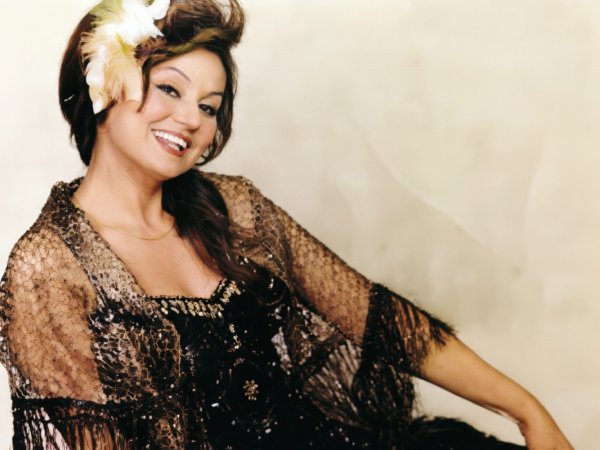
Cleopatra Melidoneanu was one of the emblematic figures of Romanian operetta during the second half of the 20th century. With a clear voice, an elegant stage presence, and a musical culture shaped from childhood, the artist became one of the great stars of Bucharest’s Operetta Theatre. For approximately a quarter of a century, she performed memorable characters, appeared in productions that remained in the public’s memory, and took part in numerous tours both in Romania and abroad. Her story, however, is not merely that of a prima donna. Behind the artist admired on stage was a woman who grew up in an intellectual and artistic environment where the piano, literature, singing, and cultural gatherings were part of everyday life. Her recollections from the 2012 interview conducted by Silvia Iliescu and preserved in the Oral History Archive reconstruct a vanished Bucharest world, in which artistic education began at home and continued at school and in the city’s major cultural institutions.
A Bucharest childhood in a family where music was a natural part of life
Cleopatra Melidoneanu was born on October 22, 1936, in Bucharest’s Dorobanți area, into a family in which intellectual and artistic pursuits held an important place. The artist remembered growing up near her grandmother’s home, within a close family circle, and described her childhood as a happy one, a feeling she believed stayed with her throughout her life. Her father came from a prosperous family and had a pronounced artistic sensitivity of his own.
He played the piano and was passionate about literature, publishing two volumes of poetry, Lumină vie (Living Light) and Bat apele (The Waters Beat). The first of these volumes was prefaced by Tudor Arghezi, a detail that says much about the cultural environment in which the future soprano grew up.
Music was present in the family not only as something to be studied, but also as a form of social interaction. Her mother had a pleasant voice and a good musical ear, while her father accompanied her on the piano. Literary and musical gatherings were held in their home, attended by people from the cultural world. Among those who frequented this circle was the future Metropolitan Bartolomeu Anania. In such an environment, Cleopatra came into contact with musical repertoire and the atmosphere of salon performances from a very early age.
Her musical education also began early. She studied the piano, and during childhood she sang for several years in the choir of the Visarion Church in Bucharest. The artist recalled that when the choir went on holiday, she and her sister would sing at the church lectern, and in this way she became deeply familiar with liturgical repertoire and Byzantine music. This experience provided her with important vocal discipline and helped develop her musical ear even before she began formal academic training.
During her high-school years, first at Regina Maria High School and later at Gheorghe Lazăr High School, her vocal talent began to point toward a professional artistic career. She received her first singing lessons from Selma Hollinger, a teacher who focused particularly on the lied repertoire. Later, Cleopatra Melidoneanu continued her training with Constantin Stroescu, one of the important teachers of the Romanian vocal tradition.
The Conservatory and the road to the Operetta Theatre stage
In 1956, Cleopatra Melidoneanu began singing in the Choir of the People’s Council of Bucharest, an activity she pursued alongside her musical studies. This period was extremely important for the young artist. The choir gave her experience in collective performance, the discipline of rehearsals, and constant contact with the stage, while conductor Mureșanu encouraged her to continue her education. The artist recalled that she often had to move quickly between work and the Conservatory, trying to reconcile her choir schedule with her academic training.
Her years at the Conservatory were not without difficulties. During her first entrance examination, Cleopatra Melidoneanu did not receive the support of soprano Arta Florescu, who was a member of the examining committee, and the young woman was tempted to give up. At her next attempt, however, she was admitted to Arta Florescu’s class and went on to study with one of the most important figures in Romanian vocal pedagogy. She graduated from the Bucharest Conservatory in 1961.
After graduating, the young soprano was assigned to the Opera Theatre in Cluj, but she never took up the position. Bucharest and the Operetta Theatre were to change the course of her professional life. She went to the theatre, where directors Nicușor Constantinescu and Barbu Dumitrescu immediately recognized the potential of the young graduate. Grigore Constantinescu later recorded that the two men saw in her the artist suited to play Vanda in Rudolf Friml’s operetta Rose Marie.
Her debut came in 1962, and Vanda marked the beginning of an exceptionally successful career. During the following approximately 25 years, Cleopatra Melidoneanu became one of the leading prima donnas of the Bucharest stage. According to biographical information published about the artist, her repertoire included 28 roles, 25 of them leading parts, in 27 productions, 17 of which were premieres.
From Vanda to Eliza Doolittle, a prima donna loved by the public
Cleopatra Melidoneanu’s career was built on a rare combination of voice, musicality, stage beauty, and acting ability. She was not merely a soloist who performed arias and duets, but an artist capable of giving personality to very different characters. Critic Grigore Constantinescu noted that elegance, talent, voice, and stage behavior came together in her case in a combination that explained why she was so deeply loved by the public.
Among the roles that defined her career were characters from Countess Maritza, The Circus Princess, The Moon Bridegroom, Viennese Blood, The Merry Widow, and other famous operetta titles. One of the essential moments of her career was her appearance in Frederick Loewe’s My Fair Lady. The musical, staged in Romania in 1968, became a landmark production, and Cleopatra Melidoneanu played Eliza Doolittle. The National Operetta and Musical Theatre “Ion Dacian” still identifies this period as an important chapter in the institution’s history.
Another essential chapter in her career was her stage partnership with tenor Dorin Teodorescu. The two formed one of the most beloved couples in Romanian operetta. The National Operetta and Musical Theatre “Ion Dacian” described them as a “wonderful couple,” while their popularity extended far beyond the stage and into television. Audiences associated them with major productions of the period and eagerly awaited their appearances together in performances and television recordings.
Cleopatra Melidoneanu was also one of the artists who transformed operetta into a television phenomenon. Her appearances helped popularize a musical genre that could thus reach Romanian households beyond the confines of the theatre. Her stage charm and accessible repertoire made her a familiar figure to several generations of spectators.
Carnegie Hall, the international highlight of a remarkable career
If the Operetta Theatre stage represented the center of her career, 1981 brought one of its most important international moments. Cleopatra Melidoneanu travelled to New York, where she performed at Carnegie Hall. This was not her first encounter with audiences abroad. Before travelling to the United States, the artist had already taken part in tours in several European countries and elsewhere, and in a 1981 interview she recalled experiences in Italy, the Netherlands, Turkey, Poland, and Bulgaria.
For her American recital, she prepared intensively for approximately six months, working with pianist Edith Huzly. The programme highlighted another dimension of the artist, that of a lied performer, a genre she had studied since her youth. In statements given after returning from the United States, Melidoneanu spoke about the emotions generated by appearing in the famous New York concert hall and about the importance of presenting Romanian repertoire to the American audience.
The Carnegie Hall recital was considered a success and was followed by favorable reviews, including a reference in The New York Times, according to biographical sources and accounts of the artist’s career. The event demonstrated that the soprano primarily associated with Bucharest’s operetta stage could also make a strong impression in concert repertoire, in one of the world’s most prestigious musical venues.
The quiet retirement of an artist who knew when to leave the stage
After 1989, Cleopatra Melidoneanu gradually withdrew from artistic life and chose to devote herself to her family. The decision was deliberate and, at the same time, characteristic of the discreet manner in which she had conducted her life. In an interview that became representative of her attitude toward her career, the artist explained that she preferred to leave before the audience felt that her period of glory had passed. Her phrase, “Rather than leave five minutes too late, I would rather leave fifteen minutes early,” remained one of the best-known expressions of her artistic philosophy.
Her retirement did not mean disappearing from the memory of the musical world. Cleopatra Melidoneanu continued to be remembered as one of the great prima donnas of Romanian operetta, and the institution that preserves the genre’s tradition still includes her among its leading figures, alongside Ion Dacian and other major performers.
Cleopatra Melidoneanu therefore remains one of the defining figures of Bucharest’s musical life during the second half of the 20th century. She had the privilege of receiving her education in a rich cultural environment, but she also had the merit of transforming her natural talent into a career built through hard work and discipline.
She was a prima donna, actress, lied performer, and television star, while her appearance at Carnegie Hall carried her name beyond Romania’s borders. For the Bucharest audiences who saw her on stage, however, her memory remains above all connected with the elegance of an artist who knew how to sing, how to act, and, at the right moment, how to let the curtain fall with dignity.
We also recommend: The story of the diva Elena Teodorini, the first soprano from Romania to sing at La Scala in Milan