Architects who shaped Bucharest: Ion Mincu, the “father” of the neo-Romanian style, built his own house with money borrowed from City Hall
- Articles
- 10 JUL 26
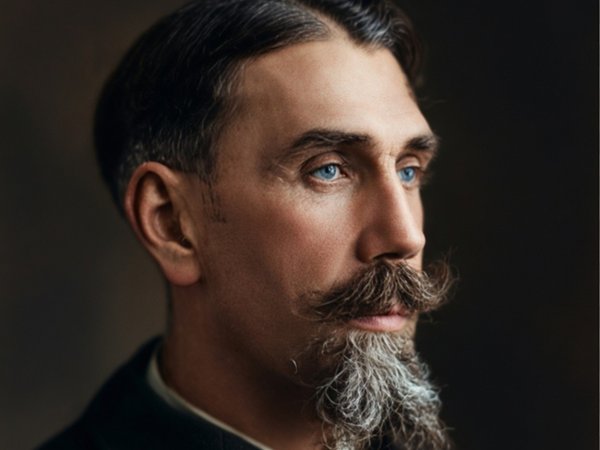
Few architects have influenced the image of Bucharest and the evolution of Romanian architecture as profoundly as Ion Mincu. Considered the founder of the neo-Romanian style, he managed to turn tradition into a source of inspiration for a modern architecture, adapted to national identity. In a period when many of the buildings erected in Romania copied almost entirely Western models, Mincu had the courage to look toward the local heritage and to demonstrate that the motifs of Romanian architecture can form the basis of elegant, functional, and representative constructions. His life was not without challenges. Although he was already an appreciated and respected architect, when he decided to arrange his own home in Bucharest he was forced to request a loan from City Hall in order to be able to expand the purchased building. The house on today’s Arthur Verona Street was to become not only his family’s home, but also a true cultural center, where artists, writers, and intellectuals of the era met. Ion Mincu’s work, however, goes beyond the boundaries of a simple successful career. He laid the foundations of a school of architecture that would influence entire generations and define the image of important cities in Romania. The buildings designed by him continue to be admired today, being considered landmarks of the national heritage.
Childhood and the making of an exceptional architect
Ion Mincu was born on December 20, 1852, into a modest family in Bucharest. He was one of the six children of Pavel and Maria Mincu, and his childhood unfolded during a period when the capital was beginning to transform rapidly under the influence of modernization.
Although his parents did not come from an artistic or academic background, the young Mincu stood out already during his school years through intelligence, discipline, and the desire to learn. The studies he followed in Bucharest gave him a solid foundation, but the real change was to come when he decided to leave for France.
In 1869, at only 17 years old, Ion Mincu arrived in Paris, one of the most important cultural and artistic centers of Europe. He was admitted to the prestigious École des Beaux-Arts, an institution that trained the most appreciated architects of the time.
The years spent in the capital of France represented a decisive moment for his professional development. His talent was quickly noticed, and among those who recognized his potential was Alexandru Odobescu, Romania’s representative in Paris. He obtained a scholarship for him for the last years of study, giving him the possibility to focus exclusively on his professional training.
The European experience that changed his perspective
During his studies, Ion Mincu did not limit himself to activity in the classrooms. He won the Grand Prize of the Central Society of French Architects, a distinction that allowed him to travel to several European countries.
The visits to Italy, Spain, and Greece had a major influence on his conception of architecture. He studied closely medieval monuments, Renaissance palaces, Byzantine churches, and popular constructions, observing the way each people expressed its identity through architecture.
This experience was to confirm his conviction that Romania too must develop its own style, inspired by local traditions and adapted to modern requirements.
Instead of copying Western models, Mincu set out to create an architecture that would speak about Romanian specificity and about the country’s cultural heritage.
The birth of the neo-Romanian style
Ion Mincu’s most important contribution remains the definition of the neo-Romanian style. This was not merely an aesthetic choice, but a true declaration of cultural identity.
The architect carefully studied traditional Romanian houses, the fortified towers of Oltenia, the monasteries of Moldavia and Muntenia, Brâncovenesc architecture, and Byzantine influences. From all of these he extracted elements that he reinterpreted in a modern manner.
The arcaded porches, the carved columns, the belvederes, the broad roofs, the floral and geometric motifs, the decorative ceramics, and the richly ornamented frames became distinctive signs of his creations.
The result was an original, elegant, and deeply Romanian architectural language.
Through this approach, Ion Mincu demonstrated that modernization does not mean giving up traditions, but valuing them in a form adapted to the present.
Family and the intellectual circle around him
In April 1887, at the age of 35, Ion Mincu married Eliza Dăscălescu, who was 11 years younger than him. The two had two daughters together and formed a family appreciated in Bucharest’s cultural circles.
In addition to his intense professional activity, the architect was a sociable and cultivated man. His house was frequently visited by numerous personalities of the time.
Among his close friends was the playwright Ion Luca Caragiale, together with his family. Ion Mincu also maintained close relations with the painter Gheorghe Petrașcu and with numerous men of culture, writers, and artists.
His home had become a true intellectual salon, where cultural projects, artistic ideas, and issues related to the development of Bucharest were discussed.
The house built with the help of a loan from City Hall
A lesser-known detail from Ion Mincu’s life is the fact that his own home was built with financial support from the Bucharest City Hall.
The architect had bought a house from the Italian Gaetano Antonio Burelli, former chief architect of the Capital. The building was located on Arthur Verona Street and needed substantial work in order to meet the needs of the new family.
For the expansion of the building, Ion Mincu requested a municipal loan, which he used to build a new wing.
The expansion was not aimed only at personal comfort. In the new space, the architect arranged his own office, where he worked together with his collaborators on the projects that were to mark Romanian architecture.
The house became at the same time a home, a creative workshop, and a meeting place for the intellectuals of the time.
This episode shows that even one of Romania’s most appreciated architects encountered financial difficulties when building his own house, resorting to the solutions available at that time in order to bring his project to completion.
Public activity and involvement in political life
Ion Mincu’s professional prestige also propelled him into public life.
Between 1895 and 1899 he was a deputy in the Parliament of Romania, taking part in debates regarding the country’s development and the modernization of institutions.
His experience as an architect gave him a different perspective on urban problems, and his opinions were appreciated both in the political environment and in the professional one.
At the same time, Mincu continued to design important buildings and to promote the principles of neo-Romanian architecture among young architects.
The buildings that changed the image of Bucharest and Romania
Ion Mincu’s work includes numerous buildings that became symbols of Romanian heritage.
Among the best known is the Bufet at Șosea, today’s Doina Restaurant, located on Kiseleff Road. The building impresses through the harmony of its proportions and through the richness of decorative elements inspired by traditional Romanian architecture.
The façades decorated with folk motifs and the elegant interior turn this edifice into one of the most representative examples of the neo-Romanian style.
Another important achievement is the Central School for Girls in Bucharest.
The construction demonstrates that aesthetics can be combined with functionality. The building offers generous spaces for educational activity, without giving up the decorative elements that define the style promoted by Mincu.
The inner courtyard and the arcaded galleries are still considered models of architectural balance today.
His name is also linked to the restoration and intervention works on the Stavropoleos Church, one of the most valuable religious monuments in Bucharest.
Through his interventions, Mincu sought to preserve the original character of the monument and the harmonious integration of the elements necessary for restoration.
Outside the Capital, his contributions are just as important.
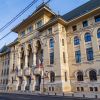
The Administrative Palace in Galați, today’s Prefecture, represents one of the most elegant administrative buildings built at the beginning of the 20th century.
Its richly ornamented façades and monumental proportions reflect the architect’s philosophy regarding the valorization of Romanian tradition in a building intended for modern administration.
In Craiova, the Palace of the Commerce Bank illustrates the way Ion Mincu combined the neo-Romanian style with eclectic influences, resulting in an imposing and refined building.
All these projects demonstrate his versatility and his ability to adapt the same architectural language to very different functions.
The legacy left to future generations
Ion Mincu passed away on December 6, 1912, but his influence did not end with his disappearance.
On the contrary, the ideas he promoted were developed by numerous disciples who continued to build in the neo-Romanian spirit.
Recognition of his value came quickly. The Architecture Institute in Bucharest was given his name, the institution being known today as the University of Architecture and Urbanism “Ion Mincu,” one of the most important schools of the field in Romania.
Numerous high schools and colleges in cities such as Focșani, Tulcea, and Vaslui bear his name, and streets in Bucharest, Cluj-Napoca, Oradea, and other cities permanently recall his contribution.
As a sign of appreciation for his entire activity, Ion Mincu was designated posthumously a member of the Romanian Academy, a symbolic recognition of his role in national culture and heritage.
More than a century after his death, his creations continue to be studied in architecture faculties and admired by tourists, historians, and specialists. The buildings designed by him are not only historical monuments, but also proof of a vision that definitively changed the way Romania defined its own architectural identity.
Ion Mincu was not only a talented architect, but also a creator of a school, a promoter of heritage, and a visionary who understood that the future of a nation can be built without losing its connection to the past. Even if, at one point, he needed a loan from City Hall in order to transform his own house into a space worthy of his family and his activity, the value of his work was to surpass any material difficulty.
Today, the name of Ion Mincu remains synonymous with elegance, authenticity, and respect for Romanian tradition. Every building bearing his signature tells the story of an architect who had the courage to believe that Romania could build its own style, and this conviction continues to define an important part of the architectural identity of Bucharest and of the entire country.
We also recommend: Architects who shaped Bucharest: Filip Xenopol, designer of the Capital's modernisation at the end of the 19th century