10 Urban Experiences in Bucharest You Should Try at Least Once
By Eddie Țone
- Articles
- 08 SEP 26
Bucharest is surprisingly difficult to get to know from behind the wheel of a car, and surprisingly easy when you actually give it some time. The city works through contrasts placed side by side with an almost comical naturalness: just a few stops apart, you can find a wetland inhabited by otters and herons, a market where the smoke from grilled mici drifts through the air like a local weather phenomenon, a gigantic palace housing a contemporary art museum, and one of the most beautiful concert halls in Europe. And those are just a few examples.
For anyone who lives in Bucharest, familiarity quickly becomes a trap. The Athenaeum turns into “that building near the Hilton,” Obor gets filed away under grocery shopping, and tram 41 remains something you have to catch before the doors close. Seen through the eyes of a traveller, however, they all acquire a different significance.
The following ten experiences start precisely from this idea: Bucharest seen as a destination, even by the people who live here. So here are ten urban experiences in Bucharest you should try at least once.
1. Visit Văcărești Natural Park Early in the Morning and Go Birdwatching
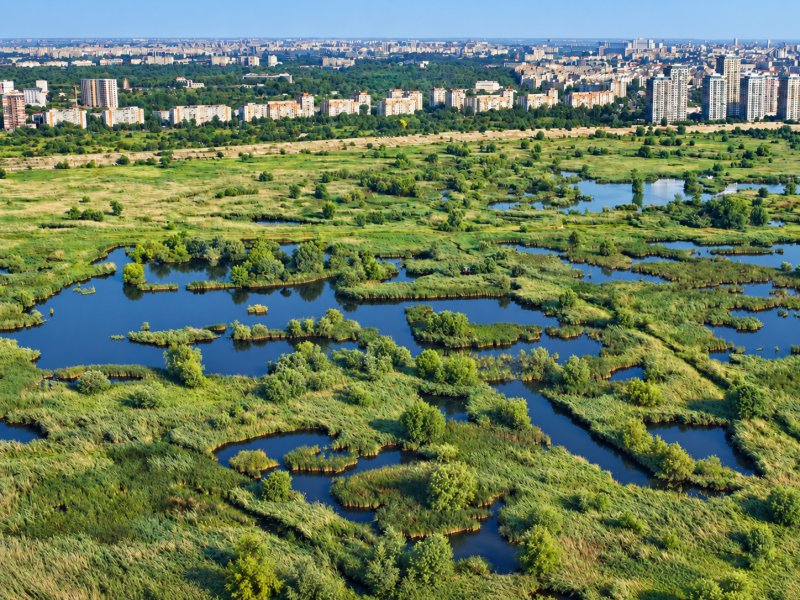 Photo: parculnaturalbucuresti.ro
About five kilometres from the centre of the capital lie 183 hectares of reeds, water, willows, meadows and dirt paths. Văcărești Natural Park was granted protected-area status in 2016, becoming Romania’s first urban natural park. Its story seems almost as though it were written by an urban planner with a taste for irony: an abandoned hydrotechnical project gradually transformed itself into a remarkable ecosystem.
The best experience comes early in the morning, when traffic can still be heard somewhere in the background and, for a while, the city acquires the soundtrack of a wetland. The urban biodiversity trail is approximately 2.5 kilometres long and passes through woodland, wetlands and reed beds, as well as several observation towers.
The Bucharest Natural Park Association has recorded more than 190 bird species in surveys carried out over the years, alongside mammals such as foxes, otters and weasels. There are dedicated observation towers and hides for birdwatching, while the spring and autumn migrations offer the richest periods for spotting wildlife.
And one more thing: a pair of binoculars completely changes the walk because, all of a sudden, every movement in the reeds seems to acquire genuine diplomatic importance.
2. Visit Obor Market, Then Finish with a Plate of Mici
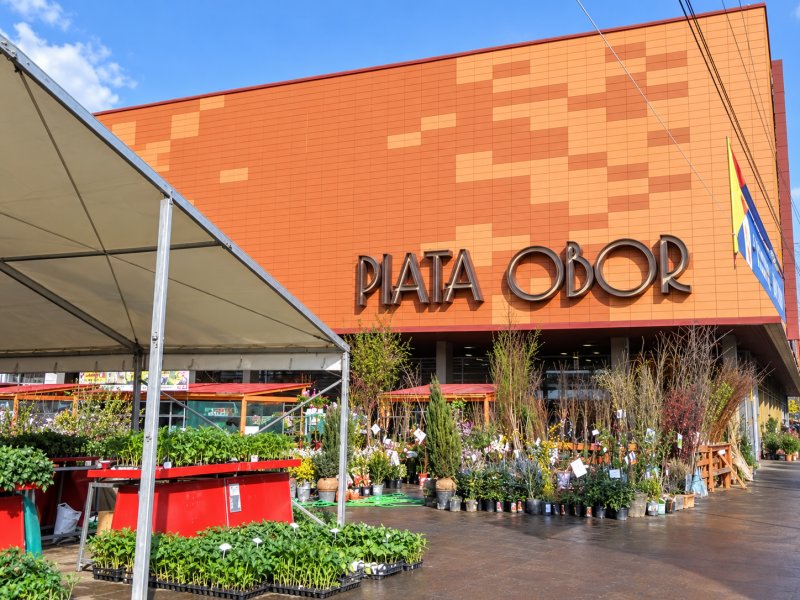
Obor probably offers the most efficient lesson in urban anthropology available anywhere in Bucharest, with mustard included as a bonus.
The name comes from the old meaning of the Romanian word obor, referring to an enclosure for livestock. The outdoor fair, later known as Târgul Moșilor and then Obor, has been part of Bucharest’s commercial history since at least the 17th and 18th centuries and for a long time served as a meeting place between the city and the rural world surrounding it.
Obor Central Market Halls have their own architectural history. The foundation stone was laid in 1936, and the original design belonged to Octav Doicescu, one of the major Romanian architects of the 20th century.
The market deserves to be explored slowly, weaving between stalls selling vegetables, cheese, meat, spices and products that seem to follow a culinary calendar of their own. Then comes the inevitable chapter involving mici. Terasa Obor and the surrounding grills have turned the combination of grilled minced-meat rolls, mustard and beer into an urban attraction in its own right.
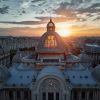
3. Attend a Concert in the Great Hall of the Romanian Athenaeum
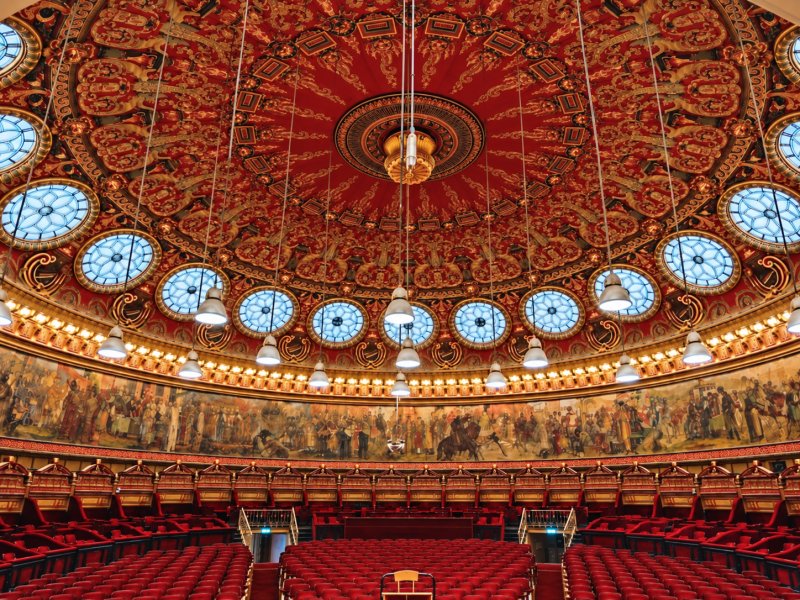 Photo: filarmonicaenescu.ro
The Romanian Athenaeum absolutely deserves to be seen and admired at leisure. But the truly memorable version involves attending a concert.
The Great Hall has almost 800 seats arranged in an amphitheatre and hosts the symphonic and vocal-symphonic concerts of the George Enescu Philharmonic Orchestra. Above the audience rises the decorated dome, while the circular wall features the famous monumental fresco depicting episodes from Romanian history.
The building was designed by French architect Albert Galleron and inaugurated in 1888. The foyer alone, with its 12 Doric columns and spiral staircases, is enough to justify a visit.
The Philharmonic also allows tourist visits outside rehearsal and concert hours. As of September 2026, admission costs 15 lei, while visiting hours are updated monthly.
A concert, however, remains the complete experience. Once the orchestra begins to play, the setting suddenly makes perfect sense, while your phone gets a well-deserved hour off.
4. Go Up to MNAC and See Bucharest from the Back of the Palace of Parliament
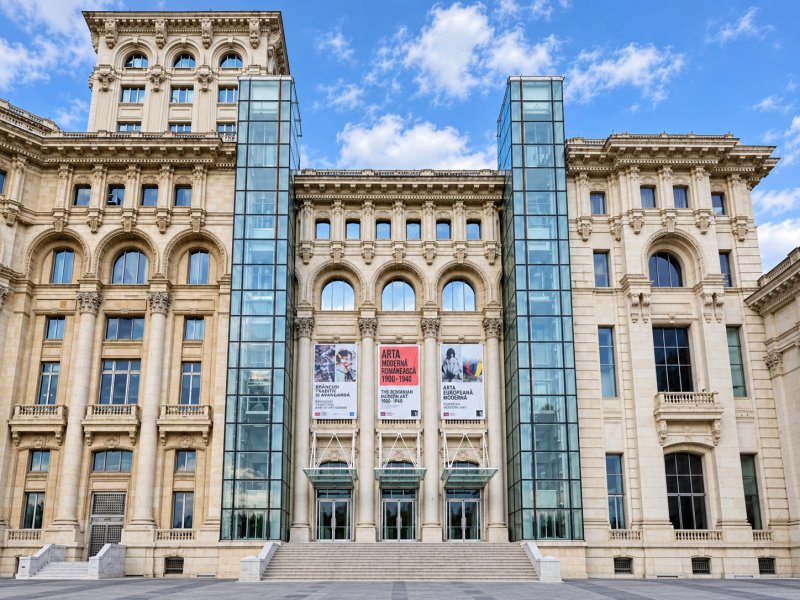
The National Museum of Contemporary Art (MNAC) operates in a setting that very few capitals could reproduce even if they made a serious effort: the rear wing of the Palace of Parliament. Access is from Calea 13 Septembrie, through gate B3 / entrance E1.
The combination produces one of the city’s most interesting visual shocks. The enormous interior of the building meets installations, photography, painting and contemporary projects, while the monumental staircase makes the simple act of moving between floors feel vaguely cinematic.
At the end comes the MNAC terrace, offering a broad view over southern and central Bucharest. At sunset, apartment blocks, church towers, construction sites and rooftops all merge into the same panorama, which is actually a fairly accurate definition of Bucharest.
In 2026, the museum is open Wednesday to Sunday from 11:00 a.m. to 6:30 p.m., with last admission at 6:00 p.m.; entry is free on the first Wednesday of every month.
5. Spend an Hour in Cărturești Carusel Without Any Particular Plan
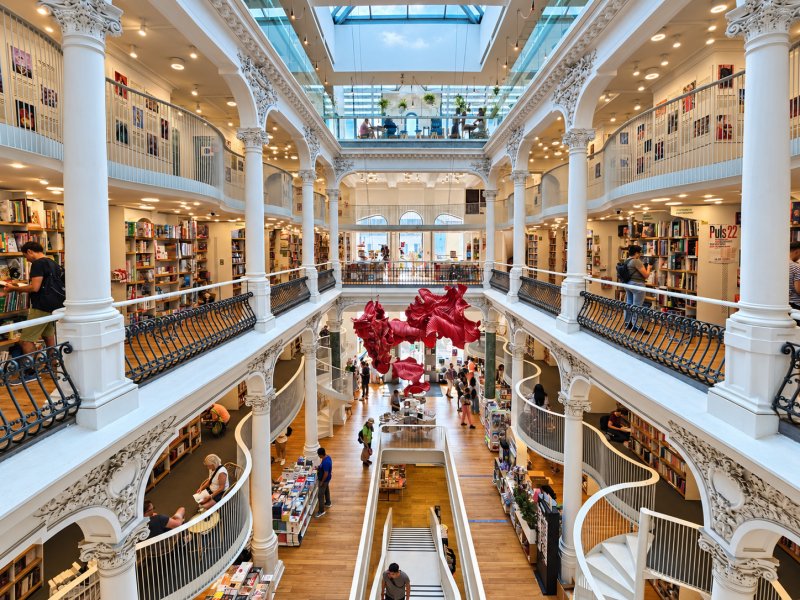 Photo: Eduard Țone
Cărturești Carusel is located at 55 Lipscani Street, inside a listed historic building in Bucharest’s Old Town. The bookshop opened in February 2015 and quickly became one of the most recognisable images of contemporary Bucharest.
The experience works best at a leisurely pace. The staircases, white galleries and soaring central atrium make the bookshop the perfect place to wander through books, albums, Romanian design and assorted objects you enter completely convinced you can live without, only to leave carrying them in a bag.
Cărturești began in 2000 in a space on Edgar Quinet Street, founded by Nicoleta Dumitru and Șerban Radu, with the original idea of building a community around books. Carusel is probably the most spectacular architectural expression of that philosophy. There is little point mentioning the Instagram-friendly photos — you already know.
The current opening hours are daily from 10:00 a.m. to 10:00 p.m.
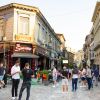
6. Walk Through Macca-Villacrosse Passage and Look for 19th-Century Bucharest
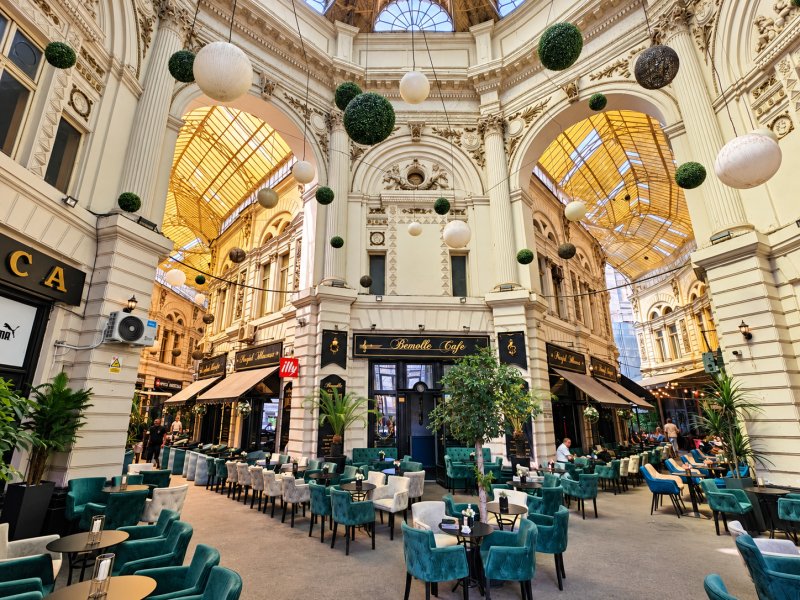 Photo: Eduard Țone
The Old Town becomes far more interesting once your attention moves away from the terraces and towards the architectural details above them.
Macca-Villacrosse Passage deserves to be appreciated as a piece of urban architecture in its own right. It was built in 1891 according to plans by architect Filip Xenopol, on properties associated with the Macca and Villacrosse families. Xavier Villacrosse had served as Bucharest’s chief architect between 1840 and 1848.
Its forked layout, metal structure and glazed roof give it the atmosphere of the European shopping arcades of the 19th century. Look at old photographs of the neighbourhood and it becomes clear just how cosmopolitan Bucharest’s ambitions were at the time.
Having a coffee here — or a shisha — takes on some of the ritual of urban travel. Another bonus is that the CEC Palace, National Bank of Romania, Stavropoleos Church and the old commercial route along Lipscani are all just a few minutes away. Suddenly, the city begins connecting the dots by itself.
7. Ride Tram 41 Across Bucharest, from Ghencea to Piața Presei
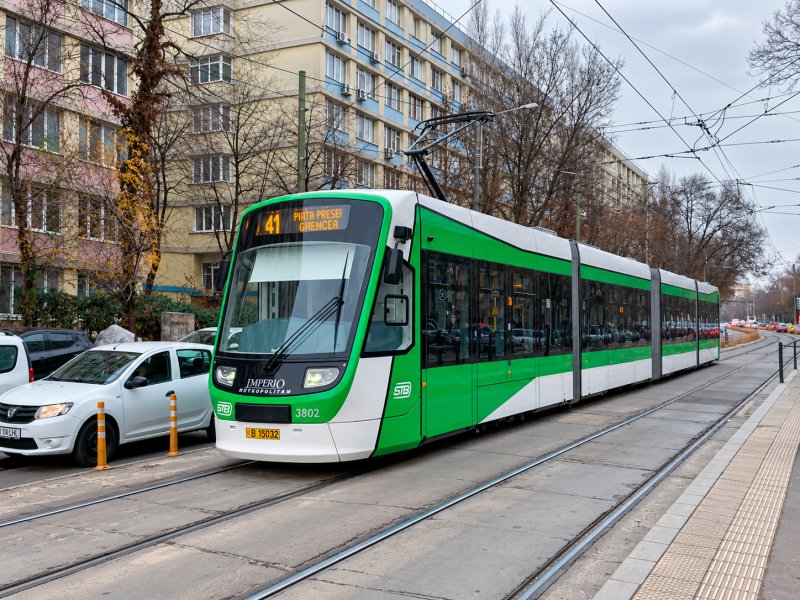
There are panoramic bus tours, of course, but Bucharest also offers the sociological version, at the price of a standard public transport ticket.
Tram line 41 connects Ghencea with Piața Presei and crosses the western and northern parts of the capital along a route passing through Drumul Taberei, Lujerului, Crângași, Grant Bridge, Turda and Mărăști Boulevard.
Riding from one terminus to the other reveals residential, commercial and sporting Bucharest in extremely rapid succession. Socialist apartment blocks, new infrastructure, a stadium, densely populated neighbourhoods, flyovers and the monumental buildings of the exhibition district all appear during a single journey.
For a visitor, it is a live urban documentary. For someone from Bucharest, it is the perhaps rather unusual opportunity to stay on tram 41 all the way to the end entirely by choice — an act that probably deserves to be recorded somewhere.
8. Spend a Tropical Evening at Therme București
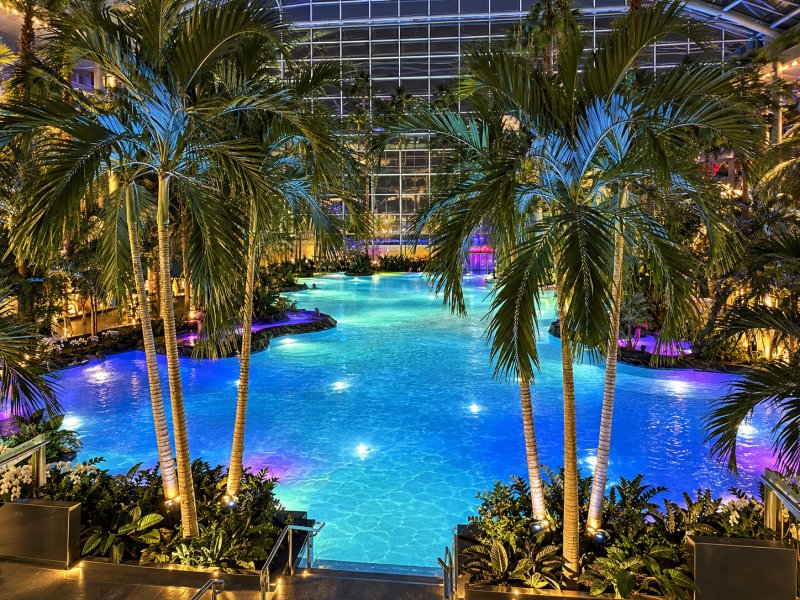 Photo: therme.ro
North of the city there is a place where, on a grey February day, you can sit in thermal water beneath palm trees. Bucharest occasionally practices magical realism through investments in wellbeing infrastructure.
The Palm at Therme includes an indoor botanical garden with palm trees, orchids and exotic plants originating from four continents, alongside thermal pools and jacuzzis. Therme describes the complex as one of the major exotic destinations in south-eastern Europe, while its Galaxy area features 17 themed water slides.
The experience is especially pleasant towards evening, when the lighting transforms the space and the contrast between the temperature outside and inside becomes almost theatrical.
Having a cocktail in a palm-lined swimming pool a few kilometres from Bucharest’s ring road says quite a lot about the contemporary city.
9. Walk Through Bellu Cemetery as Though It Were an Open-Air Museum of Sculpture and History
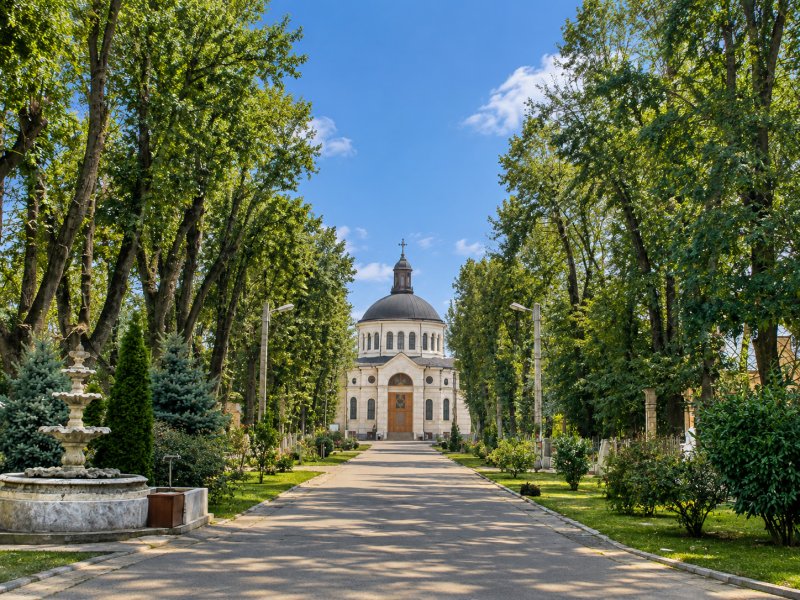
Bellu Cemetery can be explored as an enormous open-air urban archive. Located at 249 Calea Șerban Vodă, it is a Category I cemetery administered by Bucharest’s municipal authorities.
Literature, politics, theatre, architecture and funerary sculpture all meet here. Its avenues — unfortunately still in need of restoration — preserve the monuments of personalities who shaped Romanian culture, while the history of the cemetery begins with the Bellu family and the land donated to the city by Barbu Bellu in the 19th century. Historical sources describe it as one of Bucharest’s most important necropolises.
Ideally, explore it with a map showing the notable personalities buried there and allow enough time to examine the funerary monuments. Many are elaborate works of sculpture, and every avenue seems to open another chapter.
Bellu changes the way you look at the city. After a walk here, the names on street signs begin to acquire faces.
10. See Bucharest from Above, Then Come Back Down and Continue on Foot
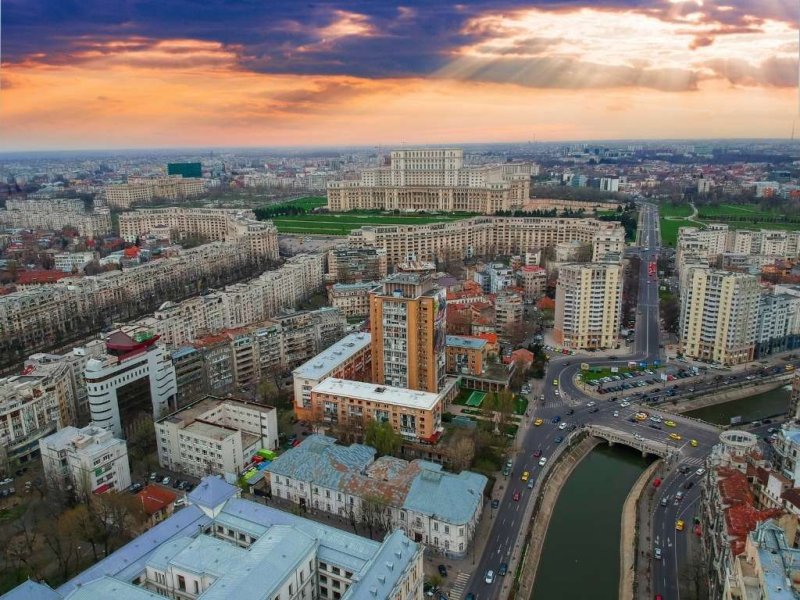
A good urban experience in Bucharest combines a view from above with walking at pavement level. MNAC already offers one of the city’s most spectacular panoramas, while the central areas between Calea Victoriei, Lipscani, Universitate and Piața Romană can turn the continuation into a several-hour walk.
The idea works best without rushing. Look at the city from above, then descend into its streets and try to identify the things you have just seen. Church towers hidden between apartment blocks emerge unexpectedly, Belle Époque palaces stand beside interwar buildings, while restored façades alternate with properties maintaining what can only be described as a complicated relationship with plaster.
Bucharest works exceptionally well in these kinds of sequences because its beauty comes in fragments. The capital rewards patience, curiosity and the willingness to change streets whenever something interesting appears around the corner.
After these ten experiences, the capital begins to look different. Văcărești reveals its wild side, Obor its commercial one, the Athenaeum its cultural face, MNAC its contradictions, and tram 41 its everyday reality. Together, they form a destination worth exploring with the same attention Romanians usually reserve for cities visited on a city break. Sometimes, after all, the most interesting journey begins just a few stops from home.
You may also like: The best places in Bucharest for sunset walks