10 Things You May Not Have Known About IOR Park and Lake
By Eddie Țone
- Articles
- 30 JUL 26
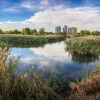
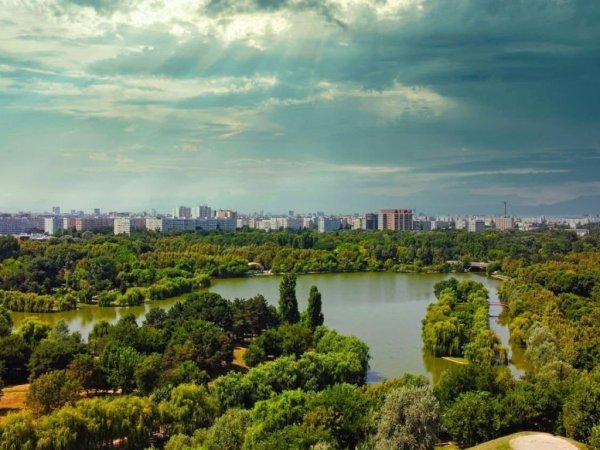
On a simple stroll through IOR Park—officially Alexandru Ioan Cuza Park, although everyone knows it by the acronym of the nearby Romanian Optical Enterprise—you will see mothers pushing prams, pensioners feeding ducks and young people taking Instagram photos beside the lake. The scenery seems so natural, so seamlessly woven into Bucharest’s urban fabric, that you might assume it has always been there. But if you stop and listen—and happen to meet a long-time Titan resident with a good memory—you will discover that IOR Park and Lake conceal many stories tinged with nostalgia.
IOR Lake bears the marks of an unexpected history. It served as a swimming spot for neighbourhood children back when pools with magnetic wristbands had yet to enter even an engineer’s wildest dreams; it hosted confectionery shops inside Soviet aircraft; and it witnessed the grounds of a former brickworks being transformed into a park. Some of the trees you see today were planted by schoolchildren, at a time when voluntary labour really did mean picking up a shovel, while the lake’s islands acquired their names from the colourful observations of local residents.
Here are ten things that might change the way you look at your next walk beside one of Bucharest’s most beautiful lakes.
1. The lake existed before the park
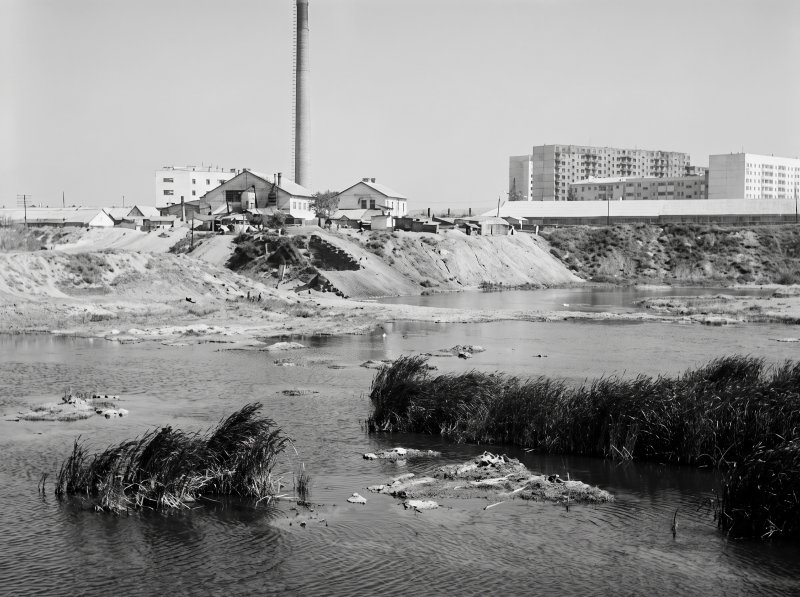
When you hear “IOR Park,” you tend to picture the entire place as a single landscaping project: someone arrived with a plan, dug the ground, planted trees, poured concrete and that was that. The reality is more complicated—and more interesting. Titan Lake, as it is known in hydrographic sources, was already there before any landscape architect put pencil to paper. Fed by underground springs and rainfall, the lake is described by hydrologists as a natural formation.
The landscaping work carried out during the 1960s, between 1965 and 1970, was intended to tame and make the most of what was already there: a temperamental stretch of water with unstable banks but genuine charm. Instead of removing or filling in the lake, the designers decided to build around it. The result? A park that feels organic because, ultimately, much of it truly is.
2. Two neighbourhoods, one park: IOR’s hidden geography
Before it became the single destination we know today, the area now occupied by the park comprised two sections with distinct identities. The side facing Baba Novac Street was called “Reconstrucții,” while the area towards today’s Nicolae Grigorescu Boulevard was known as “Flax.” The bridge on Liviu Rebreanu Boulevard, which you cross without giving it a second thought when walking from one end of the lake to the other, still separates Titan 1 from Titan 2. Before the bridge was built, the two areas were divided by an earth embankment.
For neighbourhood residents, the differences between the two areas remained obvious long after official maps had merged everything under the name IOR. Each had its own landmarks, its own makeshift cafés and its own gangs of children defending their territory with great seriousness. The bridge was a technical structure, but it also served as a symbolic border—a place where alliances were negotiated and invisible lines, understood only by the locals, were drawn.
3. Flax, the Titan neighbourhood’s own “Black Sea”
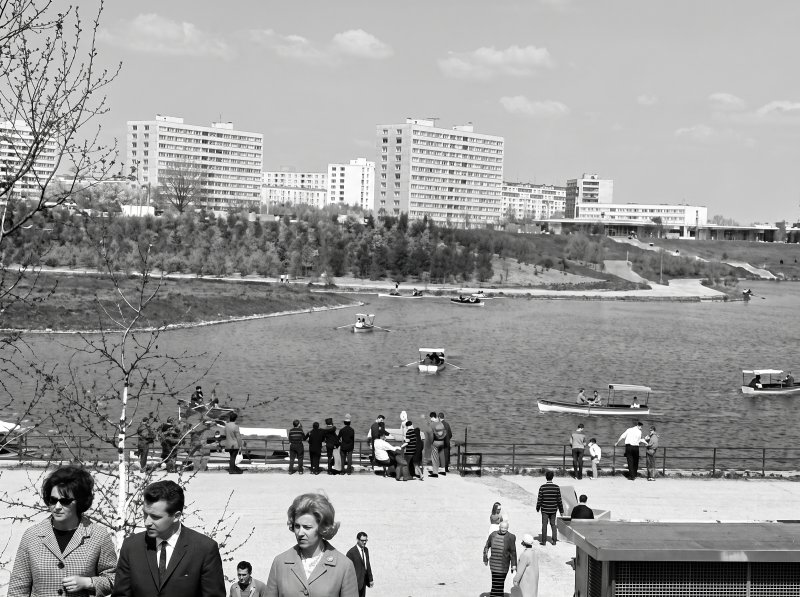
When someone mentions the “seaside” in Bucharest, you probably think of taking bus 104 to the North Railway Station and catching a train to Constanța. For the children of Titan during the 1970s and 1980s, however, the seaside was just a stone’s throw from their apartment blocks: Flax, the section of the lake that served as sea, swimming pool and unsupervised adventure all at once. Before modern swimming pools became the norm, and long before anyone had heard of magnetic wristbands, local residents swam in the lake without much ceremony.
Flax was where you learned to swim without certified instructors and discovered that Bucharest’s water could be green, cold and full of surprises. For parents, the fact that their children spent hours in the lake was probably a source of anxiety they preferred to ignore. For the children, it was pure freedom. Adventure, vague danger and the mystery of the depths—all the ingredients of a memorable summer, with no holiday vouchers or online reservations required.
4. A brickworks became a green park
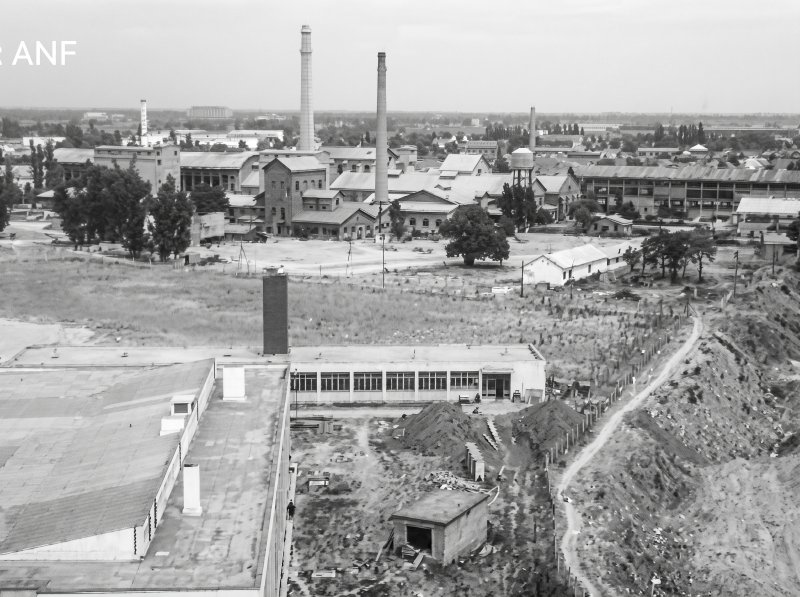
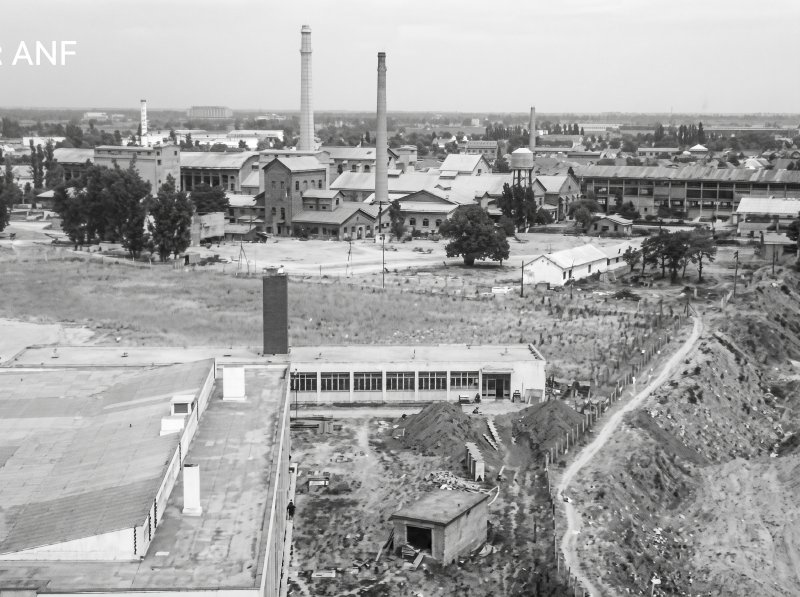
Urban parks usually have humble origins, but few can claim to have grown from the remains of an industry. Part of IOR Park was created on the site of a former brickworks. The extraction of clay and production of bricks had left behind hollows, wetlands and uneven terrain that influenced the future park’s shape.
What now appears to be natural relief—the small rises and dips, the lower-lying areas and irregular banks—also has an industrial origin. The former brick factory shaped the local geography just as much as natural forces did. Instead of levelling everything and starting from scratch, the landscape architects worked with what they had: land marked by human labour, as well as by the slow processes of water and vegetation returning after the machinery had fallen silent.
5. The old trees were planted by neighbourhood children
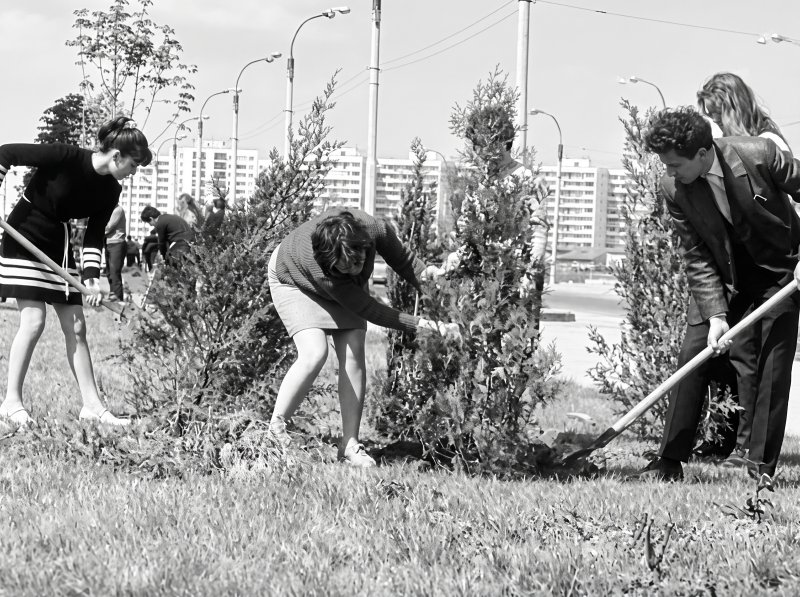
If you sit in the shade of a mature chestnut tree in IOR Park, you may be sheltered by the foliage of a tree planted by a Titan schoolchild six decades ago. The landscaping project that began in 1965 included large-scale organised voluntary labour campaigns involving neighbourhood residents, including children and workers from factories such as “23 August,” “IOR” and “Flacăra Roșie.” For the young people of the time, planting trees was perhaps less of an ideological chore and more of an opportunity to escape the classroom, get their hands dirty and leave something behind.
Some of the people who now walk through the park with their grandchildren recognise trees they planted as children. They recall carrying saplings, digging holes in the clay soil and listening to supervisors shouting contradictory instructions. These trees grew alongside the neighbourhood. They watched apartment blocks rise, shops change and generations follow one another.
6. IOR Park once had an aircraft confectionery shop
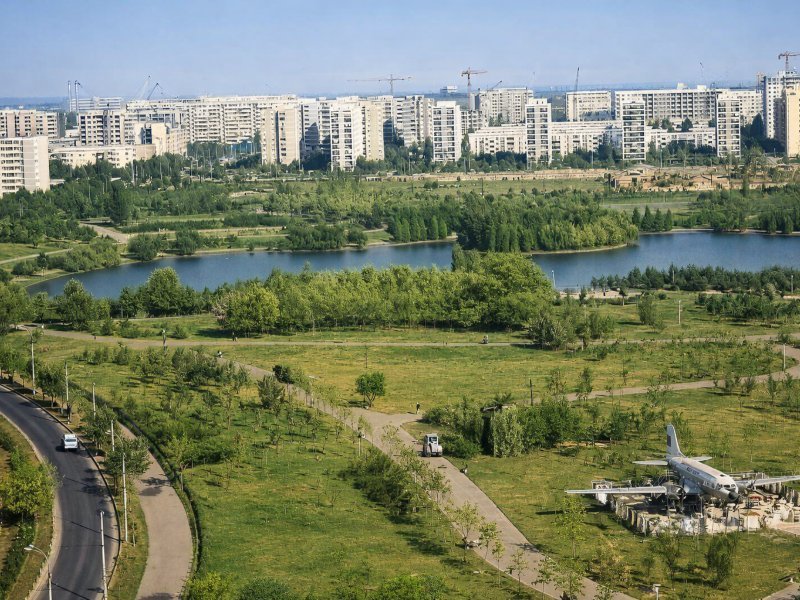
Photo: On the right - the plane installed in IOR Park in the 70s
In 1969, IOR Park received an unusual gift: a retired Soviet Ilyushin Il-14 aircraft donated by Băneasa Airport. The aircraft was installed near the park entrance facing Baba Novac and converted into a confectionery shop. At first, visitors could sit at tables inside the refurbished cabin. Later, when the interior became unusable, the terrace beneath the wings became a favourite meeting place.
For the children of Titan, the amandina chocolate cakes served at the aircraft confectionery shop had a special flavour. The combination of cakes and the physical presence of a real aircraft—with its oval windows, metal fuselage and industrial charm that seemed capable of resisting time—turned a simple trip to the confectionery into an adventure. Adults came for the weak coffee and conversation; children came for the aeronautical fascination and the sugar in the meringues. The aircraft eventually disappeared, consumed by fire, but its memory survives in residents’ stories and a handful of yellowing photographs.
7. IOR Lake is one of Bucharest’s best birdwatching locations
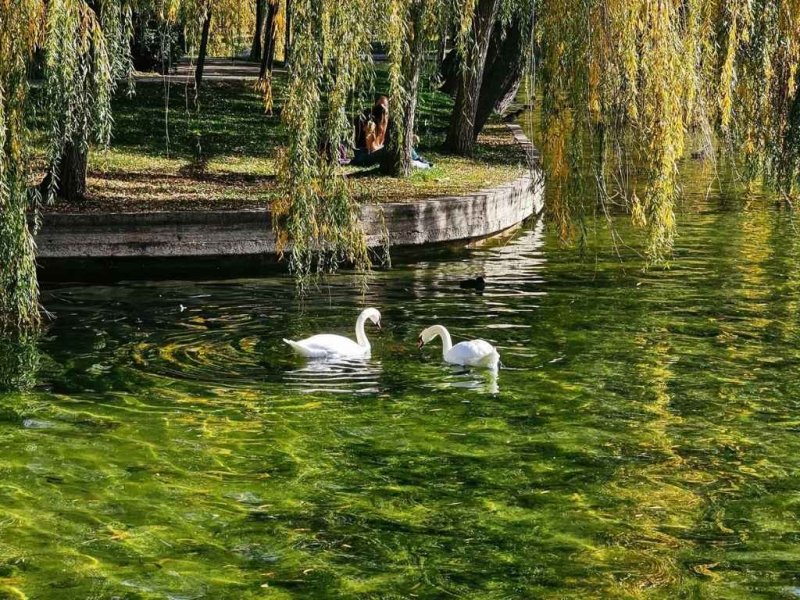
Photo: Swans on IOR Lake
Ducks and swans attract most of the attention because they glide into view with all the confidence of celebrities who have read their contracts. The lake, however, supports a much richer bird population. The Romanian Ornithological Society has ranked IOR Park among Bucharest’s three leading birdwatching areas, alongside Morii Lake and Tineretului Park. Coots, moorhens, great cormorants, gulls, night herons and swans can all be seen around the water.
A count conducted in January 2020 produced some revealing figures. Romanian Ornithological Society volunteers recorded 985 black-headed gulls, 328 coots and 265 mallards on the lake. They also spotted a gadwall, a greater white-fronted goose and a gull that had travelled all the way from Ukraine, identified by the ring attached to its leg. In other words, IOR Lake also operates as a transit hotel for migratory birds—and some of its guests arrive from distances that would already have Titan residents asking for a connecting flight and checked baggage.
8. IOR Lake has five islands, each with its own name and story
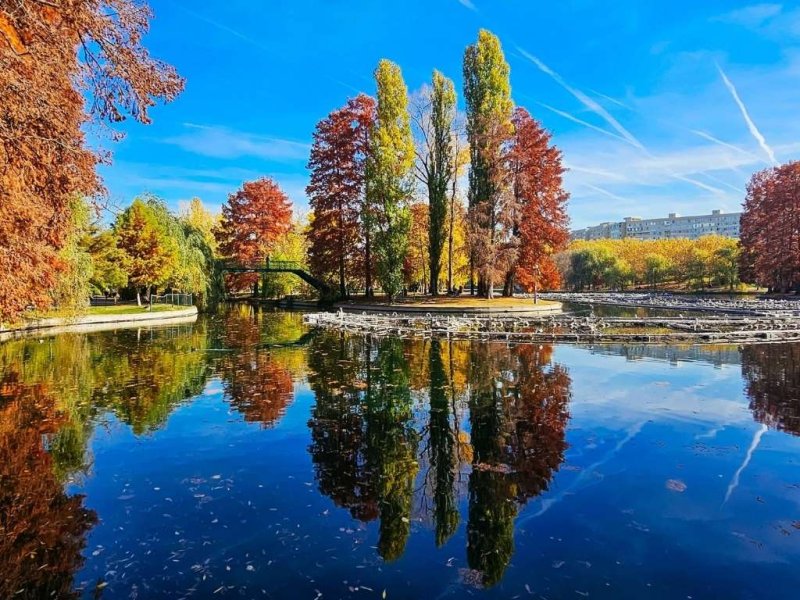
Photo: Pensioners’ Island
IOR Lake contains five islands, each with its own identity and a name acquired through local usage and the repeated observations of people who came here for a walk. Pensioners’ Island was, logically enough, the place where benches filled with older people who came to sit in the sun and discuss politics, the weather and young people nowadays. Arts Island earned its name after sculptures and artistic installations became part of the landscape.
Dog Island was favoured by owners who brought their four-legged companions and allowed them to play freely. Rose Island, also known as Fishermen’s Island, naturally attracted angling enthusiasts, who spent hours waiting for the perfect fish while discussing everything unrelated to fishing. Duck Island completes the archipelago. It is a refuge for birds and the wildest of the five, as it can be reached only by water. Pensioners’ Island and Duck Island are located in the Baba Novac half of the park, while the other three islands lie within the former Flax area.
Passed down by word of mouth, these names gradually became part of the park’s emotional geography. Official maps may ignore them, but for anyone who has spent time in IOR, the islands have both names and personalities.
9. IOR Park is full of sculptures
In 2013, IOR Park hosted the “Sculpture of the Third Millennium” creative camp, an event that brought six artists together to work outdoors under the curious gaze of visitors. They carved and shaped marble, wood and metal, turning raw materials into works of art that remained in the park. Among them is “The Horse of the Titans,” a monumental metal structure created by artist Mihaela Diaconu, which quickly became a visual landmark.
Watching the creative process unfold in public was unusual for Bucharest. You could see a block of marble gradually transformed, metal bent and welded and abstract ideas taking physical form. For the artists, working in a public space meant direct interaction with the public, questions, comments and, occasionally, unexpected criticism. For passers-by, it was a practical art lesson requiring neither an admission ticket nor an appointment.
10. IOR Park has an enormous wound: the restituted land where nature was mutilated
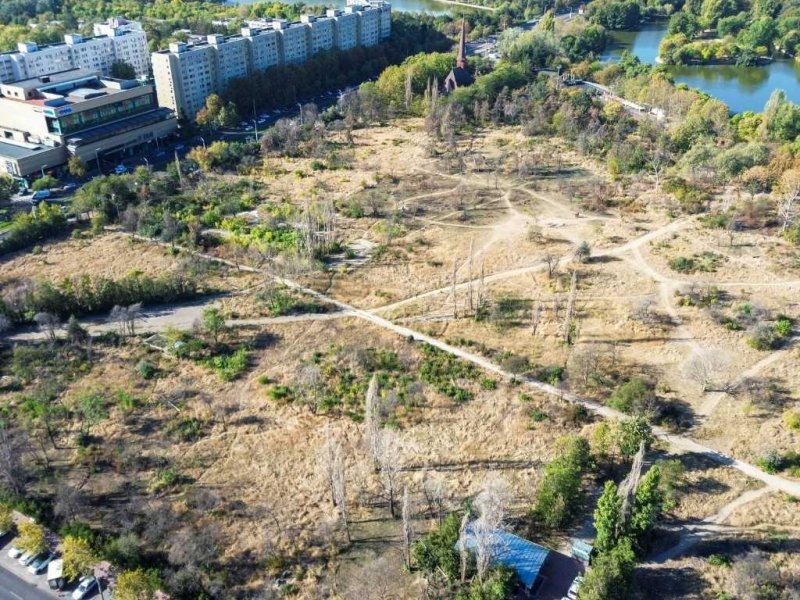
Photo: Primăria S3
The legal disputes surrounding IOR Park centre on a 112,339-square-metre plot—more than 11 hectares. The area restituted in kind in 2005 is larger than many entire parks in Bucharest. In the years that followed, the vegetation on the site was affected by tree die-offs and repeated fires—21 fires in just four years, making it difficult to attribute them to mere coincidence or negligence.
The legal battle to recover the land continues in 2026, with cases dragging through the courts, conflicting expert assessments and tensions extending far beyond strictly legal matters. For Bucharest residents, the loss of 11 hectares from IOR means more than a matter of square metres on paper. It means reduced access to green space, neglected and unsanitary areas, and the sight of a mutilated park that bears little resemblance to what it once was.
Despite all these complications, IOR Park remains one of Bucharest’s best-loved green spaces. Its lake—with its strange history, picturesque islands and the memories of generations who swam in Flax and ate cakes beneath aircraft wings—continues to offer cool air, shade and stories to those who know how to listen.
/ The black-and-white images were restored with the help of artificial intelligence from footage held by the Romanian National Film Archive.
You may also like: The History of the Titan Neighborhood. Where the Name “Balta Albă” Comes From, How IOR Park Appeared, and Why the Metro Redefined Its Existence