10 interesting things you didn’t know about the Old Town of Bucharest
- Articles
- 21 APR 26
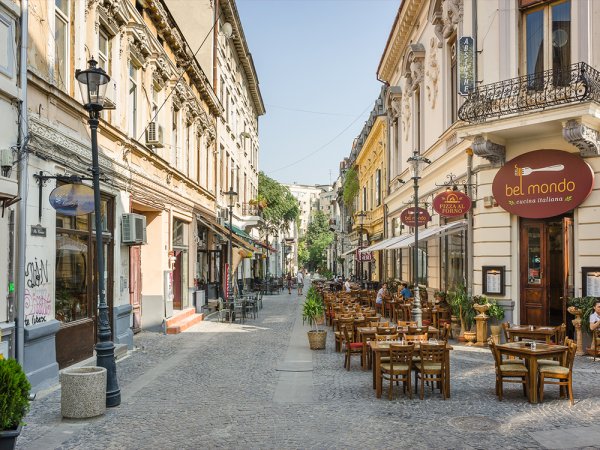
The Old Town of Bucharest is today one of the most lively and photographed places in the capital, however few truly know how deep its historical roots are. The area did not simply appear as a modern commercial or touristic space, but has its origins as early as the Middle Ages, when Bucharest was beginning to take shape as an important economic and administrative point in Wallachia.
A history that begins before what you see today
In the 15th–16th centuries, this area was the commercial core of the city, the place where merchants from various regions came to sell their goods. In fact, the names of the streets in the Old Town perfectly reflect this organization: each guild had its own area – Lipscani (merchants who brought goods from Leipzig), Șelari (craftsmen who made saddles), Blănari (fur traders). Practically, the entire district functioned as a well-structured economic organism.
Why it is called Lipscani and what connection it has with Germany
One of the most well-known names associated with the Old Town is “Lipscani”. Many use it to designate the entire area, but few know where it comes from. The name comes from the city of Leipzig in Germany, which in the past was an important European commercial center.
Romanian merchants brought luxury goods from there, such as fine fabrics, jewelry, or decorative objects. They were called “lipscani”, and the street where they carried out their activity took over this name. Over time, the name became a symbol of prosperous trade and of Bucharest’s international connections from the past.
The disappeared inns that shaped the area
What you see today in the Old Town is only a part of what once existed. In the past, the area was full of inns – true commercial and social centers. These were not only accommodation places, but also spaces where business was conducted, contracts were negotiated, and merchants from all corners of Europe and the Orient met.
Hanul lui Manuc is one of the few that have survived until today, but in the past there were many others: Hanul Șerban Vodă, Hanul Grecilor or Hanul Zlatari. Most disappeared following fires, earthquakes, or urban modernizations in the 19th and 20th centuries. However, their structure deeply influenced the current organization of the area.
The fire of 1847 that changed everything
A crucial moment in the history of the Old Town was the great fire of 1847, which destroyed a large part of Bucharest. The flames consumed numerous buildings in this area, including inns and shops, completely changing the urban appearance.
After this disaster, the authorities began a reconstruction process that led to the appearance of more solid buildings, made of brick, and to a clearer urban organization. Thus, the Old Town began to take the shape that we recognize today, combining oriental influences with European architecture.
The National Bank and its role in the development of the area
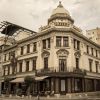
The Old Town was not only a place of traditional trade, but also an important point for the development of the banking system in Romania. The old building of the National Bank, built at the end of the 19th century, is located right in this area.
The presence of this institution attracted numerous businesses around it and consolidated the status of the area as the financial center of the capital. Merchants no longer made only direct exchanges of goods, but began to use modern financial instruments, which contributed to the economic development of the city.
The secret passages and hidden cellars
One of the most fascinating aspects of the Old Town is the existence of underground passages and cellars that date back hundreds of years. These were used for storing goods, but also as transport routes or even refuges during periods of conflict.
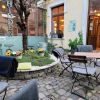
Many of these structures still exist today, being discovered during restoration works in recent decades. Some restaurants and bars in the area have integrated these cellars into their design, offering visitors an authentic experience and a direct connection with the past.
The transformation after communism
During the communist period, the Old Town was neglected and left in an advanced state of degradation. Many historical buildings were abandoned, and the area lost its economic and social importance.
After 1990, however, things began to gradually change. Private investments and restoration projects brought the area back to life. Buildings were renovated, and commercial spaces were transformed into restaurants, cafes, and clubs. Today, the Old Town is one of the main attraction points for both tourists and locals.
The eclectic architecture and diverse influences
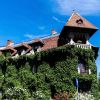
Another interesting aspect is the diversity of architectural styles in the Old Town. Here you can see neoclassical, baroque influences, but also oriental elements, all coexisting in a relatively small space.
This diversity reflects the complex history of Bucharest, located at the intersection of multiple cultures and influences. Each building tells a story, and the architectural details – from ornamented balconies to decorated facades – offer clues about the period in which they were built and about their initial role.
The place where Bucharest’s nightlife was born
The Old Town is not only a historical place, but also the epicenter of nightlife in Bucharest. Its transformation into an area full of bars and clubs began in the 2000s and continues today.
This evolution attracted a young and diverse public, contributing to the creation of a vibrant atmosphere. At the same time, it raised challenges related to heritage conservation and the balance between tourism and local life. However, this mix between past and present is one of the elements that make the area so special.
The urban legends that still circulate
Like any place with a rich history, the Old Town is full of legends and mysterious stories. It is said that some of the old buildings are haunted or that certain underground passages hide undiscovered treasures.
Although many of these stories cannot be verified, they contribute to the charm of the area and attract the curiosity of visitors. Whether they are true or not, these legends add an extra layer of mystery and fascination.
A space that continues to evolve
Even if it is called the “Old Town”, this place is in continuous transformation. New businesses constantly appear, buildings are restored, and cultural events animate the area throughout the year.
This dynamic makes the Old Town always different from one visit to another. It is a place where past and present coexist in a unique way, offering a complex and authentic experience. Whether you are a tourist or a local, there is always something new to discover here.
We also recommend: Șelari Street in the Old Town, kilometer zero of love: the Red-Light District, Zaraza’s end, Lady Păuna’s passions