Bucharest’s North Railway Station to Undergo Major Modernisation. What the City Gains — and What It Loses — by 2029
By Bucharest Team
- NEWS
- 19 JAN 26
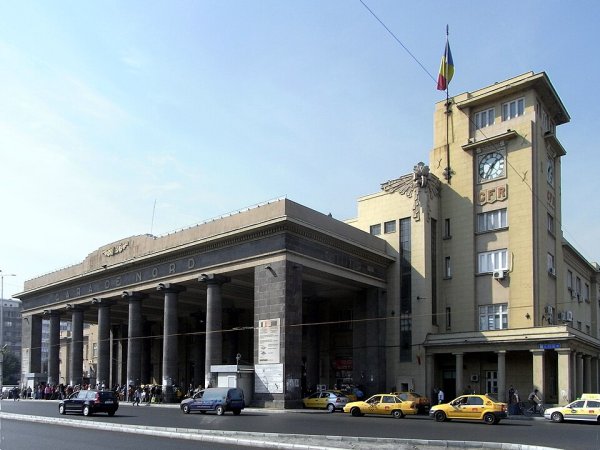
Bucharest’s North Railway Station, the capital’s main rail hub and the transit point for approximately 85% of the city’s rail traffic, is set to enter a large-scale renovation and modernisation process. The project, estimated at around 500 million lei, is scheduled to begin this month and will cover a total area of roughly 33,000 square metres.
The works include the restoration of the building’s façades, the consolidation of its structural framework, and the full modernisation of electrical, heating and climate control systems. Interventions will be carried out with respect for the station’s heritage elements, without altering their historical value. The Royal Lounge is also included in the renovation plans.
Improving passenger comfort is another key objective of the project. The plans предусматри installation of state-of-the-art lifts, facilities for people with reduced mobility, and digital information points providing real-time access to train schedules. The commercial areas will also be reconfigured: existing kiosks will be replaced with modern retail zones, designed in line with major European railway stations.
For transparency, CFR has launched a dedicated online platform where the public can follow the progress of the works. Company representatives state that rail traffic will not be fully suspended during the renovation, although certain operational adjustments will be made and announced in advance.
The project is financed through a combination of state budget allocations and non-reimbursable external funds, under the Transport Programme 2021–2027. The estimated completion date is 2029.
Beyond the technical details and the official timeline, the project raises a broader question for the city: what does Bucharest actually gain from this investment, and what are the costs it will bear in the meantime?
What Bucharest Gains
1. Infrastructure brought up to current functional standards
North Railway Station is an intensively used building that has long lagged behind in technical terms. Strengthening the structure and upgrading essential systems address long-standing functional deficiencies, not merely aesthetic concerns.
2. Improved comfort and accessibility
The installation of lifts, accessibility features and digital information points brings the station closer to the minimum standards expected of a modern public space. For a city often criticised for inadequate accessibility, this represents a meaningful step forward.
3. Reorganised commercial spaces
Replacing improvised kiosks with integrated commercial zones, inspired by European railway stations, has the potential to improve passenger experience and make more efficient use of space. In theory, this could significantly reduce the visual and functional clutter that has characterised the station for years.
4. Preservation rather than removal of heritage
Including heritage elements, such as the Royal Lounge, in the renovation without altering their character sends a positive signal. The project aims to integrate historical identity into a functional contemporary framework, rather than erase it.
What the City Loses (at Least Temporarily)
1. Long-term inconvenience for passengers
Even without a full suspension of rail traffic, a multi-year construction site in a hub handling 85% of Bucharest’s rail traffic will inevitably generate disruptions: altered routes, longer waiting times and passenger confusion. These temporary costs should not be underestimated.
2. A distant completion deadline
For critical infrastructure, 2029 is a long horizon. The risk of delays, budget adjustments or shifting priorities is real, particularly given the mixed funding structure. Until completion, the station will operate under prolonged provisional conditions.
3. Increased pressure on surrounding areas
Large-scale works may affect pedestrian and road traffic in an already congested and urbanistically fragile area. Without close coordination with local authorities, the impact on neighbouring districts could be significant.
A Necessary Investment, but Not a Complete Solution
The modernisation of North Railway Station is undeniably necessary. However, its real effectiveness will depend on how well it is integrated into a broader urban and rail transport strategy. A modern station, poorly connected to the rest of the city, risks remaining an isolated improvement rather than a transformative one.
Photo: Wikipedia