Constantin Mille’s granddaughter conquered the dictator Gheorghe Gheorghiu Dej. The movie-like story of actress Dina Cocea
By Bucharest Team
- Articles
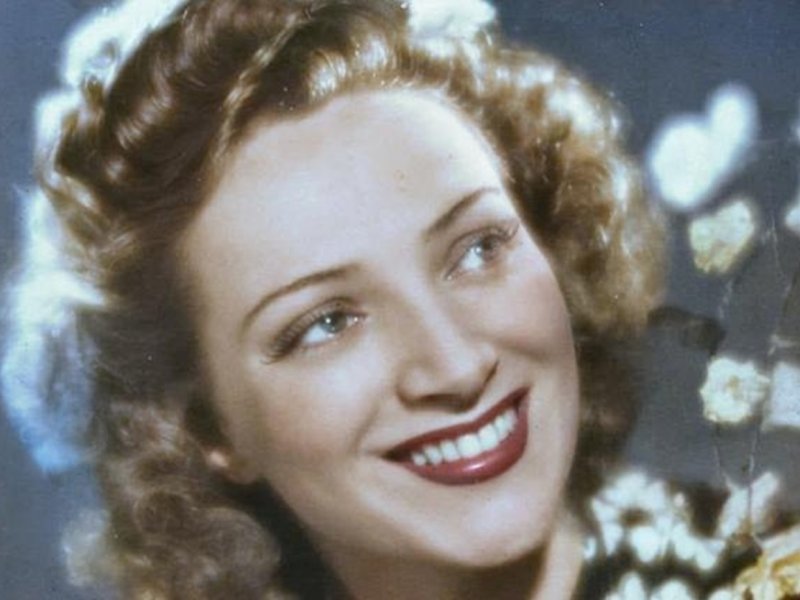
Dina Cocea was one of the most beautiful and fascinating actresses in Romania, a presence that caught the attention of Bucharest high society from her very first public appearances. Her charm, however, was not only aesthetic: her talent, intelligence, and charisma allowed her to establish herself as a prominent figure in Romanian theater and cinema. Dina Cocea’s life was, in many ways, worthy of a movie script, filled with love stories, an exceptional career, and national and international recognition.
Intellectual roots and debut in European theater
Dina Cocea was born on November 27, 1912, in Bucharest, into a family of renowned intellectuals. Her father, N.D. Cocea, was a well-known writer and pamphleteer, while her mother was the daughter of Constantin Mille, one of the prominent figures of Romanian culture. Moreover, her aunt, Alice Cocea, had made a sensation on the theater stages in Paris during the interwar period, providing Dina with a model of artistic excellence and valuable support for her own career.
After finishing high school, Dina went to Paris to study theater, determined to perfect her talent in the cultural capital of Europe. In 1934, she completed her studies, gaining a solid foundation that allowed her to confidently approach both the stage and the screen. Although opportunities in France were numerous, Dina chose to return to Romania, wishing to contribute to the development of theater and cinema in her home country.
Rise on the stages of Bucharest
In 1935, Dina Cocea debuted in Bucharest as an actress with the Bulandra-Maximilian-Fotino Company, quickly winning over audiences and critics alike. Although her first role was in the French film La jeune fille d’une nuit, her return to Romania marked the beginning of a prodigious career.
There, she performed both on theater stages and in numerous films, including Neamul Șoimăreștilor, Ștefan cel Mare, and Iancu Jianu. Her roles were appreciated not only for her beauty but also for the depth of her performances and remarkable expressiveness.
For seventy years, Dina Cocea successfully alternated between theater and cinema, maintaining a balance between live performances and film projects. In parallel, she held the position of theater director for thirty years at Teatrul Nostru, a private institution she also patronized, which became a launching pad for many Romanian artists.
University professor and exceptional playwright
In addition to her stage activity, Dina Cocea was a university professor, training entire generations of actors and actresses. She also actively engaged in dramaturgy, contributing to the development of the Romanian theatrical repertoire.
Through her efforts, she influenced both acting style and professional standards, leaving a lasting mark on Romanian culture.
Recognition of her merits came in the form of numerous awards and distinctions: Emeritus Artist (1962), Order of Labor, 2nd Class (1967), Order of Cultural Merit, 2nd Class (1967), Order of the Star of Romania (2002), and the title of Doctor Honoris Causa at IATC.
In 2006, the Romanian postal service issued a stamp featuring Dina Cocea’s portrait as part of the series “Great Contemporary Romanian Actors,” symbolizing enduring recognition of her contributions to the arts.
Beauty and famous romantic relationships
Beyond her undeniable talent, Dina Cocea was known for her striking beauty and charm, which attracted men from all social classes. It is said that she was courted by several prominent figures, including Baron Manfred von Killinger, then the German ambassador to Romania.
However, perhaps the most fascinating and controversial love story was the one associated with the communist dictator Gheorghe Gheorghiu-Dej.
According to rumors, Dina managed to catch Gheorghiu-Dej’s attention, in a discreet and brief romantic relationship. Neither of them wanted their connection to become public, which preserved the mystery surrounding this story.
This relationship highlights not only the actress’s charisma but also the influence that her beauty and presence could exert, even on the most feared communist leader of Romania.
Love and marriage with Mihai Brediceanu
Despite numerous rumored romances, Dina Cocea had only one short-lived marriage in her youth, in Paris. Nevertheless, her great love and lifelong partner was conductor Mihai Brediceanu, her last husband.
Their relationship was deep, based on mutual respect and a shared passion for art, complementing the actress’s artistic journey.
Landmark film and theater roles
Throughout her career, Dina Cocea played a wide range of roles, from historical characters to contemporary figures, demonstrating impressive versatility.
In film, she appeared in memorable productions such as Neamul Șoimăreștilor, where she combined drama with sensitivity, and Ștefan cel Mare, in which she conveyed the nobility and courage of the national hero.
On stage, her presence was always captivating, drawing the audience’s attention and receiving continuous applause.
Impact on Romanian theater and culture
Dina Cocea was not only an actress but also a cultural reformer. Through her work as a theater director, she created a stimulating artistic environment, promoting innovation and supporting young artists.
As a university professor, she imparted knowledge and theatrical values, contributing to the training of actors who preserved Romanian stage traditions and raised professional standards.
Recognition and tributes
Throughout her life, Dina Cocea was appreciated not only for her talent but also for her elegance, intelligence, and good taste. Awards such as the Order of the Star of Romania or the title of Doctor Honoris Causa reflect her exceptional contribution to Romanian culture.
In 2006, featuring her portrait on a postal stamp symbolized recognition of her merits both for the general public and for the history of Romanian theater.
Final years and legacy
Dina Cocea died on November 28, 2008, at the age of 95, from natural causes, a myocardial infarction ending a long and accomplished life. She was buried at Bellu Cemetery in Bucharest, leaving behind an impressive artistic legacy and life stories worthy of a movie. Her memory remains alive not only through her roles but also through her cultural and social impact in Romania.
Dina Cocea remains one of the most important female figures in Romanian culture, a woman who combined beauty, talent, intelligence, and the courage to follow her dreams. Her life story, sprinkled with discreet love affairs, artistic achievements, and national and international recognition, makes her an emblematic figure of the 20th century.
Her rumored discreet connection with Gheorghe Gheorghiu-Dej adds a fascinating chapter to her biography, illustrating how influential and compelling this actress was in her era.
Her career, personal life, and contributions to Romanian theater make Dina Cocea a legendary figure, a true goddess of the Romanian stage and screen, whose memory continues to inspire both artists and the general public.
We also recommend: The stars of interwar Bucharest: Virginica Popescu embraced acting and music from the age of 13