Casa Bosianu – Where the History of the Union of the Principalities Meets Bucharest’s Astronomy
By Bucharest Team
- Articles
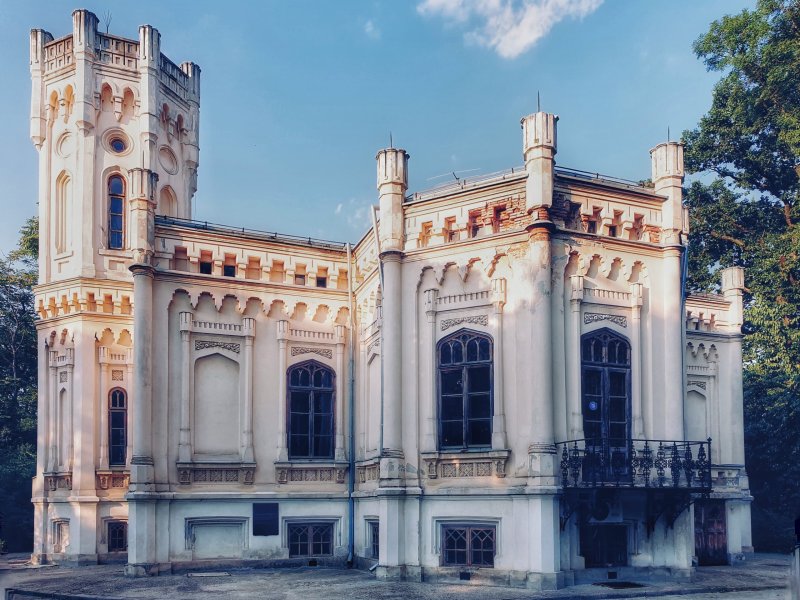
Hidden discreetly on Cuțitul de Argint Street, near Carol Park, Casa Bosianu is one of those Bucharest buildings that encapsulate political history, unionist symbols, and the beginnings of modern science in Romania. Few people know that decisive plans for the Union of the Romanian Principalities were woven within its walls, and that its name is closely linked to key figures of the 19th century.
Villa Bosianu and Its Connection to Alexandru Ioan Cuza
According to tradition and indirect accounts, on the eve of January 24, 1859, Alexandru Ioan Cuza is believed to have been secretly hosted in the villa of Constantin Bosianu. The aim was crucial: protecting the future ruler from possible assassination attempts during an extremely tense political moment.
To ensure his guest’s safety, Bosianu reportedly turned the villa into a small fortress: armed guards, windows reinforced with iron bars, and a constantly supervised observation tower. Although there are no official documents that unequivocally confirm Cuza’s stay here, the hypothesis is supported by oral tradition and by historians such as Magda Stavinschi.
Constantin Bosianu – The Man Behind the House
Born into a boyar family, Constantin Bosianu was one of the most prominent intellectual and political figures of his time. Educated in law in Antwerp and in letters in Paris at the Sorbonne, he went on to become:
- the first dean of the Faculty of Law in Bucharest
- Prime Minister of Romania
- director of the Eforia Școalelor
- member of the Romanian Academy
A fervent supporter of the Union, Bosianu served as secretary of the ad-hoc Divan of Wallachia and vice-president of the Central Committee of the Union. On January 24, 1859, as a member of the Wallachian Elective Assembly, he voted for Cuza’s election as ruler of Wallachia.
Architecture and Symbolism of Villa Bosianu
The house was built between 1853 and 1859 in an elegant Neo-Gothic style, on land once covered with vineyards and orchards—hence the name of today’s Șoseaua Viilor (Vineyards Road). The design was created by architect Luigi Lipizer, also known for the Librecht-Filipescu House (the University House).
The villa’s architectural and decorative details are rich in symbolism:
- small windows in red, yellow, and blue—the Romanian tricolor, used as a unionist emblem
- door details shaped like the Star of David
- octagonal rooms, often interpreted as Masonic symbols
- a stone entrance staircase designed to facilitate both carriage access for ladies and mounting horses for gentlemen
During Bosianu’s government, the villa served as the seat of the Council of Ministers, and it was here that the journal “Dreptul” was founded—the oldest Romanian legal publication, still issued today.
From Politics to Astronomy
After Bosianu’s death, the building entered the patrimony of the Meteorological Institute and later became the core of the Bosianu Astronomical Observatory. Over time, notable figures associated with the villa included:
- Ion Câmpineanu
- Ștefan Hepites
- Nicolae Coculescu, founder of the Bucharest Astronomical Observatory
Today, the villa’s library houses over 11,000 volumes of astronomy and belongs to the Astronomical Institute of the Romanian Academy.
Villa Soare – Completing the Ensemble
Nearby stands Villa Soare, also built in Neo-Gothic style and inaugurated by Ștefan Hepites for the Meteorological Institute. It served both as administrative space and as a residence for some of the Observatory’s directors. Although its original tower was destroyed in the 1940 earthquake, the building was restored in 1999.
A lesser-known fact: Hepites was the one who established Romania’s official time, founding the first national time service in 1892, used by the railways across the country.
Casa Bosianu Today – A Fragile but Visitable Heritage Site
Villa Bosianu suffered significant damage in the 1940 and 1977 earthquakes. Although restored in 1992, the building now requires another major intervention, as gradual deterioration is visible. It is listed as a historical monument (code B-II-m-A–18518), even though the official name and dating in older records do not fully reflect its true history.
You might be interested in:
“Amiral Vasile Urseanu” Astronomical Observatory
Today, the house can be visited free of charge through guided tours organized by the Astronomical Institute, by prior appointment, for groups of at least two people.
📍 Address: 5 Cuțitul de Argint Street, Bucharest (access from the street, not from Carol Park)
Casa Bosianu is more than a beautiful building—it is a silent witness to moments that shaped Romania’s destiny. A place where politics, science, and national symbols converge, and one that deserves to be rediscovered by every visitor to Bucharest.