Locations close to MINA – Museum of Immersive New Art

  • Museums & Galleries

    The National Aviation Museum

    Romania has a longer and more serious relationship with aviation than most people remember. Traian Vuia completed the first fully mechanical flight in 1906. Aurel Vlaicu built his own aircraft in the workshops of a Bucharest school. Henri Coandă worked on the world's first jet-powered plane. All three did this at an age when others were barely fini...
  • Museums & Galleries

    Gaep Gallery

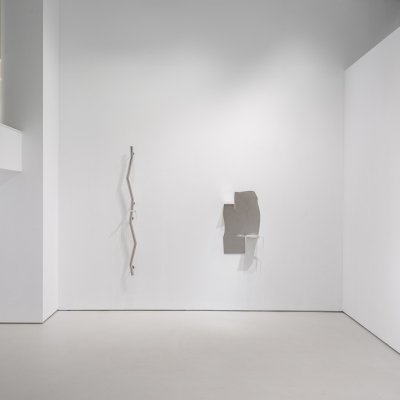
    Gaep Gallery, founded in 2014, is a contemporary art space located at 8 Giuseppe Garibaldi Street in Bucharest. Founded by Andrei Breahnă and Raluca Șoaita, the gallery initially focused on promoting artistic practices from Eastern Europe but has since expanded its scope to include international artists, addressing sociopolitical themes and diverse...

  • Museums & Galleries

    Spring Palace (Ceaușescu House)

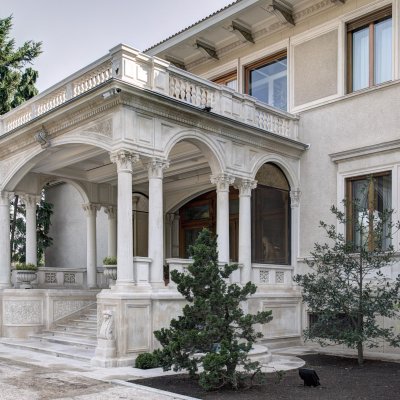
    The Spring Palace, also known as the Ceaușescu House, is, as the name suggests, the former private residence of Nicolae and Elena Ceaușescu. Located in Bucharest, this palace offers a fascinating glimpse into the luxurious life of the former dictator and his family, and is one of the most impressive examples of architecture and history from Romania...

  • Museums & Galleries

    Sandwich Gallery

    Sandwich Gallery is a collective-run art space founded in 2017, transforming a narrow in-between area (roughly 11 square meters) tucked between two utility buildings into a vibrant incubator for site-specific and experimental installations. Located at 13 Pechea Street in Sector 1, the gallery's unconventional dimensions—about 1.5 meters by 8 meters...

  • Museums & Galleries

    The Perfume Museum

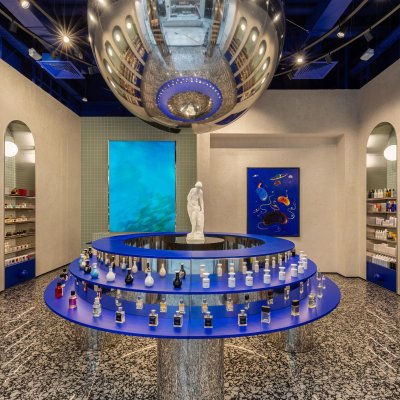
    Inside the Beautik perfumery on Calea Dorobanților, there is a corner of Bucharest that few people know about and even fewer forget after seeing it. The Perfume Museum impresses differently than you might expect — through density, through stories, through the weight of time concentrated in a few dozen square metres. Over 3,000 perfume bottles, each...

  • Museums & Galleries

    The Zambaccian Museum

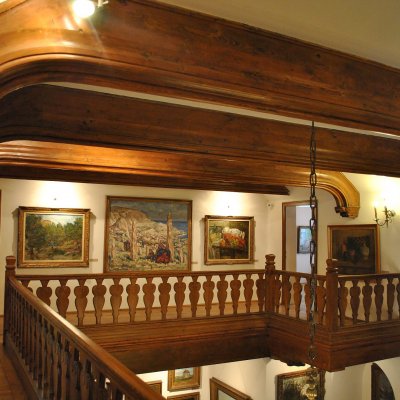
    The Zambaccian Museum is one of those places Bucharest keeps quietly to itself, far from the busier tourist trails. Tucked into a calm corner of the Dorobanți neighborhood, it makes no grand announcement from the outside — and that's precisely what amplifies the effect once you step in.
    The house was built specifically in the 1940s to hold the coll...

  • Museums & Galleries

    The Victor Babeș Memorial Museum

    Victor Babeș died in 1926, yet the Institute of Bacteriology he founded in Bucharest still bears his name today, as does the genus of parasites he discovered — Babesia — present in every microbiology textbook in the world. The world's first bacteriology treatise, written by him in 1885 alongside the French scientist Victor André Cornil, is on displ...

  • Museums & Galleries

    The National Museum of Maps and Old Books

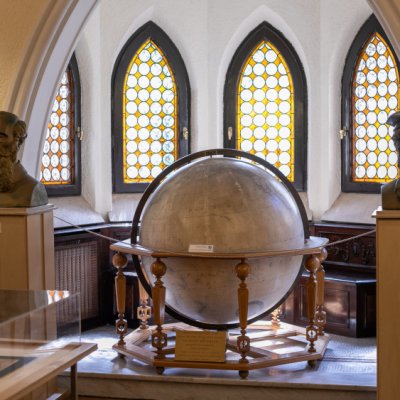
    National Museum of Maps and Old Books is a rare gem in Bucharest’s cultural landscape: vast collections of maps, atlases, globes, and old books, all housed in an elegant building that itself breathes history. Each map is a window into a different way the world was once known and imagined — vanished regions, shifting borders, old urban plans. The in...

  • Museums & Galleries

    Dimitrie Guști National Village Museum

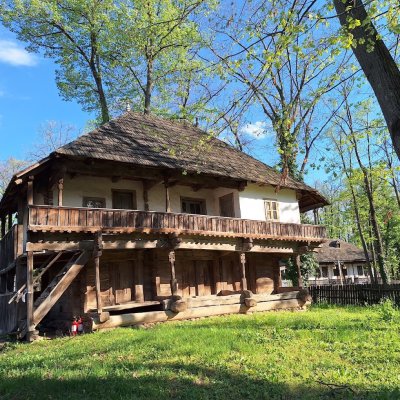
    The Dimitrie Gusti National Village Museum, the second largest open-air ethnographic museum in the world after the one in Stockholm, is a fascinating place where you can get to know your past, your history, your roots. It is the mirror of Romanian country life, the museum celebrating Romanian traditions and culture.

    Inaugurated in 1936 by the soc...

  • Museums & Galleries

    The Frederic and Cecilia Cuțescu-Storck Art Museum

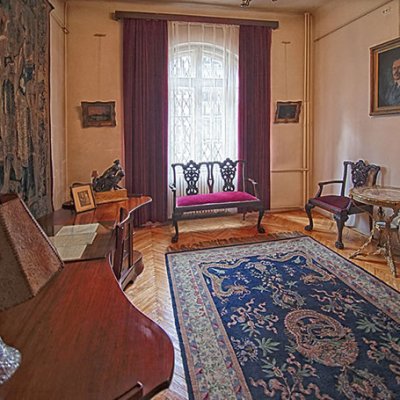
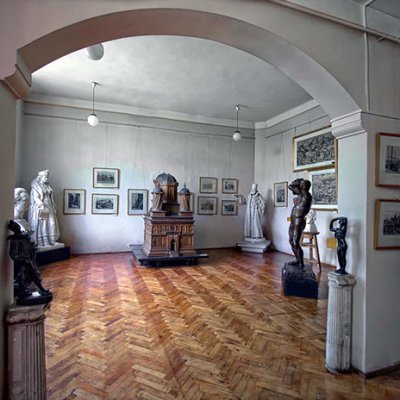
    On Strada Vasile Alecsandri nr. 16, in a quiet neighbourhood in the northern part of Bucharest, sits one of the most personal art collections in the city. The Frederic and Cecilia Cuțescu-Storck Art Museum was not built around institutional acquisitions or incidental donations — it is the actual house in which the two artists lived and worked, tran...

FAQ in case you need it

  • Yes, it is generally safe, with occasional petty theft in busy areas. Use common sense precautions.
  • No, but it helps. Many people speak English, especially younger generations and
    professionals.
  • Metro is fastest, public transport is cheap, and ride-sharing (Uber/Bolt) is convenient.
    Walking works great in the city center.
  • Yes. EU citizens can buy freely. Non-EU citizens can buy apartments and rent easily.
  • Bucharest is affordable compared to most EU capitals. Rent, food, and transport are
    reasonably priced. Costs depend on lifestyle.
  • Non-EU citizens need a visa or residence permit. EU citizens must register after 3 months
    with Romanian Immigration.
  • Yes. Public healthcare is accessible, but private clinics offer faster and higher-quality
    services. Health insurance is recommended.
  • Yes. Bucharest has several international schools and English-taught university programs,
    especially in medicine, business, and tech.