Where the name of Morarilor Park in Bucharest comes from. The history of a corner of nature in the heart of the Colentina neighborhood
- Articles
- 20 APR 26
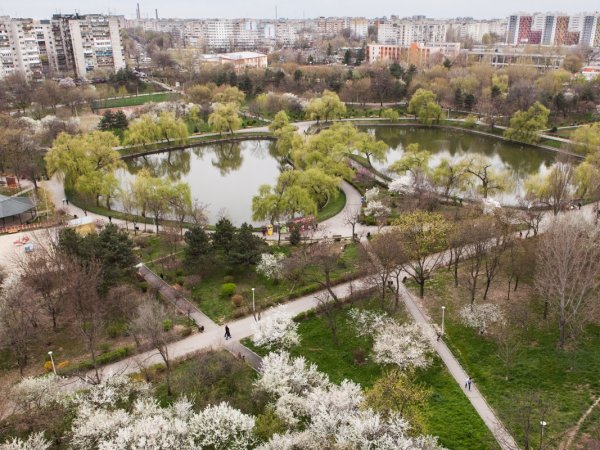
In a busy city like Bucharest, green spaces have become true refuges for residents. In the eastern part of the Capital, in the Colentina neighborhood, there is one of the most appreciated places for relaxation: Morarilor Park. Although it is not as famous as other large parks in the city, this green space has a special story, connected to the industrial past and the urban transformations of the area. The park represents today the largest public garden in East Colentina and an attraction point for families, athletes, and nature lovers. But beyond its modern alleys and recent facilities, its name hides a history that begins long before this place became a park.
The origin of the name: from water mills to urban park
The name of Morarilor Park is not random. It has its roots in a period when the area was not urbanized at all, but dominated by agricultural and craft activities. In the past, on the course of the Colentina River, several water mills operated, used for grinding cereals.
These mills represented an essential element of the local economy. Grains were brought here by residents from the surroundings and transformed into flour, using the natural energy of water. The area thus became known under the popular name “at the mills”, an expression that reflected the central role of these installations in the life of the community.
As the city expanded and industrialization took shape, the mills gradually disappeared. Their place was taken by factories, apartment blocks, and other urban constructions. However, the memory of those times was preserved through the name of the park, which recalls its origins.
The transformation of the area and the appearance of the park
After the disappearance of the mills, the area went through a profound transformation. The urban development from the second half of the 20th century completely changed the landscape, and the surrounding lands were integrated into the structure of the city.
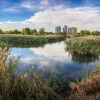
An element that remained constant was the lake in the area, part of the Colentina hydrographic system. It continued to be a landmark, even in the context of new constructions. In the 1970s, the authorities decided to capitalize on this space and create a place for relaxation for residents.
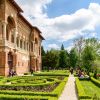
Thus Morarilor Park was born, arranged with alleys, benches, and a stone bridge that quickly became the symbol of the place. The park was designed as an accessible space, intended for recreation and socialization, in a period when such areas were essential for the quality of urban life.
The decline after 1990 and the recent rebirth
After the political and economic changes of the early 1990s, Morarilor Park entered a period of degradation. The lack of investments and maintenance led to the deterioration of infrastructure, and the space became less frequented.
For a while, the park remained a place known especially by the older residents of the area and by teenagers who used it as a refuge. Its natural charm still existed, but it was overshadowed by the general state of abandonment.
The situation changed radically starting with 2023, when the authorities launched an extensive process of rehabilitation and modernization. The works were carried out in stages and targeted all components of the park, from alleys and green spaces to sports facilities and relaxation areas.
The modernization of 2023: a new beginning
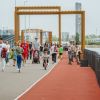
The modernization project completely transformed Morarilor Park, bringing it to modern standards and making it attractive for all age categories. Among the most important interventions are the rehabilitation of the alleys and the creation of a running track of approximately one kilometer, which surrounds the park.
This track, made of tartan, reduces the impact on joints and offers excellent conditions for athletes. In addition, outdoor fitness equipment was installed, allowing physical exercise in a natural setting.
The playgrounds were completely modernized, the old equipment being replaced with new, safe, and attractive ones for children. Also, sports fields were arranged: two for mini-football, a basketball court resulting from the transformation of the tennis court, and a rehabilitated football field.
The works also included the installation of automatic toilets, the reconstruction of the bridge, the repair of fences and entrances, and the modernization of gazebos. The area dedicated to chess was rearranged, and the green spaces were revitalized with the help of a modern irrigation system.
A space for relaxation and community
Today, Morarilor Park is a vibrant place where people of all ages meet. Clean alleys, relaxation areas, and modern facilities turn it into an ideal space for spending free time.
Whether it is about a quiet walk, a running session, or an afternoon spent with family, the park offers multiple options. At the same time, modern lighting ensures the safety of visitors even during the evening.
An element that continues to attract attention is the stone bridge, preserved and restored, which remains a symbol of the park and a reference point for visitors.
In spring, when magnolias bloom, the park gains a special charm, becoming a spectacular place highly appreciated by Bucharest residents. This seasonal transformation adds extra attractiveness and contributes to its popularity.
Access and facilities
Morarilor Park is located on Șoseaua Pantelimon, near Saint Pantelimon Hospital and opposite Florilor Park. This positioning makes it easily accessible for residents in the area and beyond.
Access can be made quickly by public transport. The M1 metro line provides connections through Costin Georgian and Pantelimon stations, from where the park can be reached in a few minutes on foot or by bus.
Also, several bus lines, such as 102, 104, 640, N102, and 460, ensure direct connections, and tram 14 is another convenient option. The main entrance is located on Șoseaua Pantelimon, being easy to identify.
Being a medium-sized park, it can become crowded during the day, especially on weekends or in the warm season. However, the generous space and the variety of areas allow a relatively balanced distribution of visitors.
An example of urban revitalization
Morarilor Park is a clear example of how an urban space can be revitalized and reintegrated into the life of the community. From an industrial area with water mills to a modern and lively park, its transformation reflects the evolution of the city and adaptation to current needs.
This story shows that, through investments and vision, even forgotten spaces can become relevant and appreciated again. The park is not only a place for relaxation, but also a symbol of continuity between past and present.
Today, Morarilor Park is no longer just “the place where the mills were”, but a living space where history blends harmoniously with modernity. For Bucharest residents, it remains a precious corner of nature, an oasis of calm in a city constantly in motion.
We also recommend: Plumbuita Park in Bucharest, short history. Where the name of the garden in the Colentina neighborhood comes from