Plumbuita Park in Bucharest, short history. Where the name of the garden in the Colentina neighborhood comes from
- Articles
- 26 MAR 26
In the north-east of Bucharest, in the Colentina neighborhood, lies one of the quietest and least explored green spaces of the capital: Plumbuita Park. Located on the shore of the lake with the same name, this park offers a special combination of nature, history, and cultural heritage, being an ideal destination for those who are looking for an escape from urban hustle. Although today it is known especially as a place for relaxation, Plumbuita Park has a much deeper story, which starts from the Middle Ages and reaches the present, going through major transformations. Its name, apparently unusual, hides a legend and a history that are worth discovering.
Location and the role of the park in modern Bucharest
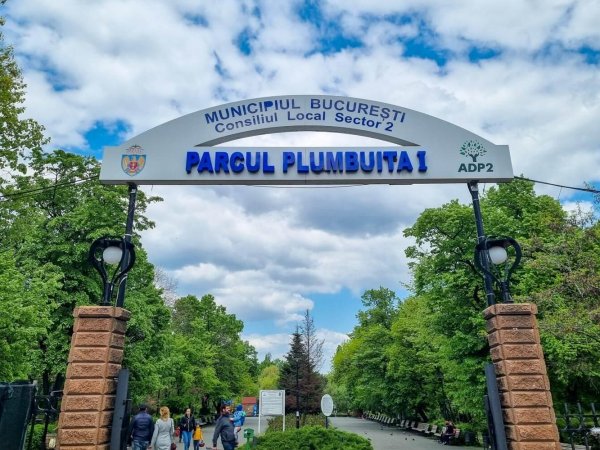
Plumbuita Park is located in sector 2 of the capital, on the shore of Lake Plumbuita, part of the chain of lakes of the Colentina River. This positioning offers it a special natural setting, with an opening towards water and rich vegetation, which differentiates it from other urban parks.
Arranged relatively late, in 1977, the park was designed as a large-scale leisure area, initially having approximately 80 hectares. From the beginning, it was equipped with alleys, playgrounds, pergolas, and even an artificial watercourse crossed by bridges, offering a diverse experience to visitors.
Over time, the infrastructure was completed with a football field, an artesian fountain on the lake, and various recreational spaces. In addition, the area became known for fairs of animals and exotic birds organized periodically, an unusual element for a park in Bucharest.
Today, the park is part of a broader project of modernization and urban revitalization, which includes bicycle lanes, refurbished alleys, and new relaxation areas, meant to transform the area into a modern green hub of the city.
Historical roots: the monastery and the Ghica domain
The history of the place is much older than the park itself. Inside it there are two important monuments: Plumbuita Monastery and Ghica Tei Palace.
Plumbuita Monastery dates from the 16th century and was built by the ruler Petru cel Tânăr, being one of the oldest religious places in Bucharest. Within its premises there is also the princely house, later built by Matei Basarab, which turns the ensemble into an important historical landmark.
On the other hand, Ghica Tei Palace, built in 1822 by the ruler Grigore Dimitrie Ghica, adds an aristocratic dimension to the area. Built in neoclassical style, the palace was the residence of an important boyar family and is located on the southern shore of the lake.
The presence of these two monuments transforms Plumbuita Park into a space where nature and history coexist harmoniously. Visitors enjoy not only fresh air, but also a journey into the past of Bucharest.
Where the name “Plumbuita” comes from
One of the most interesting aspects related to the park is the origin of the name “Plumbuita”. It does not come from the park itself, but from the nearby monastery, which gave the name to the entire area.
According to historical tradition, the name is related to the use of lead (“plumbuit”) in the construction or protection of the monastery. There is a story according to which the building was covered or sealed with lead at a certain stage of its existence, hence the name that has been preserved until today.
This name was later extended to the lake and, later, to the park arranged nearby. Thus, “Plumbuita” became a representative toponym for the entire Colentina area.
The name also has a particular sound, which contributes to the identity of the place and differentiates it from other parks in the capital. It is an example of how history and language intertwine in defining urban spaces.
The evolution of the park and recent transformations
Since its inauguration in 1977 until today, Plumbuita Park has gone through numerous transformations. Initially conceived as a classic leisure space, it was gradually adapted to the modern needs of residents.
In recent years, the authorities have started extensive rehabilitation projects, which targeted the refurbishment of infrastructure and the modernization of facilities. In 2025, the park entered a major redevelopment process, divided into several distinct areas: Plumbuita I, Plumbuita II, and Plumbuita Island.
The project, financed from European funds, had a value of approximately 18.5 million euros and included the refurbishment of alleys, the introduction of bicycle lanes, and the improvement of urban furniture.
These changes reflect a broader trend of transforming green spaces in Bucharest, in an attempt to create more accessible, modern, and environmentally friendly areas.
A place for relaxation with historical identity
Plumbuita Park is not just a simple green space, but a place where past and present meet. From its medieval origins, connected to the monastery, to its modern arrangement as an urban park, this space reflects the evolution of the city.
Its atmosphere is different from other parks in Bucharest: quieter, less crowded, but full of historical meanings. The lake, vegetation, and monuments create an ideal setting for relaxation, but also for reflection. For the residents of Colentina, the park is a daily refuge.
For tourists, it is a surprising discovery, which shows another face of the capital. Thus, Plumbuita Park remains an eloquent example of an urban space that manages to combine nature, history, and modern life, offering a complete experience to those who choose to explore it.
We also recommend: Bordei Park, La Belle Époque and the Bucharest Elite. The History of One of the Capital's Most Stylish Gardens