What the Red Dot Really Means: A Guide to Seismic-Risk Buildings in Bucharest
By Eddie Țone
- Articles
- 13 AUG 26
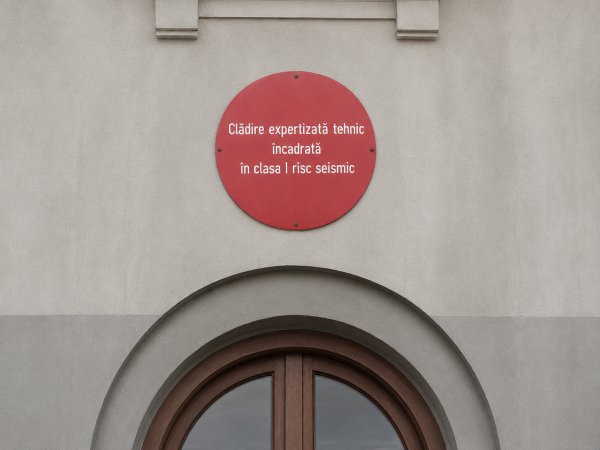
The red dot! An emblem with which Bucharest has maintained a relationship that could best be described as… “complicated.” Bucharest residents see the dot, frown for a second, and then continue on their way to the ground-floor café, where an espresso costs about as much as a toy structural assessment. Meanwhile, the red disc displayed on a façade has become part of the urban scenery, alongside cables, air-conditioning units and enclosed balconies designed according to the “that’ll do” principle.
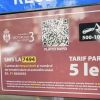
Beyond its almost folkloric familiarity, the symbol conveys a very precise piece of information. The building has undergone a technical assessment and has been placed in seismic-risk class RsI, the category with the highest level of vulnerability. In other words, the red dot represents the conclusion of a certified specialist, based on investigations, calculations and the probable behaviour of the entire structure during the earthquake scenario specified by design standards.
And this is where the delicate part begins. A façade without a red dot may belong to an RsII or RsIII building, a structure placed in one of the old U categories, or simply a property that has never undergone a technical assessment. The city looks calm enough, while its technical records acquire all the suspense of a detective novel misplaced somewhere in the local administration.
The Red Dot Means RsI Class
Law No. 212/2022 divides technically assessed buildings into four seismic-risk classes. Class RsI includes structures liable to collapse completely or partially under the design earthquake. This legal and engineering definition captures the essence of the red dot without cinematic drama and without leaving room for the creative interpretations of estate agents.
The “design earthquake” refers to the seismic action established by the technical standards used to assess a structure. The term describes the load applied in the calculations, while the date and magnitude of a future earthquake remain outside the scope of the verdict. The expert evaluates how the building would respond to that load, taking into account its structure, materials, deterioration, alterations and accumulated damage.
In everyday language, RsI and the red dot have become almost synonymous. The correct notation used in the law is “RsI,” with the Roman numeral I. Variations such as “RS1,” “risk 1” and “R1” circulate freely through property advertisements, sometimes with the same ease with which a 22-square-metre bedsit becomes a “premium studio.”
What RsII, RsIII and RsIV Mean
Class RsII includes buildings liable to sustain major structural damage during the design earthquake. Their overall stability has better prospects than that of RsI buildings, although the damage may endanger occupants, while continued use of the property may become impossible until the necessary work has been completed.
RsIII covers buildings liable to sustain moderate structural damage. Occupant safety may be affected, and both structural and non-structural components may require repairs. The classification sounds gentler, although the expert’s report contains the building’s real story, including its vulnerabilities and the recommended measures.
RsIV is the most favourable classification. The building’s expected seismic response is similar to that of a structure designed in accordance with the technical standards currently in force. The class expresses an estimated level of performance, while the notion of an absolutely invulnerable building belongs rather more to property advertising than to engineering. The official definitions of all four classes appear in the updated version of Law No. 212/2022.
The classes express different levels of risk and probable consequences. They form a technical assessment system rather than a sentimental catalogue in which RsI means “bad” and RsIV means “happily ever after.”
The Mystery of the U1, U2 and U3 Categories
Bucharest’s official lists still contain numerous properties classified as U1, U2 or U3. The letter U stands for “urgency,” and these categories were established during the 1990s under the P100-92 technical standard. They indicated the period within which strengthening work was supposed to be completed, calculated from the date of the assessment: two years for U1, five years for U2 and ten years for U3.
Those deadlines passed a long time ago, sometimes with an almost artistic degree of administrative punctuality. U2 and U3 deserve the same serious attention, because the old system described the priority of intervention rather than using a contemporary scale of structural vulnerability.
A U1 building enters the Rs classification system only after undergoing a new assessment conducted in accordance with the current technical standard. The same rule applies to U2 and U3 buildings. AICPS, the professional association of structural design engineers, stresses that the old U categories have no automatic equivalents among the Rs classes. New assessments have produced different classifications, ranging from RsI to RsIII, depending on the particular condition of each structure.
Who Determines the Seismic-Risk Class
The verdict belongs to a technical expert certified by the Ministry of Development for the fundamental requirement concerning the mechanical resistance and stability of buildings. A serious assessment examines the entire building, since the shared structure of an apartment block steadfastly refuses to respect the cadastral boundaries between individual flats.
The process may include examining the original plans and subsequent alterations, measuring structural components, inspecting apartments and communal areas, removing surface finishes, examining foundations, conducting geotechnical investigations and testing concrete, brickwork or reinforcement. The expert then analyses the structural system, deterioration, the effects of past earthquakes and the building’s capacity to withstand future loads.
A visible crack provides a clue, although its cause may lie in the plaster, temperature fluctuations, settlement or the structure itself. Conversely, a freshly painted façade reveals very little about the condition of the beams, columns and foundations. Washable paint has many virtues; structural clairvoyance is absent from the list.
The Absence of a Red Dot Offers Very Few Guarantees
This is where one of Bucharest’s most widespread misunderstandings appears. The phrase “building with no seismic risk,” commonly used in property advertisements, may conceal two entirely different situations. The first involves the existence of a technical assessment and a favourable classification. The second means simply that no assessment has ever been conducted.
From a buyer’s perspective, the difference is enormous. A property without a classification is a building whose risk has yet to be established. Its age, height, year of construction and survival of the 1977 earthquake provide context, while the technical assessment delivers the verdict.
Buildings accumulate deterioration, alterations and the effects of every earthquake. Surviving the 1977 earthquake represents one chapter in a structure’s history rather than a lifetime certificate. Nearly half a century later, utility systems are replaced, walls vanish from apartments, new openings appear, and the concrete continues to age without consulting the homeowners’ association.
Why Some RsI Buildings Have a Red Dot While Others Appear Anonymous
The classic red disc has become the public image of seismic risk. Current legislation also uses the term “notification panel.” In publicly accessible non-residential premises located inside RsI buildings, owners or administrators must install such panels at the entrances within 60 days of receiving the technical assessment report.
The presence of the marker confirms a known situation. Its absence leaves several possibilities open, ranging from a different classification to a lack of technical assessment or incomplete signage. Consequently, a visual inspection of the façade represents the beginning of the conversation, while the official list and technical report provide the useful answer.
One almost comical detail concerns the power of the symbol itself. Bucharest residents refer to a “building with a red dot,” as though the disc were responsible for the vulnerability. In reality, the assessment identifies the problem and the marker makes it visible. The thermometer occasionally gets blamed for the fever; the city retains its sense of humour even in structural matters.
What the Law Prohibits in an RsI Building
Since January 2024, Law No. 212/2022 has prohibited the renting or granting for use, including through a gratuitous loan agreement, of homes located in RsI buildings, from the date of their classification until the acceptance of work designed to improve seismic safety. Permanent or temporary activities involving large gatherings of people are also prohibited in the public premises covered by the law when they are situated in RsI buildings.
The property may still be sold under the general provisions of the law, subject to the documents being verified by a notary. In practice, however, the classification affects financing, value, buyer interest and insurance options. Banks and insurers apply their own risk rules, which frequently restricts the market for such apartments.
Homes located in RsI buildings are exempt from the issuance of the mandatory PAD insurance policy under Law No. 260/2008 and the rules published by PAID Romania. Optional insurance depends on the terms of each insurer, including contractually established exclusions and limits.
How to Check a Building in Bucharest Properly
The first reference point is the official AMCCRS list, which brings together technically assessed properties and provides their address, year of construction, number of storeys, year of assessment, the expert’s name and the assigned class or category. At the time of research, the table had been updated on 19 May 2026.
The search should be conducted using the exact street name, number, building designation and any separate sections or wings of the property. Bucharest has complex addresses, buildings with several entrances and properties occupying the corner between two streets—details capable of turning a straightforward check into a minor examination in applied cadastral science.
The decisive step is obtaining the technical assessment report. AMCCRS provides a form through which a copy may be requested, and the document explains the vulnerabilities, the investigations conducted and the recommended measures. The land register extract provides another important check. Following Emergency Ordinance No. 82/2025, ANCPI records the seismic-risk class in the land register on the basis of official notifications and the conclusions of the assessment, making the information visible within the property’s legal records as well.
Strengthening Work Changes the Building’s Status
An RsI classification represents a diagnosis and a starting point for intervention. Law No. 212/2022 created the National Programme for Strengthening Buildings with High Seismic Risk, intended for RsI and RsII buildings, while Bucharest runs projects in parallel through AMCCRS, the local budget and other sources of funding.
Strengthening involves design work, permits and approvals, structural intervention, sometimes the temporary relocation of residents and, finally, the formal acceptance of the completed work and a reassessment of the building’s performance. Such a construction project requires time, money and patience—three resources that Bucharest distributes with selective charm.
The red dot therefore conveys a simple and severe message. The building has undergone a technical assessment and has been placed in class RsI. Every other situation requires documents rather than assumptions. In a city where the appearance of a façade can change over a single weekend, the technical report remains the serious conversation about what lies behind the plaster.
You may also like: What happened in Bucharest during the November 10, 1940 earthquake — a part of history erased forever