What Bucharest looked like on December 1, 1918. Archival photographs from the day Romania changed its history
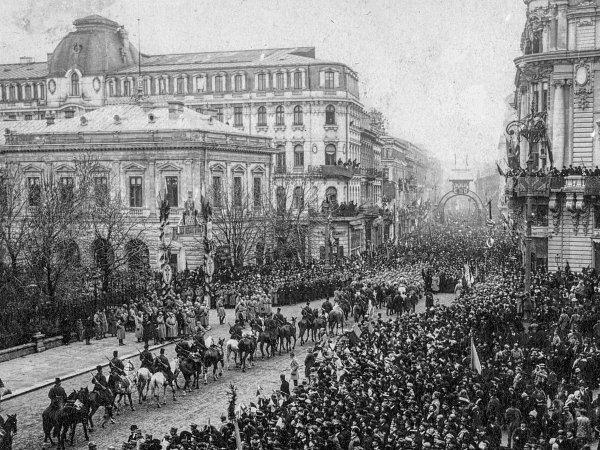
While the union of Transylvania with Romania was being voted on in Alba Iulia, King Ferdinand and Queen Marie were returning to Bucharest after two years of refuge in Iași. It was Sunday, December 1, 1918, and residents had taken to the streets to welcome the royal family and the Romanian army.
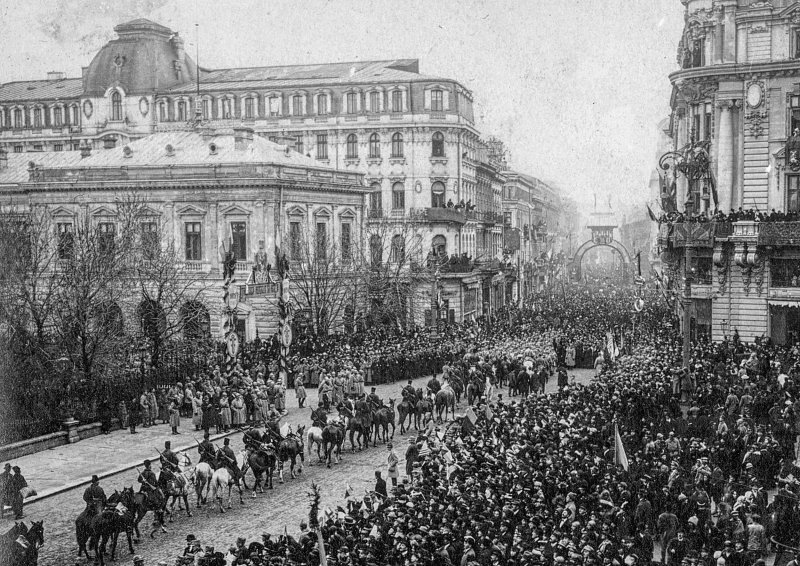
Along Calea Victoriei, buildings were decorated, crowds gathered to watch the parade, and temporary triumphal arches marked the route of the procession. Photographs preserved in archives capture Bucharest celebrating the end of a period marked by military occupation, shortages and uncertainty.
 Source: muzeuldefotografie.ro
The royal family returned to Bucharest after two years of occupation
In December 1916, Bucharest was occupied by the forces of the Central Powers, forcing the royal family, the government and part of the Romanian administration to relocate to Moldavia. Iași became the country's political centre during the war, while residents of the capital faced restrictions and shortages.
The return of the monarchs on December 1, 1918, marked the end of this period. Their ceremonial entry into Bucharest began at Mogoșoaia Railway Station, known today as Băneasa Railway Station.
Although the location remains the same, the building we see today is not the one that welcomed the monarchs in 1918. A historical and architectural study of Băneasa Royal Railway Station, conducted by Petru Mortu, features photographs of the former two-storey building, with its exposed brick façade and triangular pediments.
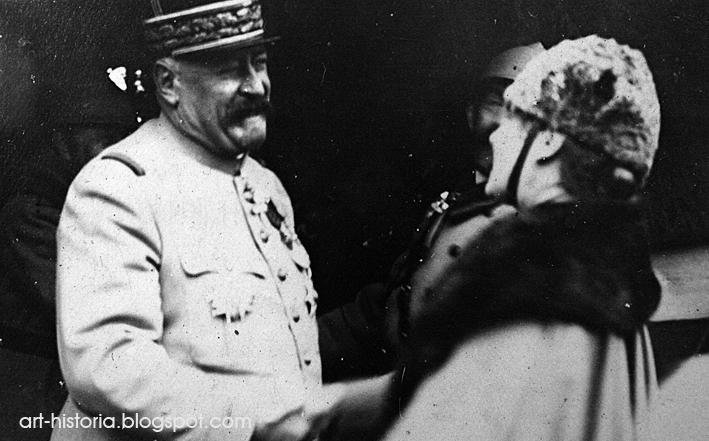 The royal family and General Berthelot near the old railway station.
Source: Biblioteca Academiei Române, figura 17 din studiul istoric
King Ferdinand and Queen Marie entered Bucharest on horseback. They were accompanied by French General Henri Mathias Berthelot, who had played an important role in reorganising the Romanian army during the war.
An album containing 25 photographs, preserved in the collection of the Cotroceni National Museum and available through the Virtual Museum of the Union, documents the return of the royal family and the parade of Allied troops.
In some historical documents and photographs, the event is dated November 18, 1918. This does not refer to a different ceremony, but to the same day recorded according to the Julian calendar, which was still in use in Romania at the time.
Bucharest had three triumphal arches along Calea Victoriei
Today, Romania's National Day parade is closely associated with the Arch of Triumph on Kiseleff Road. Photographs from 1918, however, reveal a very different urban setting.
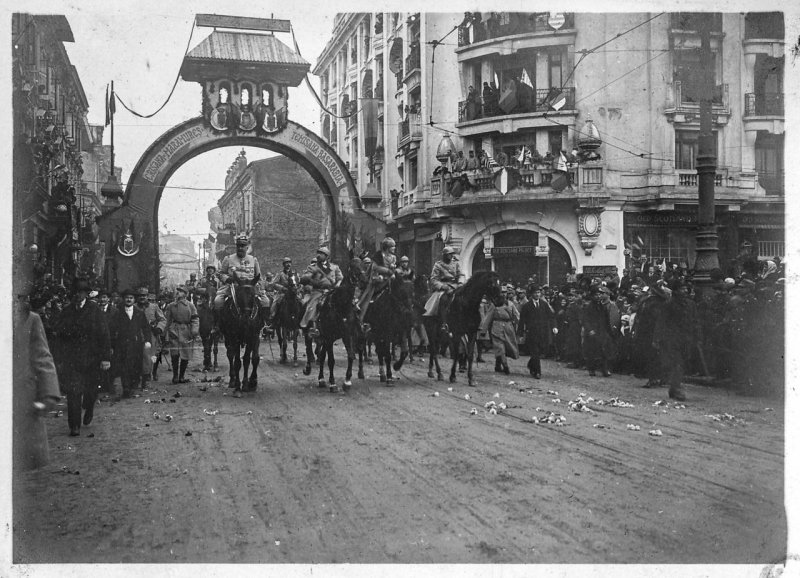
Three temporary triumphal arches were erected in central Bucharest to welcome the royal family and the troops. The first stood near the Athénée Palace Hotel, the second near the former Kretzulescu Inn, and the third in front of Casa Capșa and what is now the Capitol Hotel.
The structures were made of wood and served a ceremonial purpose. They were not intended to become permanent features of the cityscape.
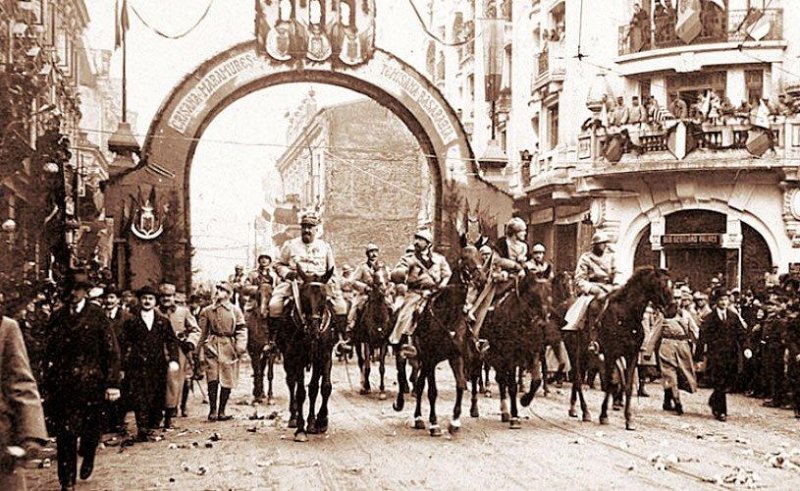 Source – Muzeul de Fotografie:
The parade near the Athénée Palace Hotel.
According to Horia Șerbănescu, a museum specialist at the King Ferdinand I National Military Museum, one of the arches bore the names of several historical provinces: Crișana, Maramureș, Temișana and Bessarabia. These details are included in a historical account of the royal family's return to Bucharest.
The ceremonial route followed Kiseleff Road and Calea Victoriei, reaching University Square. Both Romanian soldiers and members of the Allied forces took part in the parade.
The present-day Arch of Triumph, beneath which soldiers march during contemporary National Day parades, would not be inaugurated until 1936.
Buildings we still walk past today appear in photographs from 1918
The photographs featured in the Museum of Photography's gallery dedicated to the December 1, 1918 parade reveal several landmarks that remain familiar to Bucharest residents today. Other buildings captured in the images have since disappeared.
Photographs taken near the Royal Palace show the former royal residence before the architectural transformations that would radically alter this part of the city. The nearby Athénée Palace Hotel also appears in the images, featuring the architectural decorations characteristic of its appearance at the time.
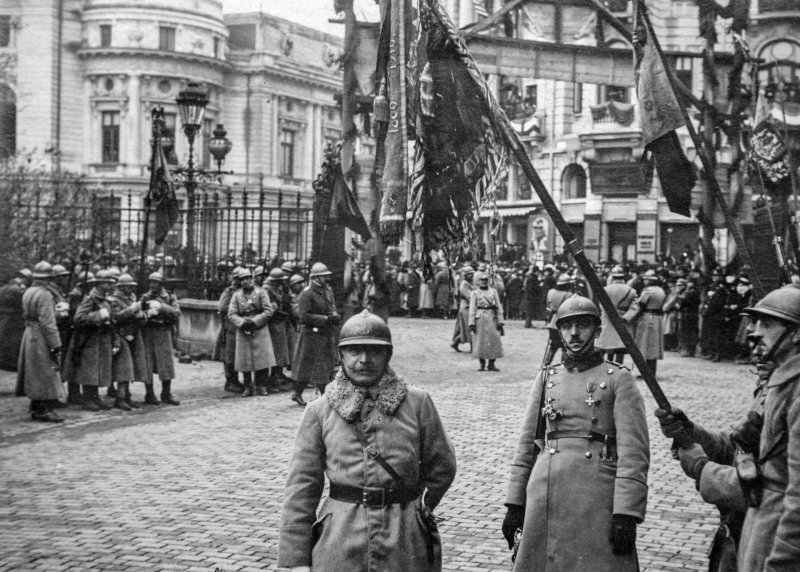 Photo 4 – The Old Royal Palace
Military personnel near the Royal Palace on 1 December 1918.
Source – Museum of Photography
Further along Calea Victoriei, near Casa Capșa, photographs capture the royal family and the troops passing beneath one of the ceremonial arches. It is one of the areas where surviving architectural landmarks allow us to compare Bucharest 108 years ago with the city we know today.
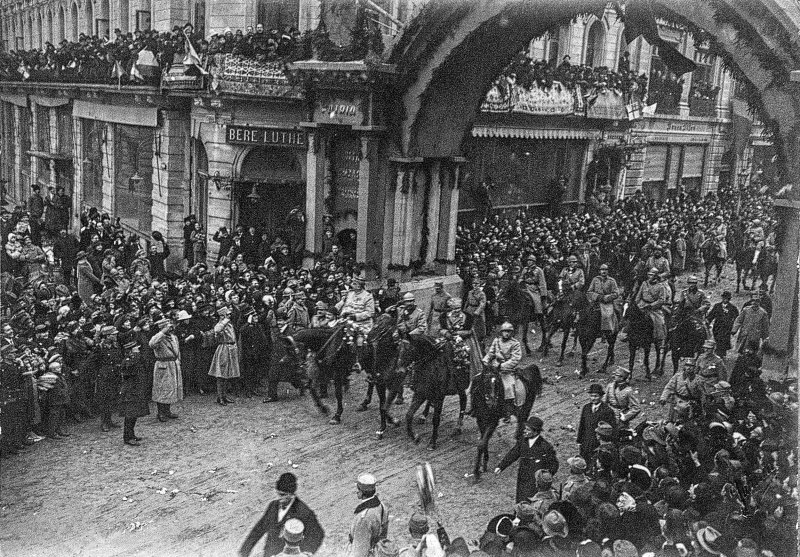 Casa Capșa
The parade along Calea Victoriei, near the present-day Hotel Capitol.
Source – Museum of Photography
In University Square, archival photographs show both the original section of the University of Bucharest, destroyed during the bombings of 1944, and the newer section of the building, which was still under construction in 1918.
 University Square
French troops marching in front of the University of Bucharest.
Source – Museum of Photography
Two historic events unfolding on the same day in Bucharest and Alba Iulia
December 1, 1918, is primarily associated with the Great National Assembly in Alba Iulia. On that same day, however, Bucharest was experiencing its own historic moment: the return of the country's leadership to the capital and the celebration of the end of military occupation.
Both events must be understood within the broader context of the end of the First World War and the formation of Greater Romania.
In 1918, the ceremony in Bucharest was not a parade commemorating the anniversary of the Great Union, as is the case today. It was the ceremonial return of the royal family and the troops to a city that the Romanian authorities had been forced to leave two years earlier.
Romania would only establish December 1 as its National Day in 1990, through Law No. 10/1990.
Today, more than a century after those events, a walk between Băneasa Railway Station, Calea Victoriei and University Square can help visitors retrace part of the geography of that historic day. Some buildings have disappeared, while others have changed their appearance or purpose. Yet the route along which the royal family returned to the capital remains recognisable.
The photographs taken on December 1, 1918, offer a glimpse of what was happening in Bucharest on the day that would, decades later, become Romania's National Day.
READ ALSO: [Băneasa Railway Station, a historic landmark: King Carol I's final journey and King Ferdinand's return to Bucharest on the day of the Great Union](https://www.bucuresti.ro/articole/gara-bane