Top 10 things you didn’t know about eastern Bucharest
- Articles
- 12 NOV 26
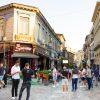
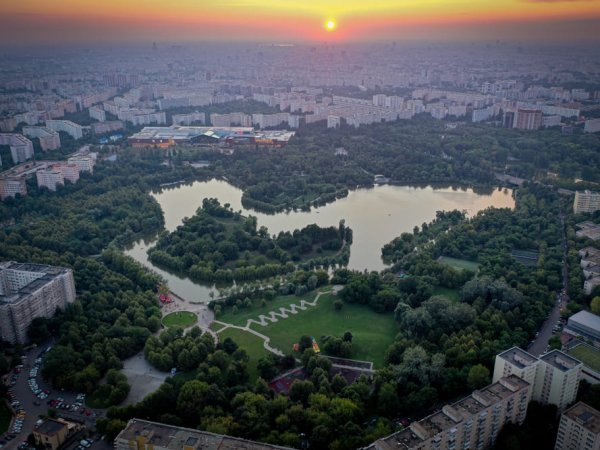
Eastern Bucharest is associated today with large apartment-block neighborhoods, heavy traffic on Șoseaua Pantelimon, Obor Market, Titan Park, the Colentina and Pantelimon lakes, and the shopping areas that have radically transformed the urban landscape over the past decades. Beyond this contemporary image, however, lies a much older and far more complex history. The current neighborhoods of Titan, Balta Albă, Pantelimon, Colentina, Vatra Luminoasă, Dudești, Iancului and Obor were formed through the incorporation of villages, estates, outlying neighborhoods and industrial areas that, one or two centuries ago, were located on the outskirts of the city. Historical documents and archaeological research show that some of these territories were inhabited long before modern Bucharest came into existence. From the old markets around Obor to the factories that transformed the outskirts into a working-class area, eastern Bucharest has undergone a remarkable succession of changes. Here are ten lesser-known facts about this part of the Romanian capital.
1. Eastern Bucharest has a history that predates the apartment blocks by centuries
For many Bucharest residents, the eastern part of the capital appears to be a territory defined almost exclusively by urban development during the 20th century. In reality, some areas preserve traces of settlements that are much older. The National Archaeological Record indicates the existence of several archaeological sites in the Pantelimon area and around the lakes in the eastern part of the city.
One important example is the archaeological site at Pantelimon – Faur Stadium, identified in 1958. Archaeological research has uncovered evidence of habitation from very different historical periods, ranging from the Eneolithic and Hallstatt periods to the La Tène period, the post-Roman era, the Migration Period and the Middle Ages. Nearby, the archaeological site in Pantelimon Park also contains remains dating from the Bronze Age, the La Tène period, the Migration Period and the Middle Ages.
2. Obor was not always a market in the modern sense
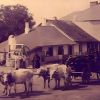
Obor Market is one of the best-known commercial areas in Bucharest, but both the name and the function of the place are much older than the buildings seen there today. In the past, the area was located outside the urban core and was known as Târgul de Afară, or the “Outer Market.”
According to the Museum of the Municipality of Bucharest, the term “obor” was used for a place where livestock markets were held, while Târgul de Afară gradually became known as Târgul Obor. The Moșilor Fair was also held in the same area and was one of the important commercial events of old Bucharest. This commercial tradition survived the city’s transformations, which explains why Obor has remained an important economic and social landmark in eastern Bucharest to this day.
3. Obor Railway Station is one of the oldest railway links in eastern Bucharest
Near the market stands another important historical landmark: Obor Railway Station, also known as Bucharest East Railway Station. The building was inaugurated on February 1, 1903, and represents a remarkable example of early 20th-century Neo-Romanian railway architecture.
The station was more than simply a departure and arrival point for passengers. In 1935, it became involved in an important episode in the history of the Romanian National Treasury: 17 freight wagons loaded with valuables from the Romanian treasury held in Moscow were returned here. In this way, Obor Railway Station connects the everyday history of eastern Bucharest with one of the best-known subjects in modern Romanian history.
4. Balta Albă has a story connected to one of the city’s most devastating epidemics
The name “Balta Albă” is traditionally associated with the plague epidemic that struck Bucharest during the reign of Ioan Vodă Caragea in 1813. According to local tradition, victims of the epidemic were buried in this area, which was then located on the outskirts of Bucharest, and the lime used to cover the bodies is said to have later inspired the image of a “white pond.”
This explanation should, however, be treated with caution, as the exact origin of the place name has not been unanimously established. Historical sources and later accounts preserve the story of the lime-covered burial pits, but in some cases it is presented as local tradition or legend. What is certain is that the name Balta Albă remained associated with this part of the city and later became the name of one of Bucharest’s largest residential neighborhoods.
5. Titan owes its name to industry, not mythology
The name Titan may sound as if it came straight from mythology, but in the case of the Bucharest neighborhood its origin is industrial. The name became associated with the Titan cement factory, established in the eastern part of the city in the early 20th century.
Industry played a decisive role in transforming what had once been a predominantly rural outskirts into a working-class area. In the following decades, the expansion of major industrial enterprises and the construction of residential neighborhoods radically changed the landscape. Today’s Titan is therefore the result of several overlapping stages: the old outskirts, interwar industrialization and the large-scale housing projects developed during the communist period.
6. Vatra Luminoasă was designed as a neighborhood of affordable housing
Eastern Bucharest is also home to an urban-planning story very different from that of the large apartment-block complexes: Vatra Luminoasă. The neighborhood was developed during the interwar period as part of policies aimed at constructing affordable homes for workers and civil servants.
The first construction campaigns began in 1933, and in 1938, 75 new homes for workers were inaugurated. The project continued afterward, eventually encompassing hundreds of individual houses and apartments in collective buildings. Vatra Luminoasă is therefore an important example of Romanian social urban planning during the interwar period, predating the large apartment-block neighborhoods built after 1950.
7. Dudești was once a village outside Bucharest
Today, the name Dudești is associated with one of the major arteries in southeastern Bucharest, but its origins are rural. Dudești was once a settlement located outside the city proper, and its name is connected to the Dudescu boyar family.
As Bucharest expanded, the road leading toward the former estate became known as Ulița Dudeștilor and later as Calea Dudești. The area was gradually absorbed into the city, and the old distinction between the outskirts and the urban core disappeared. Archaeological research nevertheless shows that Dudești has a much older significance: the area is known for discoveries that helped define the archaeological Dudești culture, associated with the Early Neolithic period.
8. The lakes in the east played a decisive role in the city’s development
Eastern Bucharest cannot be understood without the Colentina River and the chain of lakes formed along its course. Colentina, Fundeni and Pantelimon were important natural landmarks in the expansion of the city and in the emergence of settlements on its outskirts.
A spectacular example is the “Ziduri între Vii” area, on the southern shore of Lake Fundeni. The National Archaeological Record documents a site containing evidence of habitation and burial remains, investigated as early as the interwar period by archaeologist Dinu V. Rosetti. In the same area, ruins were once observed that were traditionally attributed to a palace associated with Prince Matei Basarab.
9. Eastern Bucharest became one of the capital’s major industrial centers
The transformation of the eastern part of the city was not driven solely by housing construction. Factories played a crucial role in the development of the area, and some of Bucharest’s most important industrial enterprises were established here.
In 1938, the N. Malaxa pipe factory began operations and later became known as Uzina Republica. At the time of its inauguration, it had facilities considered among the most modern in Europe. After the Second World War, the factory was expanded and modernized, and the industrial area in the east became one of the main concentrations of manufacturing in Bucharest.
10. The large apartment-block neighborhoods completely changed the face of the east
One of the most spectacular transformations took place after the 1950s, when Bucharest underwent an accelerated expansion of collective housing. Titan, Balta Albă, Pantelimon and Colentina became large residential neighborhoods featuring apartment blocks, shopping centers, schools, green spaces and transport infrastructure.
Urban-planning documents show that the Titan–Balta Albă complexes were developed mainly during the 1960s and 1970s. In Sector 3, the Titan–Balta Albă area came to accommodate a very large number of homes and residents, while former industrial areas in the east, such as 23 August and Faur-Republica, later became the subject of urban regeneration projects.
Seen today, eastern Bucharest may appear to be dominated by concrete, broad boulevards and apartment-block neighborhoods built during the communist period. In reality, beneath this image lie several layers of history: medieval villages, boyar estates, markets, trade routes, epidemics, archaeological remains, factories and the first social-housing projects.
For this reason, a walk through Obor, Pantelimon, Vatra Luminoasă, Dudești or Titan can become, for anyone familiar with the stories of these places, a genuine journey through the history of Bucharest. Eastern Bucharest is not merely an area of apartment blocks, but one of the parts of the capital where it is easiest to see how the city grew beyond its old boundaries and gradually transformed former villages and outskirts into neighborhoods of a modern metropolis.
We also recommend: Top 10 things you didn’t know about southern Bucharest