Top 10 the most beautiful interwar villas in Bucharest. Houses that take your breath away, at a short promenade
- Articles
- 07 APR 26
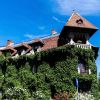
Interwar Bucharest was not just an era, but a state of mind. The capital had become an architectural laboratory where Western elegance met Romanian tradition, and the result was spectacular: refined villas, carefully decorated, built for a rising bourgeoisie and for the cultural elites of the time. The city, then nicknamed “Little Paris”, was living its moment of glory, and architecture was becoming a symbol of modernity and national identity. Today, many of these houses still exist, hidden among trees or integrated into elegant neighborhoods such as Dorobanți, Cotroceni or Armenesc. A simple walk on these streets can become a journey through time. Here is a top of the most beautiful interwar villas in Bucharest – true architectural jewels.
The elegance of a bygone era
The interwar period brought an explosion of architectural styles: from Neo-Romanian to Art Deco and modernism. The architects of the time managed to create a synthesis between European influences and local specificity, resulting in harmonious, ornamented, but also functional buildings.
These villas were not just homes, but statements of status. Richly decorated façades, stained glass windows, sculpted balconies and generous gardens reflected the refined taste of the owners. Many of them were built for doctors, lawyers, industrialists or artists, becoming true urban landmarks.
1. Filipescu-Cesianu House – an open-air museum
Located on Calea Victoriei, the Filipescu-Cesianu House is one of the best restored interwar villas. Today it is part of the Bucharest Municipality Museum and offers an authentic image of aristocratic life from that period.
The building impresses through its eclectic style, but also through its large garden, rarely found in the city center. The careful restoration preserved the original details, from stuccoes to furniture.
2. Oromolu Villa – Art Deco refinement
Located near Piața Victoriei, Oromolu Villa is a remarkable example of Art Deco architecture. The geometric lines, the balance of volumes and the discreet elegance turn it into a memorable presence. Currently, the building is restored and used for events, but it keeps its aristocratic air from the past.
3. Macca House – opulence and mystery
Although built at the end of the 19th century, Macca House became emblematic during the interwar period, when it was used as a cultural institution. Its interior is spectacular, with baroque influences and rich details.
Today it hosts the Institute of Archaeology and remains one of the most impressive historical buildings in Bucharest.
4. Minovici Villa – authentic Neo-Romanian style
The villa of doctor Nicolae Minovici is one of the most representative constructions in Neo-Romanian style. Inspired by traditional architecture, the house has loggias, arches and decorative motifs inspired by folk art.
Located in a quiet area, the villa is today a museum and offers a fascinating insight into the aesthetics of the early 20th century.
5. Assan House – discreet elegance
Assan House is a less known but extremely valuable architectural jewel. Located in a central area, the villa impresses through its balanced proportions and fine decorative details. Although it went through difficult periods, the building remains a symbol of interwar refinement.
6. Miclescu House – The Villa Where Felix and Otilia Was Filmed
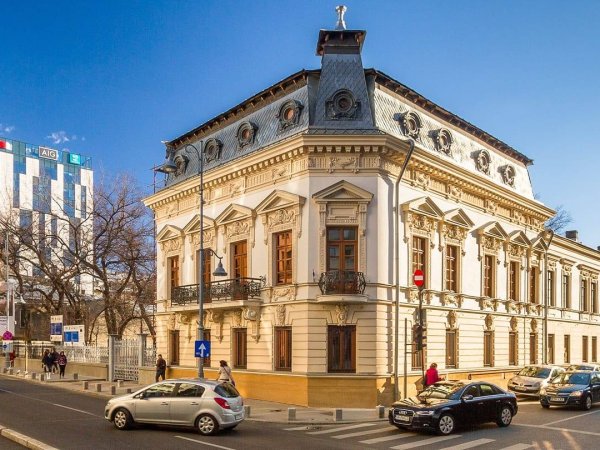
Miclescu House, located on Kiseleff Road in Bucharest, is one of the most spectacular aristocratic residences in the Romanian capital and a symbol of the elegance of a bygone era. Built in the early 20th century according to the plans of architect Ion D. Berindey, the building impresses through its eclectic style with French influences, its rich decorations, and its noble atmosphere.
Over time, the villa also became famous thanks to Romanian cinematography, as several scenes from the celebrated television series Felix and Otilia were filmed here. The production was based on George Călinescu’s novel Otilia’s Enigma. The house’s mysterious atmosphere, elegant salons, and impressive architecture provided the perfect setting for bringing to the screen a story that has fascinated entire generations of viewers.
7. Henri Coandă House – the residence of a genius
The former residence of inventor Henri Coandă is an elegant villa, located in a select area of the capital. The building combines classical elements with modern influences, reflecting the innovative personality of its owner. Today it functions as a museum and is open to the public.
8. The villa on Sevastopol Street – urban harmony
Sevastopol Street is a true open-air museum of interwar architecture. Here there are several valuable villas, harmoniously integrated into a modern urban landscape. The houses in this area preserve the Neo-Romanian style, with oriental influences and rich decorative details.
9. The Piano-Shaped House in Cotroceni – The Charm of the Historic Neighborhood
The Cotroceni neighborhood is renowned for its quiet streets and its well-preserved interwar villas. The houses here feature generous gardens and a bohemian atmosphere that recalls the Bucharest of bygone days.
A walk along these streets is an experience in itself, with every corner revealing a new architectural story. One of the most beautiful residences is the Aurelia House, known as the Piano-Shaped House, where the artist Aurelia Cionca once lived.
10. Jean Juster Villa - the modern avangarde
The Jean Juster Villa is considered one of the most valuable creations of modernist architecture in interwar Bucharest and an important landmark in the work of architect Marcel Iancu. Built in 1931 for the banker Jean Juster, the building is located at 75 Silvestru Street, near Silvestru Church, in one of the historic areas of the Capital.
The project belongs to Marcel Iancu, a prominent figure of the Romanian avant-garde and one of the most influential promoters of modernism in architecture. The building draws attention through its well-defined geometric forms, its sober and refined design, as well as its round windows inspired by ship portholes, a detail characteristic of modern architecture in the 1930s.
The exterior appearance of the villa is dominated by its white façade and by the absence of the abundant ornamentation found on buildings from earlier periods. This approach reflected the principles of the new European architecture supported by Marcel Iancu, who advocated for the transformation of Bucharest into a city with a modern architectural identity, aligned with the Western trends of the time.
The perfect promenade among interwar villas
One of the most beautiful things you can do in Bucharest is to discover these houses on foot. Areas such as Dorobanți, Cotroceni or Armenesc offer ideal routes for a relaxing walk. During the interwar period, such streets were places for promenade for the city’s elites, and the elegant atmosphere has been largely preserved until today.
Each villa has its own story – some were witnesses to historical events, others hosted remarkable personalities. Even if some are today degraded, their charm remains intact.
Why these houses fascinate us
Interwar villas are not just beautiful buildings. They represent an era in which Bucharest was a cosmopolitan city, open to cultural and artistic influences.
Their architecture reflects a society in transformation, in which tradition and modernity coexisted. Precisely this combination makes them so special and appreciated today.
Moreover, they offer an important lesson about urban identity. In a city in continuous transformation, these houses are stable landmarks, reminding us of the past and inspiring us for the future.
A heritage worth rediscovering
Interwar Bucharest has not disappeared – it still exists, hidden behind fences, among trees or on quiet streets. The villas of this period are the proof of an era of refinement and creativity, and each of them tells a story.
A simple promenade can become a memorable experience, if you know where to look. And these houses, with their discreet elegance, can take your breath away even today.
We also recommend: