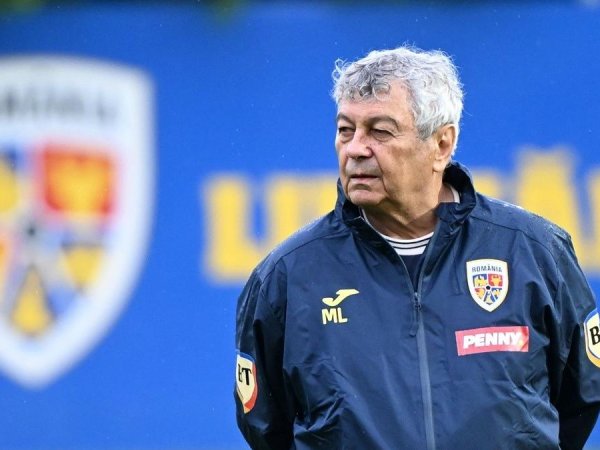
The Titan Mircea Lucescu – poverty, records and immortal glory. How the poor child from Berceni became a great legend of Romanian sport
- Articles
- 08 APR 26
Romanian football has lost one of its greatest figures. Mircea Lucescu was not just a coach or a former player, but a symbol of ambition, relentless work and the desire to overcome limits. His life, marked by hardship since childhood, became a lesson in perseverance and destiny. The story of “Il Luce” is not only about trophies and victories, but about the long and difficult journey of a poor child from the outskirts of Bucharest, who went on to conquer the world of football.
Childhood in poverty: the harsh lessons of life
Mircea Lucescu was born on 29 July 1945 into a large family with five children, in an extremely difficult period immediately after the Second World War. His family lived in the Șoseaua Berceni area, now the Apărătorii Patriei district, a modest place filled in those years with very poor houses.
Living conditions were extremely harsh. His parents worked hard to support the children: his father was a stretcher-bearer, and his mother cleaned in a hospital. The family lived for a while in a shack and later even inside a hospital where his parents worked.
Poverty was a daily reality. Food was scarce, and the children learned from an early age what it meant to share. A piece of bread was often divided among all siblings. However, those difficult times shaped the future great coach.
Lucescu later stated that this childhood taught him discipline, solidarity and above all the desire to succeed. His father, although strict and uneducated, instilled essential values in the children: work, respect and ambition.
Football, refuge and the beginning of a dream
In a world lacking comfort, football became Mircea Lucescu’s refuge. He played everywhere: in the yard, in the street, even inside the house. Most of the time barefoot, sharing a pair of sneakers with his brothers, he learned to love the game that would change his life.
This passion led him, in 1963, to Dinamo București, where he was registered at just 18 years old. His debut in the top division came in 1964, in a spectacular match against Rapid.
The years spent at Dinamo were defining for his playing career. He played until 1977, with a short period in the second division at Știința București. He became an important and respected player, and the peak of his playing career was his participation at the 1970 FIFA World Cup, where he was the team captain.
The Hunedoara phenomenon and the beginning of a legendary coaching career
After ending his playing career, Mircea Lucescu did not leave football. In 1977, following a devastating earthquake that affected his home in Bucharest, he decided to move to Corvinul Hunedoara.
There he began a project that would enter Romanian football history as the “Hunedoara phenomenon”. At only 34 years old, he became a player-coach and built a team out of talented youngsters and experienced players.
Under his leadership, Corvinul became a talent factory for Romanian football. Names such as Ioan Andone, Mircea Rednic and Romulus Gabor were developed under his guidance. The team reached European competitions in a period dominated by powerful clubs.
Coach of Romania and international recognition
In 1981, Mircea Lucescu was appointed coach of the Romania national team, during a difficult period. The team was going through a weak phase, but Lucescu managed to rebuild it.
A memorable moment was the victory against Italy, the world champion, in a match played at the “23 August” stadium in front of tens of thousands of spectators. This performance led to qualification for Euro 1984.
However, his national team career ended controversially in 1986 after a painful defeat. It was one of the most difficult moments of his professional life.
Comeback and performances in Romania and Europe
After leaving the national team, Lucescu returned to Dinamo București, where he achieved a notable performance by leading the team to the semi-finals of the Cup Winners’ Cup.
After the Romanian Revolution of 1989, his career gained an international dimension. He coached in Italy at clubs such as Pisa, Brescia and Reggiana, in one of the most competitive leagues of the time.
In 1997, he returned to Romania and took over Rapid București, where he won the league title and the Romanian Cup, bringing joy to fans after a long period of waiting.
The peak of his career: glory at Shakhtar Donetsk
The major international breakthrough came at Shakhtar Donetsk, where Mircea Lucescu built a dominant team.
He won multiple domestic titles and cups and achieved the ultimate performance in 2009, when he lifted the UEFA Cup. This victory established him as one of the greatest coaches in Europe.
Later, he coached major teams such as Zenit Saint Petersburg, Galatasaray, Beşiktaş and Dynamo Kyiv, confirming his value across different leagues.
Records, awards and a unique destiny
Mircea Lucescu’s career is full of records. One of the most remarkable moments occurred in 1990, when at nearly 45 years old he entered the pitch for Dinamo, becoming the oldest player in the Romanian top division.
This gesture was not only symbolic but also strategic, allowing him to stay close to the team during a difficult moment. That season, Dinamo won the championship, and Lucescu achieved a rare double: winning the title both as coach and active player.
For his merits, he was decorated by Traian Băsescu with the National Order “Star of Romania”, and in Ukraine he received important state distinctions.
The legacy of a titan
The story of Mircea Lucescu is more than a sporting biography. It is a lesson about how willpower can overcome any obstacle. From the barefoot child running through the streets of Berceni to the coach who conquered Europe, his journey was extraordinary.
He inspired generations of athletes and proved that success does not come by chance, but through work, discipline and sacrifice. His legacy will remain alive in the hearts of football lovers.
Mircea Lucescu was not just a coach. He was a symbol. A titan of Romanian sport whose legend will endure beyond time. May he rest in peace.
We also recommend: