The stars of interwar Bucharest: Nae Roman, “baptized” by the great Constantin Tănase, refused to join the Communist Party
- Articles
- 15 DEC 25
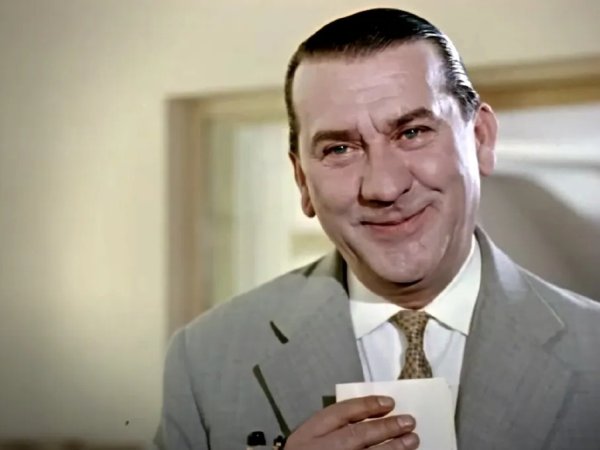
Nae Roman is one of the most emblematic figures of Romanian theatre during the interwar and postwar periods. His career was marked by numerous important moments on stage, but also by a distinctive personality that attracted both admirers and detractors. The actor and singer established himself as a complex figure who could withstand the pressures of the time while remaining authentic, even in front of the authorities of the communist regime.
A defining figure of Romanian theatre
Born Nicolae Constantinescu on November 30, 1909, in Roman, a small town with modest artistic traditions but significant influence on the formation of future artists, his early life gave few signs of the extraordinary path that awaited him.
Yet life had other plans for him, shaping him into one of the most beloved entertainers of Romanian revue and operetta theatre.
„Baptized” by Constantin Tănase
The turning point in Nicolae’s life came during a meeting with the celebrated actor Constantin Tănase. It was then that he was “baptized” with the stage name that would make him famous. According to the story, upon seeing a poster with his name, Tănase asked him where he came from.
Hearing the reply, “from Roman,” Tănase said: “Then from now on, you will be called Nae, because you are from the people, and Roman because you are from Roman, and it sounds better.” From that moment, Nicolae Constantinescu became Nae Roman, a name that would soon become synonymous with the rich world of Romanian revue and operetta.
Rapid rise during the interwar period
During the interwar period, Nae Roman quickly built an impressive career. His charisma and refined sense of humor made him highly appreciated by audiences. He debuted alongside great names of Romanian theatre, including the actor Bimbo Mărculescu, with whom he shared numerous roles on the stage of the Teatrul de Revistă. Their collaboration was essential for both careers, and together they became some of the era’s most prominent stars.
Another key chapter in his career was his association with the Teatrul „Cărăbuș”, which allowed him to perform internationally. Nae Roman took the stage in cities such as Istanbul, Cairo, Beirut, Tel Aviv, and Jerusalem, sharing the spotlight with Romanian theatre legends like Constantin Tănase, Mia Apostolescu, N. Stroe, and Lisette Verea. These performances brought him international recognition and established him as an iconic figure of Romanian theatre.
A long-standing presence in Romanian operetta
After his period performing in the Orient, Nae Roman spent 30 remarkable years on the stage of the Teatrul de Operetă in Bucharest. Over these decades, he became a household name in Romanian music and theatre.
He performed a wide range of roles, with one of his most notable being Alfred P. Doolittle in My Fair Lady, the first musical produced in Romania, directed by the master Ion Dacian. This role further cemented his popularity and confirmed his status as a distinguished artist.
Nae Roman on screen
Beyond the theatre, Nae Roman had an impressive film career, appearing in numerous successful movies of the time. Some of his most famous films include Nu vreau să mă însor (1960), Darclee (1961), Politică și delicatese (1963), Străinul (1964), Dragoste la zero grade (1964), Pădurea spânzuraților (1965), De-aș fi… Harap Alb (1965), Împușcături pe portativ (1968), and Expresul de Buftea (1979). In these films, he brought a distinctive sense of humor and character, blending comedic and dramatic elements seamlessly.
Nae Roman was known for his exceptional comic timing and verbal virtuosity. As Al. Lazăr wrote on the site of the Teatrului de Revistă Constantin Tănase:
“He had a savory comic charisma supported by verbal virtuosity, which made you strain to understand what he said. With the seriousness of a scholar, he elaborated an articulated word that he then juggled with the agility of a master prestidigitator. Excellent in playing gossips and chatterboxes, he portrayed them with great finesse and talent. He paired on stage with G. Testian and musically with Bimbo Mărculescu.”
Collaborations and stage partnerships
His collaborations with other celebrated actors such as G. Testian and Bimbo Mărculescu became reference points in their careers. The duos he formed on stage were a resounding success, drawing audiences eager to see him embody various comedic characters and enjoy the musicality of his voice. Through these performances, Nae Roman became a symbol of Romanian revue theatre, defining the genre and inspiring generations of performers.
Standing up to communism
According to Wikipedia and other historical sources, Nae Roman refused to become a member of the Romanian Communist Party despite pressures applied to him after he was awarded the title of Emeritus Artist of the Romanian People’s Republic. Despite the potential advantages of such membership, he remained loyal to his principles, refusing to compromise and demonstrating independence and moral integrity.
His refusal also acted as a form of protest against the communist regime, which frequently attempted to co-opt artists to control their activities. Even under such pressure, Nae Roman maintained his charisma and continued to be respected and admired, reinforcing his image as an authentic artist who would not be influenced by the politics of the era.
Recognition and legacy
Nae Roman was awarded the title of Emeritus Artist in 1964 and the Cultural Merit Order, third class, in 1968. However, these honors did not make him yield to the regime; he remained a symbol of free art and unyielding spirit. Nae Roman passed away on February 4, 1985, in Israel, leaving behind an indelible mark on Romanian theatre and film. His death was a great loss for Romanian culture, yet his artistic legacy endures.
Through his inimitable humor and dedication to art, Nae Roman remains in the public memory as an example of authenticity and pure talent. Despite the difficult times he lived through and the political pressures he faced, he never compromised his principles, continuing to be a respected and admired artist. His story exemplifies a strong personality who stayed true to his values while bringing joy to audiences through his extraordinary talent.
We also recommend: Mia Apostolescu, the diva of interwar Bucharest, the right hand of Constantin Tănase. The story of the stunning cupletist from Cărăbuș