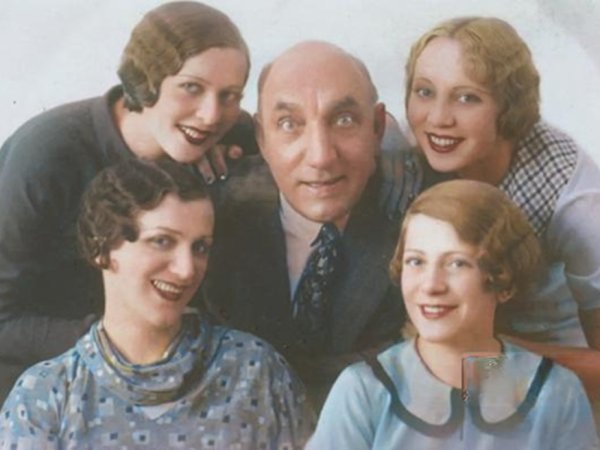
The stars of interwar Bucharest: Actress Lulu Savu, the diva from Constantin Tănase’s Quartet
- Articles
- 13 JAN 26
Interwar Bucharest was a city of contrasts, artistic effervescence, and great cultural personalities. Theatres were full, cultural magazines were thriving, and the Bucharest audience had become increasingly demanding and eager for quality performances. In this fertile context for creation and affirmation, the Romanian theatrical scene gave rise to names that entered the country’s cultural history forever. Among them is actress Lulu Savu, one of the emblematic female figures of revue theatre and interwar drama, a presence that shone alongside Constantin Tănase and other great actresses of the era.
The origins and artistic training of a future star
Lulu Savu was born in the early 1910s, in Baia Mare, into a family that valued art and culture. The environment in which she grew up offered her, from childhood, an openness toward beauty and nurtured her interest in the stage. Supported by those close to her, young Lulu chose to pursue an artistic career, a courageous decision in an era when theatre required sacrifice, discipline, and constant exposure to the public.
The first stages of her training took place in Bucharest, the center of Romanian cultural life. Here, Lulu Savu had the chance to learn from important teachers of the time and to develop in an extremely competitive environment. Her natural talent, doubled by hard work and a desire for perfection, helped her stand out quickly in a period when Romanian theatre was in continuous development and searching for new forms of expression.
Her rise on the interwar theatre stage
The years of her youth coincided with a stage of maximum effervescence in Romanian theatre. Audiences were numerous, critics closely followed every appearance, and competition among troupes and actors was intense. In this climate, Lulu Savu managed to assert herself through the naturalness of her acting and her ability to convey authentic emotions.
From the very beginning, the actress demonstrated remarkable versatility, being able to move easily from the comic register to the dramatic one. This adaptability brought her varied roles and strengthened her reputation as a complete actress, capable of carrying complex performances and meeting the demands of demanding directors.
The decisive encounter with Constantin Tănase
An essential moment in Lulu Savu’s career was her collaboration with Constantin Tănase, one of the most influential figures of Romanian theatre. Tănase, a master of revue theatre and an exceptional satirical spirit, was known for his rigor, but also for his ability to discover and support genuine talent.
Lulu Savu was among Constantin Tănase’s favorite actresses, as he particularly appreciated her scenic intelligence and artistic flexibility. Their professional relationship was based on mutual respect and a shared vision of theatrical art. Under Tănase’s guidance, the actress refined her style and became one of the constant and appreciated presences in the revue performances of the time.
The diva of revue theatre and memorable roles
The collaboration with Constantin Tănase propelled Lulu Savu into the ranks of the stars of revue theatre. This form of performance, extremely popular during the interwar period, combined humor, music, dance, and social satire, being highly appreciated by the general public.
Lulu Savu performed numerous roles in this genre, successfully blending comedy with finesse and elegance. Her stage presence was distinctive, and the audience reacted with enthusiasm every time she appeared. At the same time, the actress did not limit herself to revue theatre, also approaching dramatic plays, in which she demonstrated depth and artistic sensitivity.
Collaborations with the great actresses of the era
Another important chapter in Lulu Savu’s career is represented by her collaborations with other renowned names of interwar Romanian theatre. Lisette Verea, Lizica Petrescu, and Mia Steriade were her stage colleagues, and together they formed an exceptional artistic nucleus.
Lisette Verea was recognized for the strength of her stage presence and for her ability to bring complex characters to life. Alongside Lulu Savu, she delivered memorable appearances, appreciated by both audiences and critics. The professional relationship between the two contributed to the success of many performances.
Lizica Petrescu, appreciated especially for her comic talent, was another important stage partner. The energy and dynamics between the two actresses were reflected in the audience’s reactions, which rewarded the performances with prolonged applause.
Mia Steriade, a prominent figure of interwar theatre, completed this select group. Her professional relationship with Lulu Savu was harmonious, based on respect and artistic complementarity, and the roles they performed together remained in the spectators’ memory.
Acting style and personal charisma
Lulu Savu was appreciated not only for her talent, but also for her exceptional charisma. On stage, she managed to create a direct connection with the audience, conveying emotion and authenticity regardless of the nature of the role. Her performances were marked by naturalness, expressiveness, and particular attention to detail.
The diversity of the roles she approached was one of her main strengths. From lively revue comedies to dramatic plays with deep emotional charge, Lulu Savu demonstrated a rare capacity for adaptation and a fine understanding of characters.
The peak of interwar Romanian theatre
The interwar period represented a true peak for Romanian theatre. Bucharest was a vibrant cultural center, and the theatrical stage reflected the struggles, hopes, and humor of a society in transformation. Lulu Savu was an integral part of this generation of artists who defined the era.
Through dedication, professionalism, and talent, the actress contributed to the consolidation of revue theatre, as well as to the development of dramatic theatre. Her influence was felt not only among audiences, but also among young actors and directors, who regarded her as a model of artistic conduct.
Cinematic experience and artistic legacy
Although theatre remained the center of her career, Lulu Savu also ventured into cinema. In 1947, she appeared in the film “Two Worlds and a Love”, alongside Ion Lucian and Agy Polly, proving that her talent also adapted to the cinematic language.
Her collaborations with great personalities of the Romanian stage, such as Constantin Tănase, Lisette Verea, Lizica Petrescu, and Mia Steriade, established her as one of the most important actresses of the interwar period. Her artistic legacy remains alive, and the name Lulu Savu continues to be associated with elegance, professionalism, and the brilliance of a golden age of Romanian theatre.
We also recommend: The Bucharest diva who became a great actress in Hollywood. The lavish life of the famous Lisette Verea