The origins of native Christmas. King Carol I decorated the first Christmas tree in Romania’s history, in Bucharest
- Articles
- 22 DEC 25
Christmas, as we know it today, with a decorated tree, gifts, and light, is the result of a long history in which local traditions met European influences. In the Romanian space, the symbolic moment of the appearance of the Christmas tree is closely linked to the accession to the throne of Carol I and to the beginning of an era of accelerated modernization. Documents record the year 1866 as the founding landmark of “royal” Christmas in Romania, when, at the Princely Palace in Bucharest, the first known Christmas tree in our history was decorated.
1866, the year that changed Romania’s destiny
The year 1866 occupies an essential place in Romanian history, marking the beginning of a new political and social stage. After the abdication of Alexandru Ioan Cuza, the United Principalities needed stability and a ruler capable of offering external guarantees. In March, the Prussian prince Karl Eitel Friedrich of Hohenzollern-Sigmaringen accepted the throne of Romania, and in April a plebiscite was organized to confirm his election.
The journey of the new ruler to the country he was to lead for almost half a century was full of risks. Because of the conflict between Austria and Prussia, Carol was forced to travel incognito, with a Swiss passport, on a complicated route, from Düsseldorf to Baziaș. From there, he went down the Danube to Turnu Severin, arriving in the country on May 20, 1866. The journey ended with his entry into Bucharest, where, on May 10/22, he took the oath as ruler.
The Princely Palace and the prince’s first impressions
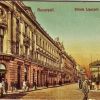
Carol’s arrival in Bucharest was accompanied by a notable surprise. The Princely Palace on Calea Victoriei, known as the Golescu house, was a modest building, without an upper floor, which did not match the expectations of a prince raised in the rigor of European courts. Built between 1812 and 1815 by the boyar Dinicu Golescu, the building had been transformed into a Princely Court during the reign of Alexandru Dimitrie Ghica and had been the residence of Cuza until 1866.
Nevertheless, Carol I quickly understood the realities of the country he was to govern. In the following years, the palace was refurbished and modernized, becoming a symbol of the new orientation toward progress. An important milestone is the year 1882, when the building was equipped with electric lighting, a premiere for Bucharest.
The first royal Christmas and the tree of 1866
Only eight months after his arrival in Romania, Carol I celebrated the first “royal” Christmas in December 1866. In the context of a Capital still in full process of modernization, with recently paved streets and a general state of poverty described by contemporaries, the moment had a special significance.
The tree decorated at the Princely Palace was adorned simply, with paper flowers and fruit, in the German fashion, bringing a note of novelty to a society that had not known this custom until then.
The atmosphere in the royal household, dominated by the sobriety of Carol I and the discretion of Queen Elisabeta, was different from the exuberance that would characterize later Christmases. Still, good cheer was not lacking. The king often spent Christmas Eve at his writing desk, and on Christmas Day he used to go ice skating or play billiards in the evening.
Traditions, gifts, and life at the court of Carol I
A defining element of royal Christmas in the era of Carol I was the attention paid to children and to the court staff. Almost 160 years ago, the king invited hundreds of children to the table, talked with them, and offered them gifts consisting of clothes, fruit, and sweets.
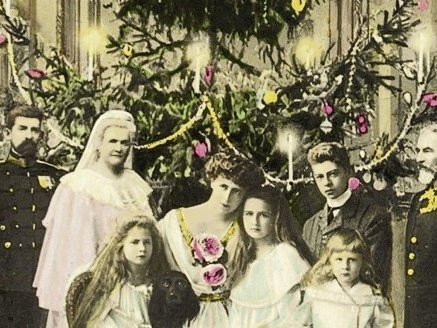
On December 23, the children of the ladies-in-waiting and those of the princely couple gathered to decorate a huge tree that reached up to the ceiling. The moment was a joyful one, with jokes, much laughter, tea, and a traditional Christmas cake, Baumkuchen.
After the children left, the staff completed the decoration of the tree. On Christmas Eve, Carol I and the queen offered gifts to the employees of the Royal Household, and the family gladly received simple gifts, usually local specialties, such as sherbets and preserves.
The religious ceremonial and the sobriety of the holiday
Christmas at the court of Carol I also had a well-defined ceremonial component. On December 24, the Metropolitan, accompanied by high representatives of the Church, came to the palace with the holy icons.
The Guard presented arms, and in the royal apartments the prayers specific to the Eve of the Nativity took place. During the three days of Christmas no official receptions were organized, the holiday being spent in a restricted, family circle, a sign of the austerity and discipline that characterized the king.
From Peleș to Bucharest: the electric tree around 1900
Around the year 1900, the tradition of the royal Christmas tree entered a new stage. A tall and beautiful tree was sent every year to the Royal Court in Bucharest, chosen by the gardener of Peleș Castle. Preparations began two weeks in advance, and the hunting estate supplied game meat for the festive meals. From Nuremberg, spectacular ornaments were brought, and the tree was placed in the great ballroom.
Because of its dimensions, candles were no longer used, but small multicolored electric lamps, a sign of modernity and technical progress. Every member of the court received a gift, strengthening the idea of community around the sovereign.
The Christmas tree in Europe and the influences on Romania
The tradition of the Christmas tree has deep roots in Central Europe. The first mentions appear in Alsace, before 1550, and in 1539 a tree was brought into the cathedral of Strasbourg. It is said that Martin Luther decorated a tree with candles, to symbolize the stars in the sky.
The custom spread gradually, reaching England in 1841, when Prince Consort Albert gave a tree to his wife, Queen Victoria. From there, the fashion was taken up by many European courts, including the Romanian one, with the arrival of Carol I.
The legacy of royal Christmas
In the following decades, the Royal House of Romania continued to celebrate Christmas, adapting it to the spirit of the times. Under Ferdinand I, the holidays became brighter and more festive, and in recent times, the Christmas celebrations at Săvârșin, hosted by King Michael I, brought back to the forefront carols and the tree as a symbol of continuity.
Looking back, the first tree decorated in 1866 was not just a festive gesture, but a sign of Romania’s opening toward Europe and of the desire for modernization. The royal Christmas of the time of Carol I laid the foundations of a tradition that, over generations, became an integral part of Romanian cultural identity.
We also recommend: The tragedy of King Carol I and Queen Elisabeth: Their only child died at the age of three, struck down by a merciless illness