The Museum of Communism in Bucharest, a gateway to the past beyond nostalgia: Opening hours, exhibits, ticket prices
By Bucharest Team
- Articles
- 06 JUL 26
Communism left deep marks on Romania's history, and for the generations who did not live through that period, understanding everyday life under the regime can be difficult through textbooks or documentaries alone. In recent years, more and more initiatives have emerged that seek to present this era in a way that is accessible to the general public, without idealizing it and without turning the past into a source of nostalgia. One such place is the Museum of Communism in Bucharest, a private museum inaugurated in the summer of 2023 that aims to offer visitors an interactive and well-documented experience about life in Communist Romania. Located in the Old Town of the capital, the museum brings together authentic objects, recreated interiors, documents, and informative materials that illustrate both everyday life and the mechanisms through which the communist regime influenced Romanian society for more than four decades. Unlike traditional museums, where exhibits can only be viewed, here visitors are allowed to touch and explore many of the objects. They are encouraged to open drawers, browse reproduced documents, and discover details that recreate the atmosphere of a period marked by shortages, propaganda, and political control.
A journey into everyday life in Communist Romania
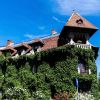
The Museum of Communism was opened in July 2023 at the initiative of entrepreneurs Gabriel Boga and Cătălina Andrieș, who set out to create a space dedicated to understanding a complex period in Romania's recent history. The museum operates in a building located in Bucharest's Old Town, at 6 Covaci Street, with an additional entrance from 1 Soarelui Street.
From the very entrance, visitors are immersed in an environment that recreates the atmosphere of the years when Romania was ruled by the communist regime. Each room is organized around a specific theme, and the exhibition route follows both the historical evolution of the regime and the way it influenced the lives of ordinary people.
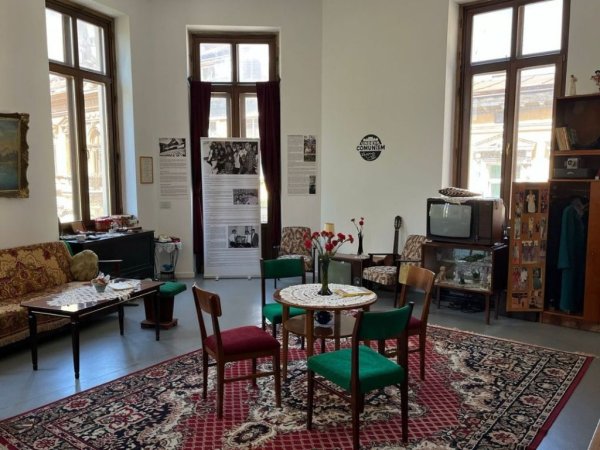
One of the museum's most appreciated areas is the reconstruction of a typical Romanian apartment from the 1970s and 1980s. The living room and kitchen are furnished with period furniture, cathode-ray tube televisions, radios, landline telephones, household appliances, tableware, and numerous objects that were part of everyday family life during those years.
Many visitors who grew up before 1989 immediately recognize the modular furniture, carpets, porcelain figurines, and household appliances that could be found in almost every home. For younger generations, however, these objects provide an opportunity to discover firsthand what life looked like in a Romania where consumer goods were limited and access to everyday products was very different from today.
Authentic exhibits and interactive experiences
One of the features that distinguishes the Museum of Communism from other museums is its interactive component. Visitors are not merely spectators but are encouraged to interact with many of the exhibits, helping them gain a closer understanding of everyday life during the communist period.
In addition to the reconstructed apartment, the museum includes several areas dedicated to historical information. Informational panels explain the establishment of the communist regime in Romania after the Second World War, the country's political and economic transformations, agricultural collectivization, official propaganda, and the role of the Romanian Communist Party in governing the state.
Another section is dedicated to political repression and the mechanisms through which the regime controlled society. Visitors can learn about the activities of the Securitate, the persecution of political opponents, and some of the darkest episodes of the communist era, including the Pitești Experiment, one of the harshest programs of violent re-education carried out in communist prisons.
The museum's collection includes numerous authentic objects donated by people who lived through that period. Among them are Communist Party membership booklets, student identification cards, administrative documents, magazines, photographs, school textbooks, and other materials illustrating how Romanian society functioned before 1989.
The experience is enhanced by sensory elements designed to recreate the atmosphere of the era. Visitors can listen to Romanian music played on original record players, see household objects that have now become rare, and discover products representative of the communist period, such as the famous "nechezol," the coffee substitute widely consumed during the final years of the regime.
A museum that aims to explain, not to idealize the past
From the very beginning, the museum's founders emphasized that the institution's purpose is not to encourage nostalgia for the communist period but rather to provide a balanced and well-documented picture of that era.
In recent years, Romanian public debate has frequently addressed the tendency of some people to remember communism only through the lens of positive personal memories while overlooking the lack of civil liberties, censorship, political repression, and economic hardships that characterized the regime.
Through its exhibits and informational materials, the museum seeks to provide the historical context necessary to understand these realities. Everyday life is illustrated both through familiar objects remembered by many visitors and through explanations regarding rationing, information control, official propaganda, and the restrictions imposed upon the population.
This balance between personal memory and historical documentation transforms the visit into an educational experience intended both for those who lived through communism and for the generations born after the Romanian Revolution of December 1989.
Visiting hours and ticket prices
The Museum of Communism can be visited throughout the year, with its regular opening hours being from 10:00 a.m. to 7:00 p.m., with the last admission taking place around 6:30 p.m. However, before planning a visit, it is recommended to check the museum's official communication channels, as opening hours may change due to special events or maintenance work.
On the ground floor of the building, visitors will find a themed café and a souvenir shop where they can purchase books, objects inspired by the communist era, and various educational materials.
Guided tours are available in Romanian, while the museum's informational displays are also presented in English, making the exhibition accessible to foreign tourists interested in Romania's recent history.
At present, admission fees vary according to the visitor category. Children under the age of seven and people with disabilities enjoy free admission. School pupils pay an entrance fee of 10 lei, while university students up to the age of 26 and pensioners pay 25 lei. The standard admission ticket for adults costs 40 lei.
Other attractions that complement a journey through the history of communism
A visit to the Museum of Communism can be complemented by other attractions in Bucharest that preserve important links to the communist period.
Among the best-known is the Primăverii Palace, the former official residence of Nicolae and Elena Ceaușescu. The building offers a different perspective on that period, presenting the lifestyle of the presidential family and highlighting the contrast between the luxury in which they lived and the hardships faced by the general population.
Another important landmark is the Palace of Parliament, built during the final decade of the communist regime and considered one of the largest administrative buildings in the world. Its construction required the demolition of a significant part of old Bucharest and the relocation of tens of thousands of residents, making it one of the most controversial urban planning projects of the era.
For those interested in recent history, these attractions provide complementary perspectives on how the communist regime influenced social life, architecture, and the development of Romania's capital city.
An experience that invites reflection
The Museum of Communism in Bucharest is not merely a collection of old objects but a space that seeks to transform history into an accessible and easy-to-understand experience. Through its combination of authentic exhibits, reconstructed interiors, documentary materials, and interactive elements, visitors have the opportunity to discover lesser-known aspects of everyday life in Communist Romania.
For those who lived through that period, the museum may represent a journey back in time and an opportunity to remember objects and habits that have disappeared. For younger visitors, however, it serves as a practical history lesson that complements textbook knowledge through direct contact with authentic objects and testimonies from an era that profoundly influenced Romania's development.
Beyond the nostalgic feelings that certain exhibits may evoke among some visitors, the museum's message remains focused on encouraging a critical understanding of the past. It is precisely this balanced approach that has made it an increasingly popular cultural attraction among Bucharest residents as well as Romanian and foreign tourists interested in discovering an important chapter of twentieth-century Romanian history.
We also recommend: The Museum of Romanian Records, an impressive collection of objects unique in the world: schedule, tickets, exhibitions