The "Ligia and Pompiliu Macovei" Memorial House: Where It Is Located, What You Can Visit, and How Much the Ticket Costs
- Articles
- 01 JUL 26
Bucharest is home to numerous memorial houses and museums that are less well known to the general public but offer an exceptional cultural experience. Among them is the "Ligia and Pompiliu Macovei" Memorial House, a place that has preserved the artistic and intellectual universe of one of the most refined couples in twentieth-century Romanian culture. Located in a historic area near Carol I Park, the house impresses visitors both through its architecture and through the richness of the collections gathered throughout the lives of Ligia and Pompiliu Macovei. Visiting this museum means much more than simply admiring paintings or decorative objects. It is a journey into an authentic residence, where every room tells a story about the owners' passion for art, their refined aesthetic taste, and the way they chose to create their own cultural universe. Today, the "Ligia and Pompiliu Macovei" Memorial House is part of the Bucharest Municipality Museum and represents one of the most interesting destinations for those who wish to discover another side of the Romanian capital, away from the usual tourist routes.
Where the "Ligia and Pompiliu Macovei" Memorial House is located
The museum is located at 36-38 11 Iunie Street, in one of the oldest areas of Bucharest, just a few minutes' walk from Carol I Park. Its location makes it an attraction that can easily be included in a cultural itinerary through the capital, together with other museums and historical monuments situated nearby.
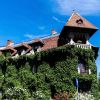
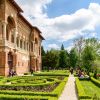
The building that houses the collection is itself an architectural landmark. The residence was built at the beginning of the twentieth century in the French eclectic style, an architectural style that was highly appreciated in Bucharest during that period. Its elegant façade and harmonious proportions reflect the Western influences that shaped the capital's architecture during the first decades of the last century.
The present memorial house entered the patrimony of the Bucharest Municipality Museum in 1992, becoming the last art collection added to the institution's heritage. After several years of restoration and preparation, the museum opened its doors to the public in 2002, giving visitors the opportunity to step into a residence preserved almost exactly as its owners had left it.
Unlike many museums organized in conventional exhibition spaces, this memorial house gives visitors the feeling of entering a genuine private home, where every object has remained in its natural place.
The story of the house before it became a museum
The history of the building goes back much further than the museum itself and reflects the transformations Bucharest has undergone over the past century.
Before the property was purchased by the Macovei family, it served several different purposes. On the ground floor there was, for a period of time, a hat shop, while the upper floor was the home of a Jewish resident. Later, following the social and economic changes of the post-war period, the building briefly served as a dormitory for apprentices working at a nearby factory.
In 1952, the house was purchased by Ligia and Pompiliu Macovei. The couple transformed it into their private residence, arranging every room according to their own aesthetic preferences and around the impressive art collection they had built over the years.
After their deaths, their wish for the entire collection to be preserved and made available to the public became reality when the house was incorporated into the Bucharest Municipality Museum. The rooms have been carefully preserved so that visitors can experience the authentic atmosphere in which the two collectors once lived.
Who Ligia and Pompiliu Macovei were
The memorial house tells not only the story of the objects on display but also that of the remarkable personalities who collected them.
Pompiliu Macovei was born in 1911 and enjoyed an outstanding career in both architecture and diplomacy. He graduated from the "Ion Mincu" Institute of Architecture in Bucharest in 1939, and after 1960 he held numerous important positions in the Romanian administration and diplomatic service.
Throughout his career, he served as adviser to the Romanian Legation in Paris, head of the diplomatic mission in Rome, deputy minister of the Ministry of Foreign Affairs, President of the State Committee for Culture and Art, and UNESCO ambassador. These positions gave him the opportunity to travel extensively and to become acquainted with important art collections and leading cultural figures throughout the world.
His wife, Ligia Macovei, born in 1916, was one of the important artists of her generation. Between 1934 and 1939, she attended the Decorative Arts Department of the School of Fine Arts in Bucharest.
She had the privilege of studying under renowned professors such as Cecilia Cuțescu Storck, Jean Alexandru Steriadi, Corneliu Medrea, and architect Horia Teodoru. This artistic education profoundly influenced her entire career as a painter and illustrator.
Their shared passion for art, architecture, and cultural heritage inspired the couple to create one of the most remarkable private art collections in Bucharest.
What can be admired inside the museum
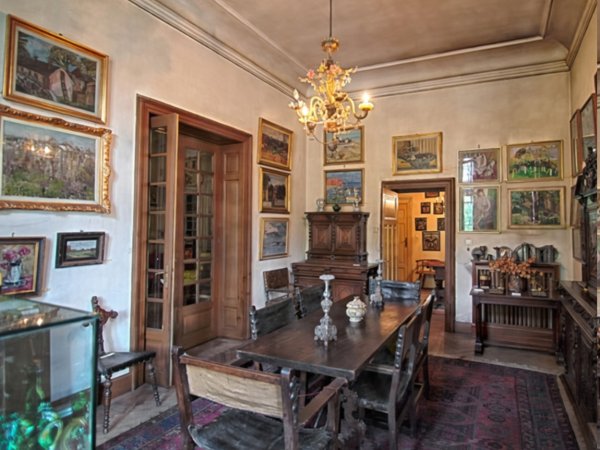
The "Ligia and Pompiliu Macovei" Art Collection offers visitors a genuine journey through different historical periods and cultural traditions. Guests discover rooms arranged like an elegant private residence, where furniture, paintings, and decorative objects create a harmonious ensemble.
One of the most valuable sections of the collection consists of paintings created by some of Romania's greatest artists. Among them are Theodor Pallady, Lucian Grigorescu, Alexandru Ciucurencu, Dimitrie Ghiață, Gheorghe Petrașcu, Ioan Andreescu, Jean Alexandru Steriadi, Iosif Iser, Nicolae Tonitza, Ion Țuculescu, Marcel Iancu, and M.H. Maxy.
Each artwork contributes to the overall character of the collection and illustrates the principal artistic movements of Romanian painting during the nineteenth and twentieth centuries. Visitors can admire landscapes, still lifes, portraits, and modern compositions brought together in an atmosphere reminiscent of the salons of distinguished art collectors.
In addition to paintings, the museum houses numerous decorative objects made of glass, ceramics, and metal, pieces of furniture representing different styles, and decorative textiles originating from various cultural regions. Together, these objects complete the atmosphere of the house and reflect the refined taste of its owners.
A special place within the museum is dedicated to the works created by Ligia Macovei herself. The collection preserves an important selection of her paintings, allowing visitors to follow the evolution of her artistic style and creative interests.
The collection is further enriched by an impressive art library containing albums, specialized books, and publications devoted to the history of art, demonstrating the owners' lifelong dedication to the study and promotion of culture.
A residence that tells the story of a way of life
One of the museum's distinctive characteristics is that it presents not simply an exhibition of objects but the atmosphere of an elegant twentieth-century Bucharest residence.
Each room has retained its original function, while the furniture has been arranged so that visitors feel as though the owners could return at any moment. The paintings are naturally integrated into the interior decoration, and the decorative objects are displayed not in the detached manner typical of museums but as essential elements of the daily environment imagined by Ligia and Pompiliu Macovei.
This approach transforms the visit into a different experience from that offered by traditional museums. Visitors discover not only works of art but also the way they coexisted within a private home, contributing to the visual comfort and aesthetic identity of the residence.
Indeed, the entire collection reflects the owners' vision of beauty and harmony. Every object was carefully selected, and the collection as a whole demonstrates how important the dialogue between art, architecture, and everyday life was for the Macovei family.
Visiting hours and ticket prices
The "Ligia and Pompiliu Macovei" Memorial House is open to visitors from Wednesday through Sunday, between 10:00 a.m. and 6:00 p.m. The last admission is at 5:30 p.m., allowing visitors sufficient time to explore the entire collection.
Ticket prices are affordable and make this cultural attraction accessible to all categories of visitors. Admission for adults costs 6 lei, while pupils, students, pensioners, and military personnel benefit from a reduced ticket price of 3 lei. Children under the age of seven enjoy free admission.
Because of its size, the museum can generally be visited in approximately one hour, although art enthusiasts may wish to spend more time admiring each artwork and every detail of the interior decoration.
Located in a quiet part of the capital and only a short distance from Carol I Park, the memorial house can easily be included in a full day dedicated to exploring Bucharest's cultural heritage.
The "Ligia and Pompiliu Macovei" Memorial House is much more than a museum dedicated to a couple of collectors. It stands as a testimony to the way in which a passion for art can transform an ordinary residence into a genuine cultural universe. Every room preserves the personalities of its former owners, while the collections displayed provide valuable insight into both Romanian and European art.
For those wishing to discover a lesser-known side of Bucharest, away from the city's busiest tourist attractions, visiting this memorial house is a truly rewarding experience. The elegance of its architecture, the value of its collections, and its authentic atmosphere make it one of the capital's most fascinating cultural destinations—a place where the past continues to inspire every visitor.
We also recommend: The George and Agatha Bacovia Memorial House: Brief History, Schedule, Exhibition, Tickets