The History of Sun Plaza, the Most Popular Shopping Complex in Southern Bucharest
- Articles
- 24 SEP 26
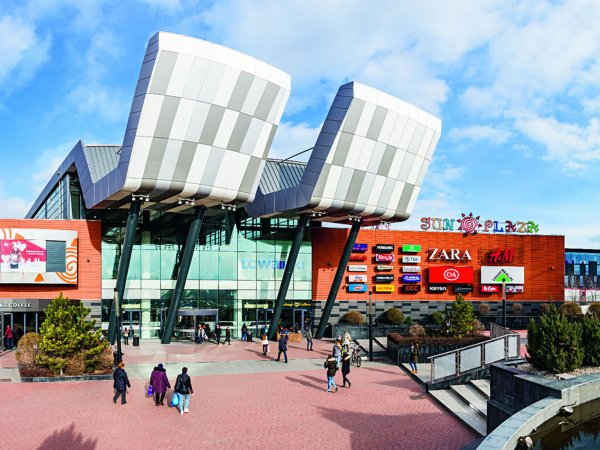
In southern Bucharest, the area around Piața Sudului was for a long time associated with local commerce, food markets, neighborhood shops and the major roads connecting Berceni with the center of the capital. More than a decade and a half ago, however, the landscape of the area changed radically. Sun Plaza appeared on Calea Văcărești, a large-scale project that would transform Piața Sudului into one of the most important commercial areas in the southern part of the city. Opened in February 2010, the complex was designed as a large-scale shopping center, with a hypermarket, fashion stores, restaurants, a cinema and entertainment spaces. At the time of its opening, Sun Plaza had approximately 80,000 square meters of leasable area and represented an investment of around 200 million euros. Over the years, the mall went through an important remodeling stage, and today it continues to adapt to a retail market that is constantly changing. Its location, right next to the Piața Sudului metro station, has nevertheless remained one of the complex's main advantages.
From Piața Sudului to a Major Commercial Hub
Piața Sudului already had major importance for Bucharest before Sun Plaza appeared. The area was one of the major commercial and transportation hubs in the southern part of the capital, being connected to the Berceni neighborhood and to the roads leading toward Calea Văcărești, Șoseaua Olteniței and the city center.
The appearance of a large-scale mall here was not accidental. Access to the metro, the high density of the surrounding neighborhoods and the significant traffic on Calea Văcărești made this part of the city an attractive location for the development of a major commercial project. Before its opening, the economic press reported that the project was expected to significantly change the commercial offer in the area and attract customers from a wide part of the capital.
Sun Plaza was developed by EMCT România for S IMMO AG, while the architectural project was designed by the international firm Chapman Taylor. At the time of its launch, the project was presented as one of the largest shopping malls in Romania, with approximately 80,000 square meters of leasable area and more than 200,000 square meters of built-up area.
The investment was important not only because of its size, but also because of its concept. Sun Plaza was not intended to be merely a shopping gallery. The idea was that of a shopping center where shopping, food services and entertainment would be brought together in one place.
The Opening in February 2010
Sun Plaza opened its doors in February 2010, at a time when the Romanian retail market was strongly influenced by the economic crisis. The opening took place on February 25, and the press at the time presented the project as one of the largest shopping centers in the country.
At the opening, approximately 80% of the stores were ready to receive customers, while the center's occupancy rate had reached approximately 97%. Among the important tenants were Cora, bauMax, Mobexpert, Flanco, Zara, C&A, New Yorker, Debenhams, Bershka, Pull&Bear and Deichmann, alongside restaurants and cafés such as McDonald's, KFC, Pizza Hut and Starbucks. The complex also included Cinema City.
The offer was designed to cover both everyday shopping and fashion, furniture, DIY, electronics and entertainment. For residents of Berceni and the nearby neighborhoods, the appearance of the mall meant access to a concentration of stores that, until then, required traveling to other commercial areas of the city.
The size of the project was one of its main characteristics. Sun Plaza had approximately 2,000 parking spaces, and the shopping center was designed to accommodate a large volume of visitors.
The Metro, the Advantage That Made the Difference
One of the most important elements of Sun Plaza was its direct connection with the Piața Sudului metro station. In a city where access by car to major shopping centers can be difficult, the connection with the metro gave the complex an important advantage.
The underground passage connecting Piața Sudului station to Sun Plaza was inaugurated in June 2010, a few months after the mall opened. The passage was approximately 180 meters long and six meters wide and allowed direct access from the metro area to the shopping center. The investment required to build it was estimated at approximately three million euros.
This connection effectively changed the relationship between the mall and the area's transportation infrastructure. For a customer coming from central Bucharest, the journey to Sun Plaza could be made without changing the means of transportation and without crossing the busy roads at street level.
Even today, direct access from the Piața Sudului metro station remains one of the shopping center's important advantages. According to current information about the complex, Sun Plaza is also served by numerous bus and tram lines, which extends its accessibility area.
A Mall That Changed After Its First Years
The success of a shopping center does not depend only on its opening. As consumer preferences change, stores leave, new brands appear, and spaces need to be adapted. Sun Plaza went through such an important transformation process in the middle of the 2010s.
The remodeling process began in several stages and covered more than 20,000 square meters. Approximately 11,000 square meters were integrated into a new area, where 40 stores were opened. The works took place over 24 months, in three stages, so that the center's activity could continue.
The changes did not mean only new commercial spaces. The interior design was refreshed, two new squares were created and two other areas were reconfigured. The passage to the metro also received an artistic intervention created by Austrian artist Peter Kogler.
In 2017, the remodeling project received the award for the best renovation/extension of the year at the CIJ Awards. According to the center's official information, the works contributed to consolidating Sun Plaza's position in the southern part of the capital.
What You Can Find at Sun Plaza Today
Today, Sun Plaza has a built-up area of approximately 208,000 square meters and is described by its owner as the dominant shopping center in southern Bucharest. The complex has four levels, two of which are dedicated exclusively to commercial activities, while the parking area extends over two levels and has 2,000 spaces.
The commercial offer includes more than 170 stores and spaces dedicated to leisure activities. Among the main partners currently listed by Sun Plaza are Carrefour, Leroy Merlin, Cinema City, C&A, H&M, LEGO, Zara, Altex, Bebe Tei and Flanco. The center therefore brings together fashion, electronics, home products, DIY, services, restaurants and entertainment.
The building also has a BREEAM Excellent certification, according to information published by CPI Romania, the current owner of the complex. The leasable area is indicated at approximately 81,000 square meters.
Another element that contributed to turning Sun Plaza into a leisure destination is the combination of shopping and entertainment. The cinema, restaurant area, children's spaces and other leisure activities have meant that a visit to the mall is not limited to shopping.
A New Stage of Transformation
Sun Plaza has recently entered a new period of modernization. In 2025, CPI Romania announced a major transformation process for the shopping center, also connected to the change of the hypermarket operator. Carrefour was due to leave the space previously occupied, while Auchan was announced as the new partner for this area.
According to CPI, the new Auchan hypermarket is planned to cover approximately 7,000 square meters, while the project is part of a broader strategy to reposition and modernize the center. At the same time, approximately 16,000 square meters were to be used to integrate new international brands in the fashion sector.
The process actually began in 2025, and some changes have already become visible. The Inditex Group expanded its Zara store, with its area expected to reach almost 4,000 square meters distributed over two floors, according to information published in the business press. Pull&Bear was also expected to be relocated and expanded.
At the same time, Sun Plaza announced the opening of the first reconfigured area, with stores such as H&M, C&A and Bebe Tei in larger spaces, as well as new stores and improved access to the metro and parking area.
Why Sun Plaza Became a Landmark of Southern Bucharest
The history of Sun Plaza is, in a certain sense, also the history of the transformation of Bucharest's retail sector over the past 16 years. From a project worth approximately 200 million euros, inaugurated during a difficult economic period, the shopping center became a permanent landmark of the Piața Sudului area.
Its location is one of the main reasons. Sun Plaza is not situated in an isolated peripheral area, but at an important urban hub, at the intersection of major roads and next to one of the important stations of Metro Line 2. This positioning allowed it to attract both residents of Berceni and neighboring neighborhoods and visitors from other parts of Bucharest.
At the same time, the complex went through successive transformations to keep up with changes in retail. From the stores and hypermarkets present in 2010 to the current commercial mix, Sun Plaza has evolved together with its customers.
Today, Sun Plaza, located at 391 Calea Văcărești, remains one of the best-known commercial destinations in southern Bucharest. Its story is not only that of a mall built 16 years ago, but also that of an urban area that has changed profoundly: from the old commerce of Piața Sudului to today's major shopping centers, where shopping, transportation, restaurants and entertainment meet under the same roof.
We also recommend: Plaza Romania, a brief history: from the Lujerului "Hunger Circus" to one of the most popular shopping malls in the western part of Bucharest