Plaza Romania, a brief history: from the Lujerului "Hunger Circus" to one of the most popular shopping malls in the western part of Bucharest
- Articles
- 15 JUL 26
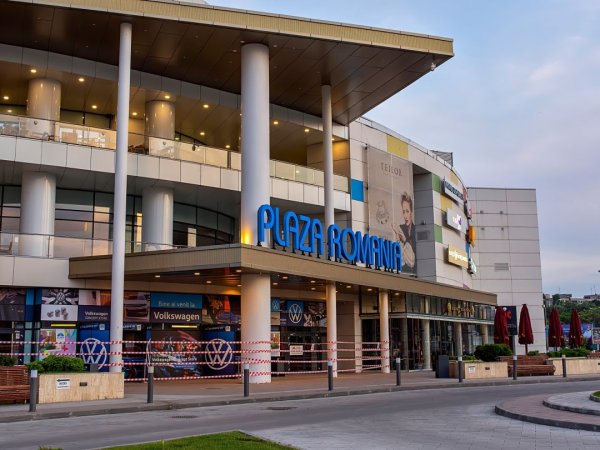
Few buildings in Bucharest illustrate the transformations Romania has undergone over the past four decades better than Plaza Romania. Built on the structure of one of the former Agro-Industrial Commercial Complexes constructed during the final years of the communist regime, the current shopping center represents one of the best-known examples of urban redevelopment in the Romanian capital. A site originally designed to become a symbol of the socialist economic system was transformed, after 2000, into a landmark of modern retail and everyday life in western Bucharest. Inaugurated on October 28, 2004, Plaza Romania is the second modern shopping mall opened in Bucharest, after Bucharest Mall Vitan. Both projects were developed by Anchor Grup, the Romanian company that is part of the Turkish FIBA Group. Throughout more than two decades of operation, the shopping center has gone through several stages of development and modernization, continuously adapting to changes in the retail market and evolving consumer habits. The story of Plaza Romania, however, began almost twenty years before its inauguration, during a period when Bucharest was being reshaped according to the principles of communist urban planning, and major public construction projects aimed not only to reorganize the city but also to change the lifestyle of its residents.
Why the "Hunger Circuses" were built
During the second half of the 1980s, the regime led by Nicolae Ceaușescu initiated the construction of a network of Agro-Industrial Commercial Complexes, large-scale buildings intended to centralize the distribution of food products while also including facilities for storage, food preparation, and retail.
Officially, these buildings were known as Agro-Industrial Commercial Complexes. Bucharest residents, however, quickly gave them a nickname that would become deeply rooted in collective memory: the "Hunger Circuses." The name was inspired both by their distinctive architecture, dominated by large metal domes, and by the everyday reality of the final years of the communist regime, marked by food shortages and the rationing of basic goods.
These buildings formed part of the authorities' policy to reorganize the food supply system. The concept sought to expand the consumption of meals prepared in centralized facilities while reducing food preparation in private households, all within a state-controlled system. In practice, however, many of these complexes were never completed before the fall of the communist regime.
Among them was the Lujerului Agro-Industrial Commercial Complex, built at the intersection of Timișoara Boulevard and today's Lujerului Overpass, in an area located on the border between the Drumul Taberei and Militari neighborhoods. The location was not chosen by chance. Both neighborhoods had experienced rapid development since the 1960s and were already home to hundreds of thousands of residents, making the construction of large commercial centers a necessity.
An abandoned construction site after the 1989 Revolution
The Romanian Revolution of December 1989 interrupted numerous projects that had been launched during the final years of the Ceaușescu regime, and the Lujerului Agro-Industrial Commercial Complex was among them. Construction work stopped before completion, and for years the unfinished structure remained a familiar sight for residents of western Bucharest.
For more than a decade, the massive concrete frame and the steel dome structure dominated the urban landscape around Lujerului. The unfinished building had become one of many abandoned construction sites reminding people of the grand projects initiated during the final years of communism and abandoned after the political regime changed.
Despite the deterioration caused by the passage of time, the building's structural framework remained in sufficiently good condition to allow its redevelopment a few years later. Its location in a densely populated area, combined with access to major road infrastructure, would eventually transform the former communist complex into an attractive investment opportunity for real estate developers.
Anchor Grup and the beginning of the transformation
By the end of the 1990s, modern retail was beginning to develop rapidly in Romania. A key role in this transformation was played by Anchor Grup, a company belonging to the Turkish FIBA Group, which had inaugurated Bucharest Mall Vitan in 1999, widely regarded as Romania's first modern shopping mall.
The success of the project in the eastern part of the capital encouraged the company to develop a second large-scale shopping center. Choosing the former Agro-Industrial Commercial Complex at Lujerului proved advantageous from both an urban planning and an economic perspective. A solid structure already existed, while the surrounding area offered a substantial pool of potential customers.
The redevelopment process involved far more than a simple renovation. Engineers and architects incorporated the central section of the former complex into the new project while expanding the structure with modern buildings designed to meet the requirements of a contemporary shopping center. In this way, a symbol of the planned economy was transformed into a space dedicated to shopping and leisure, illustrating the economic and social changes Romania was experiencing at the beginning of the 21st century.
The inauguration of Plaza Romania and the beginning of a new era for western Bucharest
After several years of construction, the former Lujerului Agro-Industrial Commercial Complex was given a new identity. On October 28, 2004, Plaza Romania officially opened its doors, becoming the second modern shopping mall inaugurated in Bucharest after Bucharest Mall Vitan. Developed by Anchor Grup, the project represented one of the most significant private investments made in the western part of the city in the early 2000s and an early example of the urban redevelopment of a structure originally begun before 1989.
The new building combined elements of the former communist complex with architecture designed to meet the demands of modern retail. The central structure and its impressive steel dome were incorporated into the new complex, while the remainder of the building was expanded with modern retail units, spacious shopping galleries, and areas dedicated to leisure activities. The result was a shopping center unlike the traditional department stores that had previously existed in Bucharest, introducing Romanian consumers to a new concept that brought together shopping, restaurants, entertainment, and services under one roof.
The inauguration coincided with a period during which modern retail was beginning to profoundly change the consumption habits of Bucharest residents. For people living in the Drumul Taberei, Militari, Crângași, and neighboring districts, Plaza Romania quickly became one of the city's main destinations for shopping and leisure. Its location next to the Lujerului Overpass and close to major thoroughfares helped attract a large number of visitors from its very first years of operation.
An important factor in the shopping center's success was the Movieplex multiplex cinema, inaugurated shortly after the mall opened. Featuring multiple screening rooms and state-of-the-art facilities for its time, it became one of Bucharest's leading cinemas, transforming Plaza Romania into a leisure destination rather than merely a place for shopping.
Adapting to an ever-changing market
The years following its inauguration saw rapid growth in modern retail across the Romanian capital. After 2008, several new large shopping centers opened, and competition among malls became increasingly intense. Western Bucharest changed significantly with the opening of AFI Cotroceni, while additional commercial developments later reshaped the city's retail landscape.
Within this context, Plaza Romania had to adapt to a constantly evolving market. Anchor Grup invested in modernizing the shopping center by reconfiguring its interior spaces, improving the lighting system, and updating the design of its façades. At the same time, the tenant mix was adjusted according to market demands, ensuring that the retail offering met both everyday shopping needs and the growing demand for services and leisure activities.
One of the most important strategic decisions was the conversion of part of the retail space into modern office facilities, a project known as Plaza Romania Offices. This transformation represented one of the first redevelopments of its kind within a Romanian shopping center and allowed more efficient use of spaces that no longer held the same commercial potential as they had during the mall's early years.
The modernization focused not only on the building's appearance but also on adapting it to new retail trends. Food and beverage areas as well as leisure spaces were reorganized, further strengthening the shopping center's role as a multifunctional destination frequented by both families and employees working in nearby office buildings.
More than two decades after its inauguration, Plaza Romania continues to be one of the major commercial landmarks of Bucharest's Sector 6 and one of the best-known examples of the transformation of a structure begun during the communist era into a project adapted to the market economy. Its story illustrates how the city reinvented itself after 1989 by reusing abandoned structures and integrating them into a new urban and economic context.
Viewed today, Plaza Romania is much more than a shopping center. It is the witness to a history that began during the final years of the communist regime, continued through the uncertainties of Romania's post-communist transition, and extends to the present day, when the former Lujerului "Hunger Circus" has become one of the most recognizable landmarks in western Bucharest.
Its evolution reflects the profound transformations the Romanian capital has undergone over recent decades and demonstrates that even some of the most controversial projects of the past can be given a new life when they are intelligently integrated into the city's development.
We also recommend: The history of ParkLake Mall in Bucharest, an oasis of greenery and entertainment in the heart of the capital's most beautiful sector