Mihail Jora, the artist who created the Romanian lied and ballet music, has a street named after him in Bucharest
- Articles
- 06 MAR 26
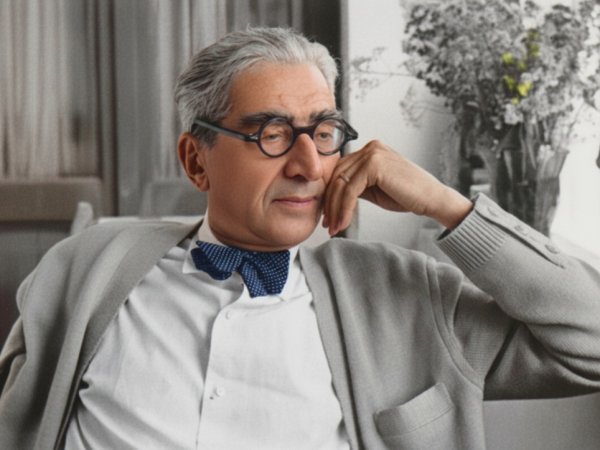
Mihail Jora is one of the most important personalities of Romanian music in the 20th century. Composer, pianist, conductor and professor, he contributed decisively to the development of the national musical culture and to the formation of entire generations of artists. Alongside George Enescu, Mihail Jora dominated Romanian musical life in the first half of the last century, being considered the creator of the Romanian lied and of ballet music in Romania.
The origin and formation of a great musician
His activity was not limited only to composition. He was a full member of the Romanian Academy, professor and rector of the Royal Academy of Music in Bucharest, as well as the first musical director of the Romanian Radio Broadcasting. Through his work and through his pedagogical activity, Jora profoundly influenced the evolution of Romanian music, and his disciples would in turn become important personalities.
As a sign of recognition for his exceptional contribution to Romanian culture, Mihail Jora’s name was given to a street in Bucharest, and his memory continues to be celebrated through musical competitions, cultural institutions and numerous studies dedicated to his work.
Mihail Jora was born on August 2, 1891, in the city of Roman, in Neamț County, in a family of Armenian origin. He came from a cultivated environment, and his musical talent manifested itself from childhood.
In 1909 he began his studies at the Conservatory in Iași, where he studied theory and solfeggio under the guidance of professor Sofia Teodoreanu. At the same time, he attended the courses of the Faculty of Law in Iași, later obtaining a degree in law. This double training shows the seriousness and intellectual discipline that characterized him throughout his life.
Wishing to perfect his musical training, Jora left for Germany, where between 1912 and 1914 he studied at the Conservatory in Leipzig. Here he had renowned teachers of the era: in harmony Stephan Krehl, in composition Max Reger and in piano Robert Teichmüller.
Some critics later argued that his training in Leipzig, in an environment dominated by the tradition of German music, could have distanced him from the ideal of a Romanian national music. However, his patriotism and attachment to Romanian cultural traditions would prove to be much stronger than the influences of the German school.
The first works and the approach to the Romanian musical tradition
In 1914, Mihail Jora composed his first work, opus 1, a piece for voice and piano on a German text. This composition still carried the stylistic influence of the musical school in which he had been trained in Leipzig.
Soon, however, his creation was to evolve in a different direction. In the following year he created opus 2, a work that went beyond the intimate character of vocal chamber music and explored broader musical forms.
An important moment in his career was the composition of the “Suite for orchestra in D minor”, created in 1915. This work brought him the prestigious Enescu Prize and demonstrated his remarkable talent for orchestra.
In the years that followed, elements inspired by Romanian folk music became increasingly evident in his creations. In the “Little suite for violin and piano”, opus 3 from 1917, melodic features strongly influenced by national musical traditions can already be observed.
This orientation toward the values of Romanian folklore would become one of the defining characteristics of his artistic style.
The war experience and the completion of studies in Paris
The outbreak of the First World War interrupted Mihail Jora’s studies. Like many young people of his generation, he was mobilized and participated in the military conflict.
After the end of the war, he resumed his musical training. Between 1919 and 1920 he studied in Paris, where he worked with the composer Florent Schmitt, an important figure of French music of that period.
The Parisian experience had a significant influence on his artistic evolution, offering him the opportunity to come into contact with the modern ideas of European music.
After returning to Romania, Mihail Jora began an intense activity as pianist, conductor and music critic. At the same time, he actively involved himself in organizing the musical life of the country.
The founding of the Romanian Composers’ Society
An essential moment in the history of Romanian music took place on November 2, 1920, when Mihail Jora, together with several important composers, founded the Romanian Composers’ Society.
Among the founding members were A. Alessandrescu, Mihail Andricu, Constantin Brăiloiu, George Enacovici, Dimitrie Cuclin, D. G. Kiriac and Ion Nonna Otescu. Jora held the position of vice-president of this organization until 1949, when the institution was transformed into the Union of Composers of the Romanian People’s Republic.
In the same year, 1920, he composed the symphonic poem “Povestea indică”, inspired by the poem with the same title by Mihai Eminescu. This work, written for tenor and orchestra, reflected his interest in music connected to poetic text and dramatic action. This preference would later manifest itself especially in his creations of lied and in ballets.
The creator of Romanian ballet
One of Mihail Jora’s most important merits is that of having laid the foundations of Romanian ballet. His first works in this field were the ballets “La piață” and “Demoazela Măriuța”.
At that time, the concept of “Romanian ballet” was viewed with skepticism, and the composer was often asked what this artistic genre actually meant. Jora offered a clear explanation: Romanian ballet had to be a choreographic art performed by Romanian dancers, on music written by Romanian composers, inspired by subjects and rhythms of Romanian life.
Later, he also composed other important ballets, such as “Curtea veche”, “Când strugurii se coc” and “Întoarcerea din adâncuri”. These works demonstrate his rhythmic imagination and his ability to integrate elements from Romanian folk dances into the language of classical music.
The contribution to the development of the Romanian lied
Besides ballets, Mihail Jora also became known as the creator of the Romanian lied. This musical genre, inspired by the German tradition, involves a piece for voice and piano in which the poetic text has a central importance.
Jora drew inspiration from the creation of great Romanian poets such as Tudor Arghezi, George Bacovia or Mihai Eminescu. Among his best-known works is the cycle “Five songs”, opus 11, on verses by Octavian Goga.
Unlike the classical lieder composed by Schubert or Schumann, in which the vocal melody has the main role, Jora developed his own style. In his creations, the vocal line is closer to poetic declamation, and the piano gains increasing importance.
The musicologist Pascal Bentoiu explained that, in Jora’s lieder, harmony becomes the dominant element, and the melodic line is often generated by the succession of chords at the piano.
Professor and trainer of generations
The pedagogical activity of Mihail Jora had enormous importance for the development of Romanian music. Beginning in 1929, he was professor of composition and counterpoint at the Conservatory in Bucharest.
Over the years, he trained numerous musicians who would become important personalities. Among his students were Paul Constantinescu, Ion Dumitrescu, Pascal Bentoiu, Dan Constantinescu or Octavian Nemescu.
At the same time, between 1931 and 1945, he was artistic adviser of the Philharmonic and of the Romanian Opera, contributing to the orientation of the repertoire and to the development of musical institutions in Romania.
The contribution to the development of the Romanian Radio Broadcasting
Another important moment in his career was his involvement in the activity of the Romanian Radio Broadcasting. On November 30, 1928, only one month after the inauguration of the national radio station, Mihail Jora organized and conducted the first season of symphonic concerts broadcast live on the radio.
The inaugural program was dedicated exclusively to the composers Mozart and Haydn. Through this initiative, Jora laid the foundations of the tradition of radio symphonic concerts in Romania.
Classical music quickly became an essential component of radio programs, and Mihail Jora’s contribution to this development was decisive.
The confrontation with the communist regime
After the establishment of the communist regime, Mihail Jora came into conflict with the authorities, which were trying to transform art into an instrument of political propaganda.
A symbolic moment took place on December 31, 1947, when, during the ceremony of taking the oath of loyalty to the new Romanian People’s Republic, Jora requested that a moment of silence be kept in memory of King Michael I, who had been forced to abdicate one day earlier.
His gesture was considered a provocation. Shortly afterwards, the composer became the target of public attacks, and the Securitate began to monitor him.
He refused to accept the ideological directives imposed on artists and declared that a composer cannot be forced to write what others feel, because the artist must be a free man.
Where Mihail Jora Street is located in Bucharest
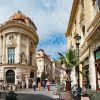
As a sign of recognition for his contribution to Romanian culture, Mihail Jora’s name was given to a street in Bucharest. Mihail Jora Street is located in the center of the Capital, in Sector 1, near important cultural institutions.
The street is situated in the area between Calea Victoriei and Lascăr Catargiu Boulevard, close to Victory Square and the Romanian Athenaeum. This area is part of the modern historical center of the city, known for numerous interwar buildings, cultural institutions and embassies.
The street lies in an elegant central neighborhood, characterized by historical architecture and the proximity to some of the most important institutions of Romanian culture. The choice of this place to bear Mihail Jora’s name reflects the respect given to his contribution to the development of Romanian music.
The cultural legacy of Mihail Jora
Mihail Jora died on May 10, 1971, leaving behind an impressive artistic work. His ballets and lieder represent the most original part of his creation, but the orchestral and instrumental works complete a major contribution to the Romanian cultural heritage.
In his memory, the Union of Critics, Editors and Musical Producers from Romania, together with the National University of Music in Bucharest, organizes annually the National Competition of Musical Criticism and Interpretation “Mihail Jora”.
Also, the largest symphonic and choral concert hall of the Romanian Radio Broadcasting bears the name “Mihail Jora Concert Studio”.
As the composer Ion Dumitrescu, one of his close disciples, said, Mihail Jora was not only a great musician, but also a moral model. Through his talent, courage and integrity, he remains one of the fundamental figures of Romanian culture.
We also recommend: Who was Nicolae Bretan, the Romanian composer who set Eminescu’s Luceafărul to music