Who was Nicolae Bretan, the Romanian composer who set Eminescu’s Luceafărul to music
- Articles
- 15 JAN 26
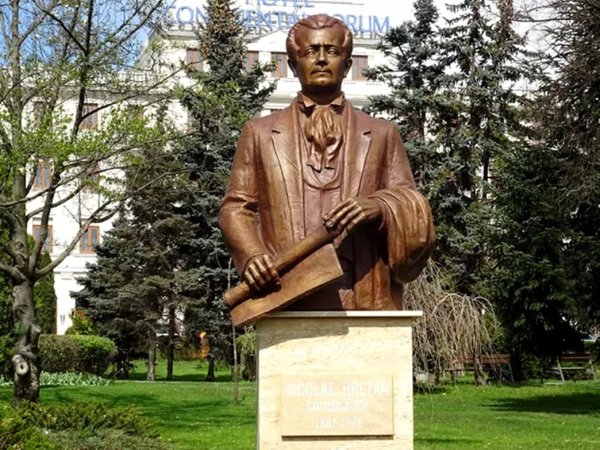
Nicolae Bretan occupies a special place in the history of Romanian music, being one of those complex personalities who managed to combine artistic creation, folkloric research, and social commitment in a profound and authentic way. Composer, conductor, opera singer, and author of lyrics, Bretan was a complete artist, devoted to Romanian cultural values and deeply connected to the realities of his time. Born on August 25, 1887, in the locality of Hărman, Brașov County, he grew up in a modest but spiritually rich environment, which decisively shaped his artistic and human path.
The childhood and artistic formation of Nicolae Bretan
Although he did not always enjoy the recognition his works deserved, Nicolae Bretan remains one of the most important Romanian composers of the twentieth century. His best-known achievement is undoubtedly the opera Luceafărul, inspired by Mihai Eminescu’s masterpiece, through which he succeeded in translating into music one of the most profound and symbolic poems in Romanian literature.
Nicolae Bretan discovered his love for music already in childhood, in a family context in which art and folk music were appreciated and cultivated. His parents, although facing financial difficulties, instilled in him respect for culture and tradition, offering him his first artistic landmarks. The sounds of folk songs, heard in his native village and its surroundings, remained deeply imprinted in his memory and would later become a major source of inspiration.
His musical talent was noticed early on, and despite material hardship, Bretan managed to pursue specialized studies. He studied at the Vienna Conservatory, one of the most prestigious European musical centers of the time, where he came into contact with the great traditions of Western classical music. Later, he continued his training at the Bucharest Conservatory, where he consolidated his artistic identity and his connection with Romanian cultural values.
Early creations and the influence of Romanian folklore
During his years of study, Nicolae Bretan began composing, exploring themes inspired by Romanian folklore and the universe of the traditional village. He did not regard folk music as a static element, but as a living source of artistic expression, capable of blending harmoniously with the language of classical music. This approach allowed him to create original works that preserved the authenticity of traditions while being modern and expressive at the same time.
His creation is extremely diverse, covering genres such as the lied, operetta, and opera. Bretan had a special sensitivity toward the relationship between text and music, emphasizing the clarity of the message and emotional intensity. In his lieder, the melody does not overshadow the word, but supports and amplifies it, offering the listener a profound and intimate experience.
The opera Horia and the vocation of national history
One of Nicolae Bretan’s most important works is the opera Horia, considered a true masterpiece of Romanian lyric art. Inspired by Horia’s Revolt of 1784, the opera explores the struggle for freedom, justice, and dignity of the Transylvanian Romanians.
Through this creation, Bretan not only pays tribute to a crucial moment in national history, but also conveys a powerful message about sacrifice and resistance in the face of oppression.
The music of Horia is dramatic, intense, and deeply moving, reflecting the tensions and aspirations of the characters. The work had a strong impact on audiences, being appreciated for its expressive force and for its ability to transform history into a living artistic experience.
Lieder and songs, the expression of inner sensitivity
Alongside large-scale creations, Nicolae Bretan composed numerous lieder and songs, which occupy a special place in the Romanian vocal repertoire. Among the most well-known are Cântec de leagăn (Lullaby), Doina, and Cântec de dragoste (Love Song), works that impress through simplicity, refinement, and emotional depth.
These compositions are characterized by subtle harmonic richness and by special attention paid to textual expression. Bretan succeeded in capturing fundamental human emotions—love, longing, melancholy within a musical language that is accessible yet extremely expressive.
Research and valorization of Romanian folklore
An essential aspect of Nicolae Bretan’s activity was his direct involvement in promoting and preserving Romanian folklore. He traveled to numerous villages across the country, collecting folk melodies and studying local traditions. These experiences gave him a deep understanding of the Romanian spirit and helped him create works that reflected the authenticity of rural life.
Folklore was not for Bretan merely a source of inspiration, but also a cultural responsibility. Through his music, he contributed to preserving and reinterpreting traditional heritage, making it accessible to the wider public and integrating it into the sphere of cultivated music.
Music as an instrument of social and political message
Nicolae Bretan’s creations were not devoid of a social and political dimension. He was a critic of injustices and social inequalities, and these concerns are reflected in many of his works. Through music, Bretan addressed themes such as poverty, injustice, and the suffering of ordinary people, transforming art into a form of social conscience.
His messages were not strident, but conveyed subtly, through emotion and symbol. This approach allowed him to reach audiences in a profound way, without sacrificing the artistic value of his creations.
Luceafărul, the meeting between Eminescu and Bretan’s music
One of Nicolae Bretan’s most important achievements is the opera Luceafărul, composed in 1947 and inspired by Mihai Eminescu’s famous poem. Bretan was not only the composer but also the librettist of the opera, adapting the original verses to fit the musical structure without altering their essence.
The opera, structured in two acts, combines classical music with elements of Romanian folk music, creating a highly expressive sonic universe. The story of the Evening Star who descends to Earth to find love in a human princess is translated into a musical language full of dramatism and lyricism. Bretan succeeds in expressing the entire range of human emotions, from love and ecstasy to suffering and renunciation.
Luceafărul had a significant impact both on the Romanian and the international musical scene, being performed by numerous orchestras and lyric ensembles. The work was appreciated for its fidelity to the spirit of Eminescu’s poetry and for its musical strength.
The artistic legacy of Nicolae Bretan
Nicolae Bretan remains a reference figure of Romanian culture, a composer who knew how to unite tradition with modernity, emotion with artistic rigor. Through his works, his love for folklore, and his social commitment, he left a lasting legacy that continues to inspire musicians and art lovers.
The work Luceafărul represents the ideal synthesis of his artistic vision and his deep respect for national values, confirming Nicolae Bretan as one of the most important creators of Romanian music.
We also recommend: Desired by Maiorescu, Conquered by the “Evening Star.” Cleopatra Lecca — The Woman Behind Mihai Eminescu’s “Along the Poplars Without a Mate”