How to request tree trimming or inspection in Bucharest. Who is responsible, when approval is needed and what to do if the tree seems dangerous
By Raluca Ogaru
- Articles
- 29 MAY 26
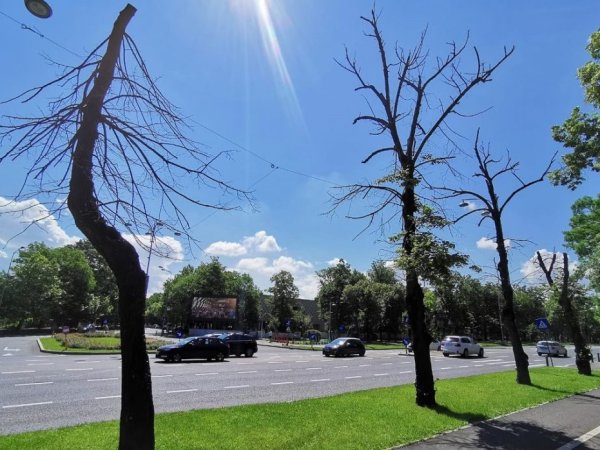
A dry, leaning tree or one with broken branches can become a serious problem in a crowded city such as Bucharest. In apartment building courtyards, along streets, in parks or near playgrounds, trees in poor condition can affect the safety of pedestrians, cars and buildings. At the same time, cutting or trimming trees cannot be done in any way people choose, because green spaces are protected by specific rules.
For residents, the practical question is simple: where do you report a dangerous tree and who can legally intervene? In Bucharest, the answer depends on where the tree is located and who manages the land: the district city hall, Bucharest City Hall, ALPAB, an apartment owners’ association or a private owner. For trimming or removal works, Bucharest City Hall has an official section for the approval of trimming/removal of vegetation located along streets or in green spaces belonging to residential complexes.
Why you cannot cut down a tree on public land yourself
Even if a tree looks dry or dangerous, cutting it without approval can create legal problems. Trees on public land, along streets, in parks, in green areas between apartment buildings or in other spaces managed by authorities cannot be removed by individual decision. Verification, documentation and, where applicable, specialist approval are required.
The rules are meant to prevent abusive cutting. Bucharest already faces strong pressure on its green spaces, and interventions on trees must be justified. Not every tree that creates shade, drops leaves or bothers a window can be removed. In many cases, the solution may be maintenance work, not removal.
On the other hand, if the tree is dry, broken, storm-damaged or presents a real risk, the complaint should be made quickly. Authorities can order checks and interventions depending on the seriousness of the situation, and in urgent cases there may be special procedures for public safety.
Where to send the complaint
The first criterion is the tree’s location. If it is on an alley between apartment buildings, in a neighbourhood green space or on land managed by the district, the complaint is usually sent to the district city hall or the district public domain administration. If the tree is in a large park managed by ALPAB or in an area managed by Bucharest City Hall, the complaint must be directed to the competent institution.
If you do not know exactly who manages the space, you can send the complaint to the district city hall and ask for it to be redirected. In the text, mention: “If the area is not managed by your institution, please redirect the complaint to the competent authority and inform me accordingly.”
For issues concerning green spaces, the Environment Department of Bucharest City Hall states that it checks complaints regarding the degradation or reduction of green spaces and provides information on green spaces in response to petitioners’ requests. This is a useful official source when the problem goes beyond a simple neighbourhood complaint.
What the complaint should include
An effective complaint must identify the tree exactly. Write the street, number, building, entrance, nearby landmark, district and position as clearly as possible: “in front of the building”, “next to the playground”, “on the pavement in front of the property”, “behind the parking area”, “at the entrance to the park”. If possible, attach a map screenshot.
Photos are very important. Take photos from a distance, for location, and close-up photos showing the problem: cracked trunk, broken branches, leaning position, dryness, exposed roots, fungi at the base, contact with wires or risk of falling. If the tree was damaged by a storm, mention the approximate date.
The text should be clear and neutral. For example: “I am reporting the presence of a tree located on X Street, in front of building Y, Sector Z, which has broken branches and is visibly leaning toward the pedestrian area. I request an on-site inspection and the legal measures required for pedestrian safety and the protection of the green space.”
When trimming or removal approval is needed
For works on trees along streets and in green spaces belonging to residential complexes, Bucharest City Hall has an approval procedure. On the official page for trimming/removal approval, forms and required documents for such requests are published. This shows that interventions are not carried out based only on a verbal decision.
Approval is important in order to establish whether the tree should be trimmed, removed or preserved. In many cases, specialists may decide to reduce dangerous branches, carry out maintenance works or monitor the tree, rather than remove it completely. For dry or weakened trees, documentation can be the basis for a legal intervention.
ALPAB mentions in its 2023 activity report that it sent documentation to Bucharest City Hall’s Environment Department for approval to remove dry or weakened trees from parks and street alignments. This example shows the institutional circuit: the green space administrator identifies the problem and requests specialist approval.
What to do if the tree is an immediate danger
If the tree or a large branch is about to fall, if it has fallen onto the road, onto wires, onto cars or is blocking access, the situation may become urgent. In such cases, an ordinary online petition is not enough. The competent authorities must be notified, and if there is a risk to people’s lives or safety, call 112.
For situations that are not immediate emergencies but may become dangerous, send a written complaint and request an on-site inspection. Clearly mention whether the tree is near a school, kindergarten, playground, STB stop, building entrance or heavily used pedestrian route. These details help authorities assess the priority.
Do not try to cut branches from public land yourself, even if your intention is good. You may cause damage, put other people in danger and break the rules on the protection of green spaces. The safest option is to notify the competent institution and keep proof of the complaint.
What happens after the complaint
After receiving the complaint, the competent institution should check the situation, establish whether the tree is under its administration and decide the next steps. An on-site inspection, documentation, an approval request or forwarding the case to another administrator may be required.
The general response deadline for petitions is 30 days, according to Government Ordinance no. 27/2002. However, a response does not automatically mean that the work will be done within 30 days. Sometimes the institution may communicate that the complaint has been checked, that it has been forwarded or that the approval procedure is ongoing.
If the problem is old and you do not receive a response, follow up with the registration number. If the situation worsens, send new photos and mention that the risk has increased. For dangerous trees, documenting how the situation evolves can matter.
What to remember
In Bucharest, trimming or removing a tree is not done based on the opinion of residents or of a single person. Verification is needed and, in many cases, approval is required. The complaint must be sent to the district city hall, Bucharest City Hall, ALPAB or the space administrator, depending on where the tree is located.
For the request to be effective, include the exact address, photos, a description of the risk and your contact details. If the tree immediately endangers people, cars, buildings or utility networks, treat the situation as urgent and call 112. For all other cases, use a written complaint and keep the registration number.
READ ALSO:
Pandelică Watches Over. The Only City Hall in Bucharest Built Specifically for That Purpose
How to submit online requests for documents at the City Hall in Bucharest