Famous boulevard names: Splaiul Independenței, the main artery that crosses all of Bucharest
- Articles
- 16 APR 26
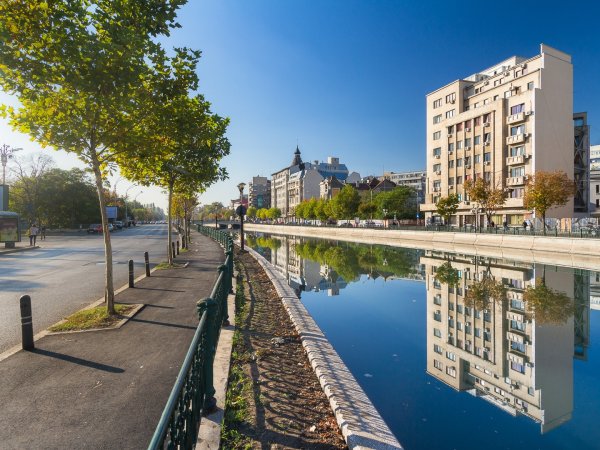
Splaiul Independenței is one of the most important arteries of the capital, a route that follows the course of the Dâmbovița River and connects essential areas of the city from west to east. Over time, this boulevard has become more than just a traffic route: it is an identity axis of the city, a space where history, urban planning, and daily life meet in a continuous form of transformation. In the context of the development of Bucharest, Splaiul Independenței has functioned as a strategic infrastructure, connecting neighborhoods, institutions, and industrial areas. Its importance is not limited only to its functional role, but also to the way it has influenced the urban evolution of the capital, becoming a landmark of modernization and urban expansion throughout the 19th–20th centuries.
Origins and historical development
The history of Splaiul Independenței is closely linked to the canalization and regulation of the Dâmbovița River, an essential process for the modernization of Bucharest. Before major urban interventions, the area was often exposed to floods, and the banks were insufficiently arranged. With systematization projects, a road infrastructure was created that radically transformed the image of the city.
Over time, this space evolved from a marginal area into an important urban artery. The construction of bridges, the reinforcement of riverbanks, and the development of administrative buildings contributed to shaping a coherent urban axis. The Splai thus became an integrated part of the capital’s modernization process, reflecting the urban ambitions of different eras.
Role in the capital’s urban system
Splaiul Independenței plays a central role in the urban structure of Bucharest, functioning as a connecting axis between historical, administrative, and residential areas. Through its geographical position, this artery facilitates connectivity between the east and west of the city, as well as access to the administrative center.
Over time, the boulevard was integrated into various urban planning schemes aimed at streamlining traffic and organizing urban space coherently. Its strategic importance is highlighted by the fact that it crosses areas with a high density of institutions, universities, and cultural centers, contributing to the overall dynamics of the city.
Mobility artery and infrastructure
From the perspective of mobility, Splaiul Independenței is one of the most heavily trafficked arteries of the capital. The intense flow of vehicles, public transport, and pedestrian movement reflects its importance in the daily life of the city. This artery functions as a main transit channel, reducing pressure on other central boulevards.
In addition, its infrastructure has been constantly modernized to meet growing urban needs. Road widening, bridge rehabilitation, and intersection reorganization have contributed to improving traffic efficiency. However, congestion challenges remain a constant issue, typical of large European capitals.
Architectural and institutional landmarks
Along Splaiul Independenței there are numerous buildings of architectural and institutional value. Universities, administrative headquarters, historic buildings, and research centers define this urban route, turning it into a corridor of knowledge and administration.
These landmarks contribute to the visual and functional identity of the boulevard. The diverse architecture, combining old and modern styles, reflects the historical evolution of the city. At the same time, the presence of important institutions strengthens the role of the Splai as a central axis of urban life.
Urban life and social dynamics
Splaiul Independenței is not only a traffic artery, but also a space of everyday urban life. Along it, diverse activities take place, from fast commuting to moments of social interaction. Students, employees, tourists, and residents cross this area daily, contributing to a continuous flow of urban energy.
In the vicinity of the boulevard, recreational areas, green spaces, and cultural points of interest are developing. These elements add an additional layer of functionality, turning the Splai into a hybrid space where infrastructure and social life constantly intersect.
Contemporary transformations and perspectives
In recent decades, Splaiul Independenței has undergone numerous transformations, adapting to the new demands of modern urbanization. Urban rehabilitation projects have targeted both road infrastructure and the improvement of adjacent spaces, aiming to increase urban quality of life.
Today, this artery continues to be a major point of interest in Bucharest’s urban planning. Discussions regarding sustainable mobility, alternative transport, and urban regeneration frequently include Splaiul Independenței as a central element, confirming its essential role in the future of the city.
Conclusion
Splaiul Independenței remains one of the most representative arteries of Bucharest, both historically and functionally. Its evolution reflects the transformation of the city from a fragmented space into a modern, connected, and dynamic capital.
Through its role as a link between important areas, its complex infrastructure, and the presence of major institutions, this boulevard continues to define the urban rhythm of the capital. Splaiul Independenței is not just a traffic route, but a true backbone of the city, telling the story of its continuous development.
We also recommend: The Urban Fountains of Unirii Square - a tourist attraction recognized by the Academy of World Records