Eugeniu Iordăchescu, the “Angel of Churches” in Bucharest. How the engineer saved places of worship during the communist period
- Articles
- 16 APR 26
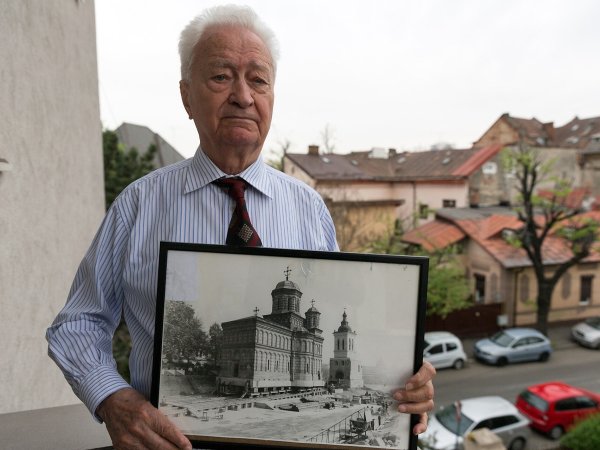
The destiny of some cities is sometimes changed by brutal political decisions, other times by the courageous ideas of people who refuse to accept destruction. In the Bucharest of the 1980s, marked by massive demolitions and the grand ambitions of the communist regime, one engineer managed to change the course of history for dozens of monuments. Eugeniu Iordăchescu, later nicknamed the “Angel of Churches,” invented a spectacular and ingenious method by which entire buildings could be moved out of the path of bulldozers. Thanks to him, several places of worship and heritage buildings still exist today. His story is not only one about engineering, but also about courage, perseverance, and a silent struggle against a system that did not tolerate opposition. In a period when the city’s identity was being mercilessly erased, Iordăchescu found a solution to save essential fragments of the past.
Bucharest of demolitions and the historical context
After the devastating earthquake of 1977, the communist regime announced a vast program for rebuilding the Capital. At first glance, the initiative seemed necessary, but in reality it became the pretext for one of the most aggressive urban systematization campaigns in Eastern Europe. Neighborhood after neighborhood was wiped off the map, and in place of houses, churches, and gardens, massive blocks and wide boulevards lacking identity appeared.
The Dealul Arsenalului area, the Uranus neighborhood, Dealul Spirii, Dudești or Sfânta Vineri were among the most affected. Thousands of buildings disappeared, and tens of thousands of people were forcibly relocated. All this to make room for a megalomaniac project: the new Civic Center and the House of the People. In this process, Bucharest’s architectural heritage was severely mutilated.
The atmosphere of those years was oppressive. Witnesses speak about a city dominated by construction sites, noise, and uncertainty. Everyday life had become difficult, and people helplessly watched the destruction of symbols of the past. In this grim context, the idea of saving some buildings seemed almost impossible.
The birth of a revolutionary idea
Eugeniu Iordăchescu, a construction engineer and technical director of the “Proiect” Institute in Bucharest, was directly involved in the systematization plans. Precisely this position gave him a clear perspective on the disaster that was about to happen. The decisive moment was the demolition of the Enei Church, which pushed him to act.
The solution he proposed was completely different from classical approaches. Instead of accepting demolition or attempting a partial rescue, he conceived a method by which buildings could be moved entirely. The idea started from a simple analogy: a waiter carrying full glasses on a tray without spilling their contents. On a large scale, the “tray” became a concrete platform built under the building.
The technique involved strengthening the structure, creating a new foundation in the form of a rigid platform, installing rails, and using special devices for movement. The building was slightly lifted and moved, centimeter by centimeter, to the new location. The procedure could be carried out either by pulling or pushing, depending on the terrain.
At first, the idea was viewed with skepticism. Even those close to him said it was not taken seriously. However, Iordăchescu insisted, created detailed plans, and demonstrated that the method was viable. The inspiration even came from personal life—from the care with which a delicate dessert was served, which had to be kept stable on a rigid support.
The first major success: Schitul Maicilor
The first application of the method took place in 1982, when the Schitul Maicilor Church was moved in order to be saved from demolition. Built in the 18th century, it weighed approximately 745 tons. The operation was spectacular: the building was moved over a distance of more than 200 meters.
The event attracted public and media attention. People gathered to watch how a church was “walking” on wheels, and the atmosphere on the construction site was electrifying. Engineers and workers worked with extreme concentration, aware that any mistake could have serious consequences.
The relocation lasted several months, and the actual movement was carried out at a speed of about 2.8 meters per hour. The success of the operation changed the authorities’ perception, who began to accept the method, even if initially they had hoped it would fail.
Saving other monuments and technical challenges
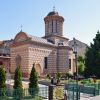
After the initial success, Iordăchescu’s method was applied on a larger scale. In total, 13 places of worship and another 17 buildings were saved, both in Bucharest and in other parts of the country. Among the most impressive projects was the relocation of the church of the Mihai Vodă Monastery.
It weighed approximately 3,100 tons and had to be lowered on a slope, which significantly complicated the works. The operation was carried out with remarkable precision, demonstrating the high level of competence of the team.
Another spectacular project was the relocation of the Synodal Palace at Antim Monastery, a building of approximately 9,000 tons. Surprisingly, it was moved without evacuating its contents, including the library. The works took place under difficult conditions, including extremely low temperatures.
However, not all attempts were successful. The demolition of the Sfânta Vineri Church remained one of the most painful losses. Although there was a rescue plan, the political decision was final, and the building was destroyed in a very short time.
The struggle with the regime and political pressures
Iordăchescu’s activity was not without risks. In an authoritarian regime, any initiative that went beyond the norms was viewed with suspicion. The engineer was monitored, and his projects were closely supervised.
A relevant episode is the anonymous letter he sent in 1979, in which he criticized the situation in the country. After years of investigation, the authorities discovered who the author was. Interrogations, pressure, and threats followed, including the loss of his position and travel restrictions.
Nevertheless, the regime needed his expertise. The relocation method had become known even in the West, and the authorities could not afford to give up a valuable specialist. This paradoxical situation allowed him to continue his work.
The pressure and stress left their mark on his health. He was diagnosed with thyroid cancer, and the family believes that the illness was aggravated by the difficult context in which he worked.
A career marked by performance and sacrifices
Eugeniu Iordăchescu’s path toward engineering was, in itself, a coincidence. He had wanted to become an architect, but ended up in Construction due to circumstances. However, he discovered his vocation and became an accomplished professional.
He worked on construction sites, taught, and carried out complex projects. In 1984, he obtained his PhD, dedicated precisely to the technology of moving buildings. His method was patented and recognized internationally.
After 1989, he held important positions in the construction field and contributed to the development of major projects. He was involved in professional organizations and promoted modern ideas, including in the field of seismic protection.
Although he had the opportunity to work abroad, including on an important project in Canada, the political context blocked this chance. The refusal to grant him a visa led to the loss of a valuable contract for the Romanian state.
The legacy of a savior of heritage
Eugeniu Iordăchescu died in January 2019, at the age of 89. He left behind not only saved buildings, but also a lesson about responsibility and courage. In a period when destruction seemed inevitable, he demonstrated that there are alternatives.
Although some of the saved churches were hidden between blocks, they continue to exist and preserve the memory of the past. Without his intervention, these monuments would have been lost forever.
His story is a rare example from the communist period, when an individual managed to positively influence the course of events. “History that moved on wheels” is not just a metaphor, but a concrete reality, built with intelligence and determination.
Today, when we look at Bucharest, we see both the traces of destruction and the signs of salvation. And among them, Eugeniu Iordăchescu’s contribution remains one of the most impressive proofs that ingenuity can overcome even the harshest constraints.
We also recommend: The story of the Sfânta Vineri church, the most beautiful church in Bucharest. Why Elena Ceaușescu demolished it