Does March 1 Still Have Charm in Bucharest? What Has Been Preserved, What Has Been Lost, What Still Moves You Today
- Articles
- 27 FEB 26
Every year, the beginning of March brings to Bucharest a curious mixture of tradition and modernity. March 1, the day of the mărțișor, continues to be a symbolic landmark of the coming of spring, even if the atmosphere no longer resembles exactly that of the past. In a crowded and hurried city, where the rhythm of life is dominated by traffic, offices and mobile phones, the mărțișor remains one of the few traditions that manage to interrupt daily routine for a moment.
A Celebration That Still Brings Spring to the City
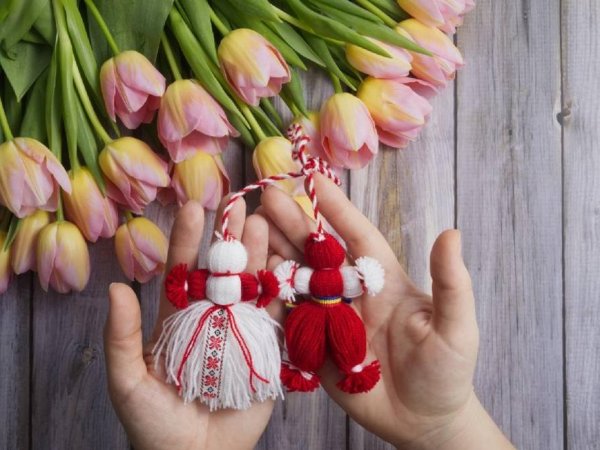
Even today, in the last days of February, mărțișor stalls appear in markets, at street corners or near subway stations. Vendors display their small symbols of spring – figurines made of ceramic, wood, glass or plastic, modern brooches, handmade jewelry and the classic red-and-white strings. People stop, look, choose, sometimes negotiate, and this atmosphere recalls old Bucharest, in which holidays had a slower and more personal rhythm.
For many Bucharest residents, the mărțișor continues to be a simple gesture, but one filled with emotion. Offering a small symbol to a loved one is a discreet form of affection, a tradition that has survived social and economic changes. Even if today the mărțișor is often bought in a hurry, its meaning has not completely disappeared.
There are still people who keep the custom of giving snowdrops or small handmade mărțișoare. In these gestures one can still find the charm of a tradition that cannot be replaced by expensive objects or sophisticated gifts.
At the same time, the city itself seems to take part in the celebration. The first warmer days, the trees that begin to bud and the different light of spring create a special atmosphere. For a few days, Bucharest seems gentler and brighter.
Bucharest of the Past and the Magic of the Mărțișor
Those who grew up in Bucharest during the 1970s, 1980s or 1990s remember a simpler March 1, but perhaps a more intense one. During that period, the mărțișor was a true small collective celebration.
Students went to school with their pockets full of mărțișoare, and exchanging them became a form of social interaction. Girls received dozens of small symbols, which they then wore pinned to their clothes or on their wrists. In offices and institutions, colleagues offered mărțișoare to one another, and the atmosphere was more relaxed than on ordinary days.
The mărțișor stalls had a special charm. Many of them were improvised, and the products were simple: plaster figurines, plastic four-leaf clovers, small chimney sweeps or horseshoes. It was not about material value, but about the gesture itself.
In those times, buying the mărțișor was a small ritual. People took the time to choose, to compare and to think about whom they would give each object to. There was no pressure of perfection or absolute originality, and simplicity was part of the charm.
There was also a stronger sense of community. Neighbors offered mărțișoare to each other, teachers received symbols from students, and human relationships were marked by these small gestures.
For many Bucharest residents, the memory of those days is connected to the emotion of childhood: the first flowers received, the first gifts offered or the first emotions related to a loved person.
What Has Changed Today
Today, March 1 in Bucharest looks different. The city is larger, more crowded and more hurried, and traditions are influenced by the modern lifestyle.
The mărțișor has become, in many cases, a commercial product. Large stores sell elegant sets, carefully packaged, and prices can sometimes be surprisingly high. Instead of simple figures, elaborate jewelry or decorative objects have appeared.
For many people, choosing the mărțișor has become a social obligation. It is bought quickly, sometimes at the last moment, without much reflection. The rhythm of the city no longer allows the same slow rituals as in the past.
Social relationships have also changed. In many offices, the tradition of the mărțișor is less visible than it used to be. Digital communication has often replaced direct gestures, and virtual greetings have taken the place of symbols offered in person.
Another element that has partly been lost is the collective atmosphere. Although the stalls still exist, people spend less time around them. The city seems more individualistic, and traditions are experienced more on a personal level than a communal one.
However, change does not necessarily mean the disappearance of charm. Some things have evolved in a positive way.
What Has Remained Unchanged
Despite the transformations, the essence of the mărțișor has not completely disappeared. There are still many things that preserve the spirit of this tradition.
First of all, the gesture of offering a mărțișor continues to be important. Even in a world dominated by technology, people feel the need for simple and symbolic gestures.
Spring flowers remain indispensable. Snowdrops, hyacinths or freesias are sold everywhere in the city, and their delicate fragrance is one of the sure signs that spring has arrived. There is also a revival of interest in handmade objects. Handmade mărțișor fairs attract more and more visitors, and many buyers look for original objects made with care.
For children, the mărțișor remains a small celebration. In schools and kindergartens, the tradition is still alive, and the young ones discover the joy of giving and receiving. In these spaces, the mărțișor still has the authentic charm of its beginnings.
The Discreet Emotion of an Urban Tradition
Perhaps the charm of March 1 in Bucharest is no longer as visible as it once was, but it still exists in a more discreet form. Sometimes it can be found in small gestures: a mărțișor left on a desk, a bouquet of snowdrops received in the morning or a simple message accompanied by a red-and-white symbol.
Emotion is no longer collective, but rather personal. Each person lives their own version of this celebration. For some, March 1 means the memory of childhood. For others, it is a moment of closeness with loved ones. There are also people for whom this day passes almost unnoticed.
And yet, every year, the mărțișor returns. The stalls appear again, the red-and-white strings are worn on the chest, and the city seems for a short time warmer. The charm of March 1 has not completely disappeared, but has transformed. It is no longer a noisy and collective celebration, but a quieter and more personal one.
Perhaps this very transformation ensures its survival. Traditions that manage to adapt remain alive. And the mărțișor, even in a modern and busy Bucharest, continues to tell the same simple story about beginnings, hope and spring.
We also recommend: The story of the Mărțișor in Bucharest. How an old custom turned into a modern urban ritual