The story of the Mărțișor in Bucharest. How an old custom turned into a modern urban ritual
- Articles
- 27 FEB 26
The Mărțișor is one of the most beloved symbols of spring in Romania, and in Bucharest this tradition has undergone a special evolution. From the simple customs of villages in the past to the modern fairs and elegant gifts in large stores, the Mărțișor has become in the Capital a complex urban ritual, in which tradition intertwines with the contemporary lifestyle. Every year, at the beginning of March, the streets of Bucharest fill with stands selling Mărțișors, and the shops decorate their windows with symbols of spring. For the inhabitants of the city, the Mărțișor is no longer only a protective talisman, as it was in the past, but also a gesture of politeness, a form of social communication and an expression of affection.
From rural tradition to the modern city
Although Bucharest is a modern city, the connection with tradition remains strong. The Mărțișor continues to be a symbol of new beginnings, and its story reflects the transformations of Romanian society over time.
The custom of the Mărțișor was born in rural communities, where it was closely connected to the rhythm of nature and agricultural life. In these communities, people considered the Mărțișor a talisman that protected against illnesses and brought fertility and luck.
When Bucharest began to develop as a city, especially during the 18th and 19th centuries, inhabitants coming from different regions of the country brought their own traditions with them. Among these was also the custom of the Mărțișor, which was quickly adopted by the urban community.
In old Bucharest, the Mărțișor was usually a simple object: a coin tied with a white and red string. Children wore it around the neck or on the wrist, and women pinned it on their chest. After a few weeks, the string was tied to the branches of a blossoming tree.
During that period, the Mărțișor still had a strong magical meaning. It was believed that it protected against illnesses and brought health throughout the year.
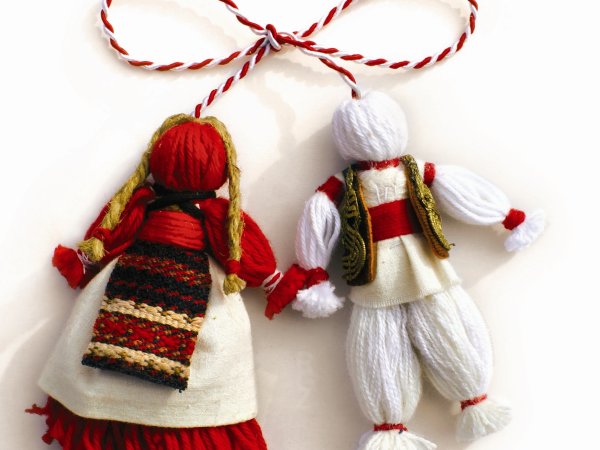
As the city modernized, the Mărțișor began to take increasingly varied forms. Craftsmen started to create small jewelry or decorative figurines, and the custom of offering the Mărțișor became more and more popular.
The Mărțișor in old Bucharest
During the interwar period, Bucharest was already a cosmopolitan city, and the Mărțișor had become a well-established tradition. Street vendors sold Mărțișors in markets and on the streets, and people bought small gifts for family members and friends.
Mărțișors were made from simple materials: metal, glass or wood. Some were decorated by hand, while others had shapes inspired by nature, such as flowers or leaves.
During that period, offering the Mărțișor was an elegant and respectful gesture. Men offered Mărțișors to the women in the family or to female colleagues at work, and children gave them to their teachers.
The custom was often accompanied by spring flowers, especially snowdrops. These flowers symbolized the beginning of spring and were considered a sign of hope. In interwar Bucharest, the Mărțișor was already part of urban life, but it preserved its traditional character.
Transformation during the communist period
After the Second World War, life in Bucharest changed radically. The communist regime influenced all aspects of social life, including traditions.
However, the Mărțișor did not disappear. On the contrary, it continued to be a popular celebration. Every spring, state shops sold simple Mărțișors, and people bought them to offer to colleagues and friends.
During that period, many Mărțișors were mass-produced. They had standardized shapes and were made from cheap materials.
Even under these conditions, the Mărțișor remained a celebration of joy. For many inhabitants of Bucharest, the beginning of March was a moment when daily routine was interrupted by small but meaningful gestures. People continued to respect the tradition of the white-red string, and the Mărțișor was worn with pride.
The Mărțișor after 1990
After 1990, Bucharest experienced a rapid transformation, and this was also reflected in the tradition of the Mărțișor. Spring fairs appeared, where craftsmen and artists sold their creations. Mărțișors became more and more diverse, from traditional objects to modern jewelry.
More and more inhabitants of Bucharest began to look for handmade Mărțișors, appreciating their uniqueness and artistic value.
During this period, the Mărțișor also became a commercial symbol. Shops, shopping centers and flower shops intensely promote this celebration, turning it into an important event for the seasonal economy. At the same time, the tradition remained alive. Many people continue to offer simple Mărțișors, preserving the symbolic meaning of the white-red string.
The Mărțișor as an urban ritual
Today, the Mărțișor is part of the identity of Bucharest. Every year, the city acquires a special atmosphere at the beginning of spring.
For many inhabitants of the Capital, offering the Mărțișor is a social ritual. Office colleagues offer Mărțișors to one another, students give them to teachers, and friends make small surprises for each other.
The Mărțișor is also present in the online environment. Many people send digital greeting cards or order Mărțișors through the internet.
This transformation shows the way in which an old tradition has adapted to modern life. In Bucharest, the Mărțișor is no longer only a symbolic object, but a collective experience that brings people together.
An old custom in a new world
The story of the Mărțișor in Bucharest is the story of a tradition that has survived historical and social changes. From the simple talisman worn by children and young girls to modern gifts offered in the urban environment, the Mărțișor has constantly evolved.
Despite all its transformations, the deep meaning of the Mărțișor has remained the same: the celebration of spring and of life.
In contemporary Bucharest, the Mărțișor is a bridge between past and present. It reminds us of the traditional roots of the community, but at the same time reflects the dynamism of the city. Thus, a custom thousands of years old continues to live in the rhythm of a modern city, proving that traditions can evolve without losing their soul.
We also recommend: The most famous legends of the Mărțișor: The Dragon Who Kidnapped the Sun, Baba Dochia and the Fierce Battle Between Spring and Winter