Bucharest, Facing Rains That Arrive Faster and Harder
- Articles
- 30 JUN 26
The past few summers have made one thing clear: European cities need to learn how to handle huge volumes of water in increasingly short periods of time. Extreme weather events are no longer the exception — they're the trend, and Bucharest is no different from the rest of Europe's major capitals. It faces the same pressures and needs the same kinds of solutions.
The data behind this phenomenon is well documented. Europe is warming twice as fast as the global average, and this pace brings with it more frequent heatwaves, more pronounced drought in southern Europe, and more intense torrential rain (Copernicus Climate Change Service, European State of the Climate 2024 report). At the European level, 2024 was the hottest year ever recorded, marked by storms and floods that affected around 413,000 people, caused at least 335 deaths, and generated an estimated 18 billion euros in damages. That same year, nearly a third of Europe's river network exceeded the high flood threshold, a clear signal of the growing pressure on urban and regional infrastructure (World Meteorological Organization).
In urban areas, the problem is amplified by soil sealing. According to the European Environment Agency, nearly half of the surface area of European cities is impermeable — buildings, asphalt, concrete — which drastically reduces the soil's capacity to absorb water and increases the risk of local flooding. Bucharest fits clearly into this pattern, and even more sharply: roughly 80% of the city's surface is impermeable or semi-permeable. In practice, rainwater from rooftops, boulevards, parking lots, and paved surfaces no longer reaches the ground — it flows almost instantly straight into the sewer system.
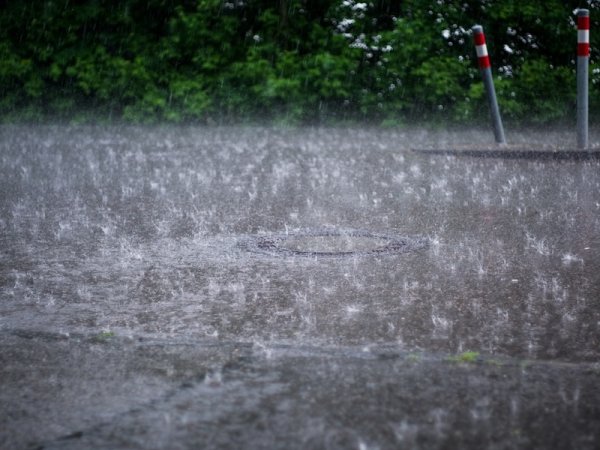
This dynamic means that during torrential rain, the sewer network receives very high flow volumes in a very short time. The capital's sewer system is sized to handle heavy rainfall, but like any city's, it cannot completely eliminate the effects of exceptional precipitation that exceeds the infrastructure's design parameters.
One of the solutions currently under discussion is building underground retention reservoirs beneath the city's large parks, such as Izvor Park and Opera Park. The idea is for these reservoirs to temporarily store water from torrential rain, easing the pressure on the sewer network exactly during critical moments. It's a logic similar to what many European cities have already adopted: more retention capacity, expanded permeable surfaces, and temporary stormwater storage solutions, instead of letting water drain immediately into the sewers.
The stakes here aren't just urban planning ones — they're economic too. Romania is particularly exposed to climate risks (floods, drought, heatwaves), and the OECD estimates that between 1980 and 2023, losses linked to climate risks totaled around 6% of GDP. The organization also notes that modernizing water infrastructure, reducing network losses, and adapting sewer and treatment systems are essential not only for managing floods, but also for coping with the increasingly present risk of drought and water shortages.
The conclusion that emerges from all this data is simple: investment in urban retention — whether underground reservoirs or permeable surfaces — is no longer an aesthetic luxury or an optional project. It's a basic component of how cities adapt to a climate that has already visibly changed.