10 interesting things about the “Grigore Antipa” Natural History Museum that you didn’t know until now
- Articles
- 21 APR 26
Muzeul Național de Istorie Naturală Grigore Antipa is today one of the most visited and appreciated museums in Romania, but its story begins with the ambition and intelligence of a visionary scientist: Grigore Antipa. At the beginning of the 20th century, he managed to transform a relatively modest collection into a modern institution, aligned with the standards of major European museums.
A museum born from the vision of a remarkable scientist
Antipa was not just a simple administrator, but an innovator who changed the way the public interacts with science. He wanted the museum to be not only an exhibition space, but also an educational one, accessible to all categories of visitors. This vision has remained valid to this day, being one of the reasons why the museum continues to attract entire generations.
Dioramas – a revolutionary invention in museography
One of the most spectacular things you will notice in the museum are the dioramas. These are not just simple display cases, but real scenes that recreate natural ecosystems in the smallest details. The concept was introduced in Romania by Grigore Antipa himself, being a premiere at that time.
The dioramas are made with extraordinary attention to detail: from the position of the animals to the vegetation specific to each habitat. They give visitors the feeling that they are looking at a real scene from nature, not just static exhibits. This way of presentation revolutionized Romanian museography and continues to be one of the museum’s strong points.
Impressive collections of millions of specimens
Although visitors see only a part of the exhibits, the museum actually houses millions of items. Its collections include insects, fish, birds, mammals, and many other species, some extremely rare or even extinct.
A large part of these specimens are not displayed to the public, being kept for scientific research. Thus, the museum is not only a place to visit, but also an important study center for specialists in the fields of biology and ecology.
The building has its own fascinating history
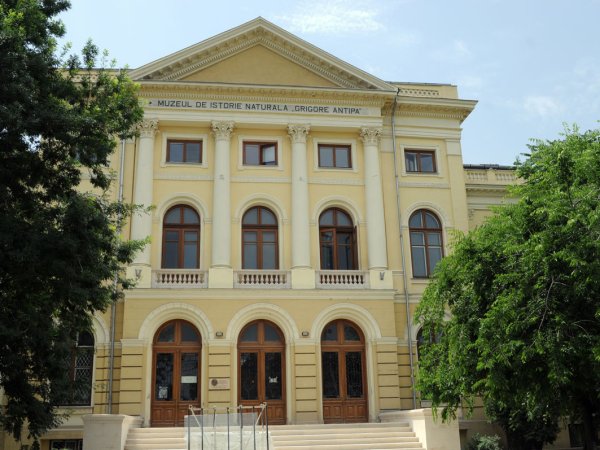
The museum building, located on Kiseleff Road, also has an interesting story. Built at the beginning of the 20th century, it was designed specifically to host natural history collections, which makes it one of the few buildings in Romania created for this purpose.
Over time, the building has gone through several stages of modernization, but it has preserved its original charm. Recent restorations have brought the Grigore Antipa Museum up to modern standards, without affecting its historical identity.
The giant skeletons that attract all eyes
One of the most impressive things in the museum is the collection of large skeletons. Visitors are often fascinated by the elephant skeleton or the giraffe skeleton, but also by other spectacular exhibits.
These pieces are not only visually impressive, but also extremely valuable from an educational point of view. They offer a clear perspective on animal anatomy and the way animals have adapted to the environments in which they live.
A close relationship with scientific research
The museum is not only a space intended for the general public, but also an active research center. The specialists who work here study biodiversity, ecosystems, and the impact of climate change on the environment.
Over time, the museum’s researchers have contributed to numerous important discoveries and studies. Thus, the institution plays an essential role not only in education, but also in the development of science.
Interactive exhibitions for all ages
Another lesser-known aspect is that the museum has invested heavily in interactivity. Visitors can discover information through touchscreens, projections, and modern installations that make the experience much more engaging.
These elements are designed especially for children and young people, but they are just as interesting for adults. They transform the visit into a dynamic experience, not just a simple walk among exhibits.
The story of rare and valuable exhibits
Within the museum’s collections there are numerous truly unique pieces. Some of them were brought from scientific expeditions organized decades or even hundreds of years ago.
These exhibits have not only scientific value, but also historical value. They tell stories about explorers, researchers, and eras in which discovering nature was an adventure in itself.
A museum that has survived difficult times
Throughout its history, the museum has gone through complicated periods, including wars and major political changes. Despite this, it has managed to preserve its collections and continue to function.
This continuity is proof of its importance and of the efforts made by those who managed it. Each generation has contributed to preserving and developing this institution.
A place that educates entire generations
For many Romanians, the first encounter with the world of science took place in this museum. School visits or family trips have contributed to shaping curiosity and interest in nature.
The educational role of the museum is just as important today as it was in the past. Through its programs and activities, it continues to inspire children and adults to discover the surrounding world.
More than a museum – a complete experience
Muzeul Național de Istorie Naturală Grigore Antipa is not just a place where you see exhibits, but a space where you learn, enjoy, and discover. Each hall offers a new perspective on nature and the diversity of life on Earth.
Whether you are passionate about science or simply curious, the museum has something to offer for everyone. It is a place that perfectly combines the past with the present and continues to evolve, remaining one of the most important cultural landmarks in Bucharest.
We also recommend: Alina and Grigore Antipa Loved Beyond Death. The Scientist’s Wife Committed Suicide Hours After Losing Her Partner